
Different Apple Banana — a step-by-step lesson for grown-up and child
This lesson flips the deck’s first question: after finding twins, your toddler now spots the pair that refuses to match — and the word for that is different.
What is this?
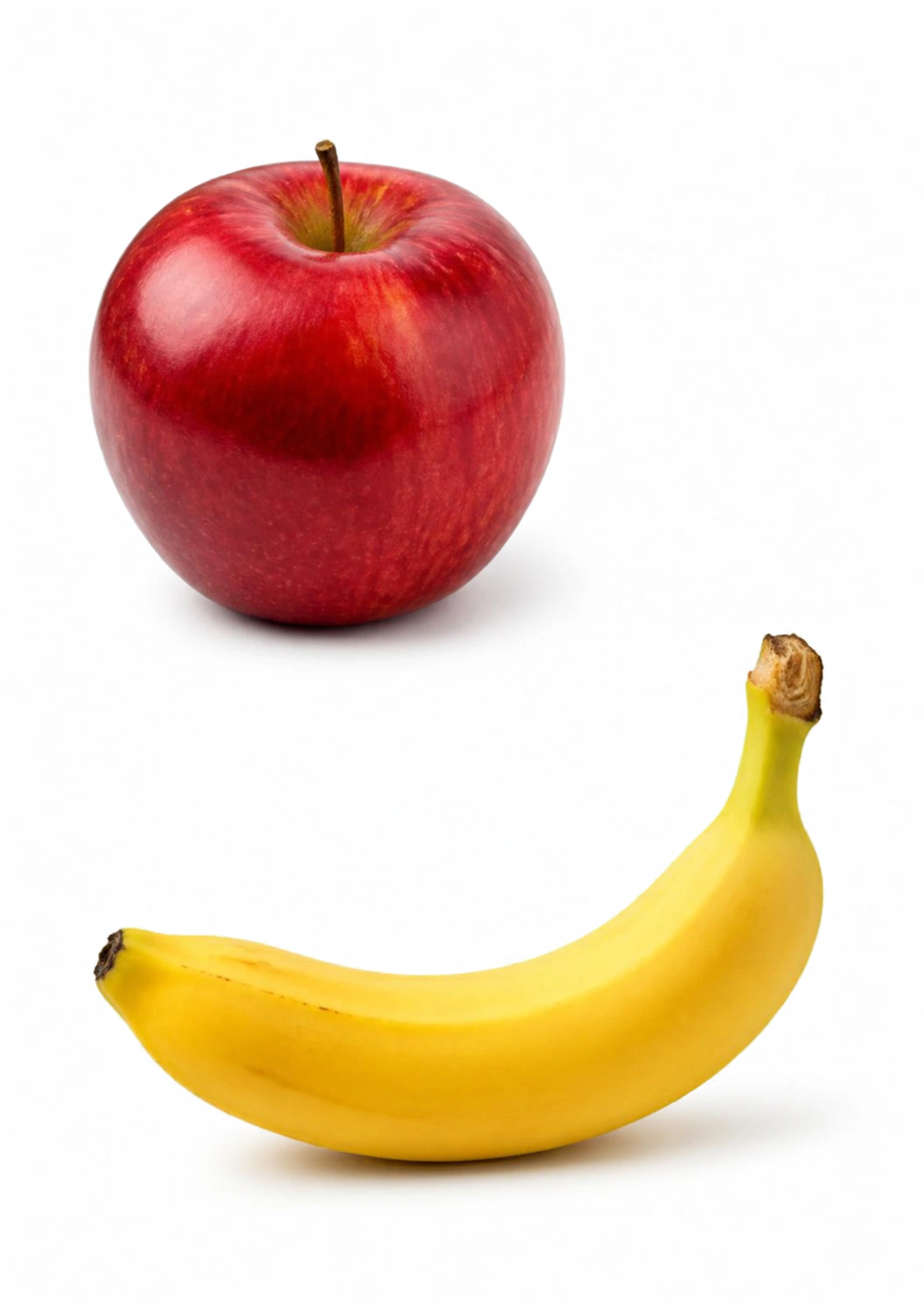
An apple is round; a banana is long and curvy. Two fruit, two shapes, two colours — sitting side by side, they make different visible from across the room.
What does it mean?
Different only means something next to a same: your toddler needs both words to feel the contrast. Comparing pairs like this is the seed of describing, sorting and, eventually, explaining choices.
What does the child need to know?
Any noticed difference counts — size, colour, shape, or simply pointing at each in turn and waiting. You supply the words: long, round, yellow, red. Your toddler supplies the looking.
Why this matters
Fruit arrives daily, so the comparing can rerun at every meal without effort. Best of all, the difference is harmless: nobody has to be right, because both fruit are staying.
What it teaches
Comparing two familiar objects, difference-spotting, and describing words (long, round, colours) — the vocabulary of noticing, built on snack food.
Words to learn
applebananadifferentlongroundfruit
Say this to your child
“"An apple and a banana! Are they the same? Look… no! The apple is round, the banana is long. Different! Can you show me long? Now round?"”
Step by step
- Lay the card between you and name each fruit in turn: an apple… a banana. Two names, two points, one breath between them.
- Say the contrast out loud and let your hands show it: the apple is round, the banana is long. Curve your arms for the banana, circle them for the apple.
- Ask the question both ways: are they the same? No — different! Let your toddler hear the word land right after the same.
- Bring both real fruit to the table and compare for real: hold them side by side, roll the apple, try to roll the banana, and talk about what each one did.
- Rerun at snack time with the words attached: the long one, the round one. If your toddler picks one, say why it was wanted — that is the description skill sprouting.
Look closer at the picture
The card shows an apple and a banana side by side for a same-and-different activity — two fruit, plainly not twins. Ask your toddler to point at the round one, then the long one.
Ask your child
"Are they the same or different?" "Which one is long?" "Which one is round?" "Which one do you want to eat?"
What your child can say or do
Different is a harder word than same, so expect pointing first: one hand on the apple, one on the banana. Words that may come: nana, appo, or a confident different borrowed straight from your voice.
Out in the real world
The fruit bowl runs this lesson all week: every snack is a chance to hand over the long one or the round one and let the choice happen. Shopping trips work too — same shelf, real fruit, live comparing.
Try it together
Fruit roll test: an apple, a banana, a low rug. Which one rolls? The apple obeys, the banana wobbles off course — and the difference becomes something your toddler’s hands have tried.
Understanding check
Next snack, hold up an apple and a banana and ask which is which. A correct point passes; a grabbed banana with a satisfied nod passes better, because choosing means the difference is being used.
Parent tips
Keep the pair friendly and the quiz absent: nobody loses for mixing up a nana and an appo. Say each word cleanly once, then hand over the fruit — the mouth follows the taste.
Staying safe
Slice the apple for toddler teeth and peel the banana all the way back; stay close for the chewing. The roll test stays on the floor, away from table edges and other diners’ breakfasts.
This lesson pairs with the Different Apple Banana flashcard in the library — print it, show it, keep it on the fridge. Back to Matching & Sorting (Toddler 4).