
Same Apples — a step-by-step lesson for grown-up and child
This lesson pairs the card with the fruit bowl: two apples alike on the picture, two apple slices alike on the plate, and one word — same — doing all the work.
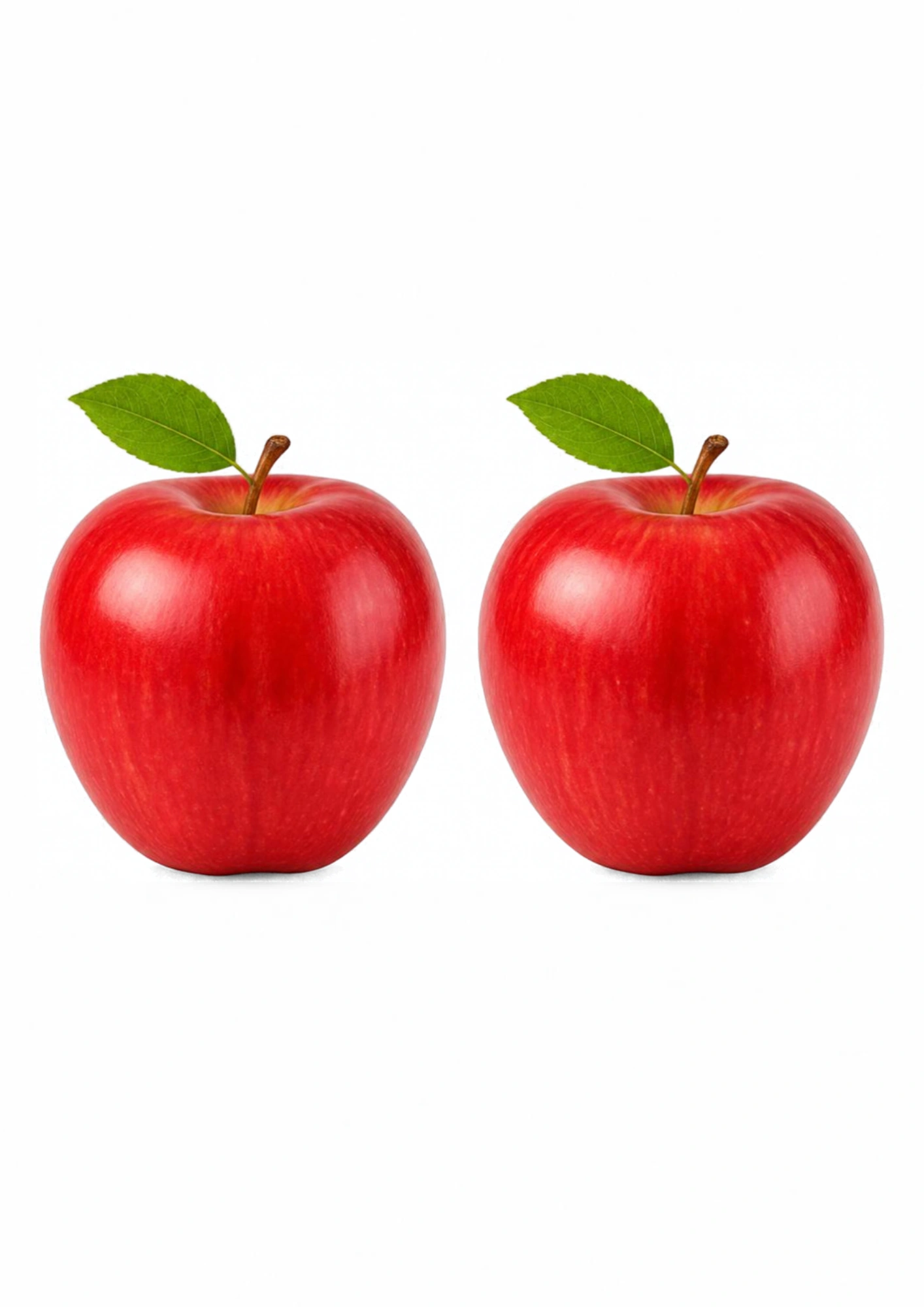
What is this?
An apple is round, red and familiar — most toddlers have held one long before they point at one. Two that match make the sameness impossible to miss.
What does it mean?
Familiar objects make matching easier: a toddler spots twin apples faster than twin shapes because the apple is already an old friend. Familiarity is not cheating; it is the ladder.
What does the child need to know?
The match does not need naming — a glance travelling back and forth between the two apples is already comparing. One apple getting eaten mid-game turns into a bonus lesson: one, and then one.
Why this matters
Apples show up daily, so this card reruns itself at snack time all week. Food games hold a hungry toddler’s attention like nothing else in the cupboard.
What it teaches
Matching familiar objects, back-and-forth visual comparing, and early counting-to-two woven into a snack — thinking skills delivered with lunch.
Words to learn
applessamematchtworedsnack
Say this to your child
“"Two apples, and they match! Apple and apple — same. Here are your apple slices, lined up just like the picture. Same, same! Which one goes first?"”
Step by step
- Show the card and name the pair slowly: apple… apple. Pause on the second one so your toddler’s eyes make the trip across.
- Ask where the two apples are and follow your toddler’s finger — touch each one as it is found, saying apple, same.
- Bring the real thing: two apple slices on a plate, lined up like the picture. Say the word again over the real pair: same!
- Let your toddler eat one — then narrate the change: one apple… gone. What is left? One. Matching survives even a missing apple.
- Rerun the game at snack time through the week: two crackers, two banana rounds, two of whatever is already on the plate.
Look closer at the picture
The card shows two matching red apples — a pair, drawn alike from stem to bottom. Ask your toddler to touch the first apple and then its twin, and to point at anything the two share.
Ask your child
"Where are the two apples?" "Do they match?" "Can you find the same ones on your plate?" "Which apple goes first?"
What your child can say or do
Matching at two is mostly looking: a gaze that travels from one apple to the other and back is a working comparison. Words that may arrive: same, apple, or a decisive "dis one!" with a slice already in hand.
Out in the real world
The fruit bowl is this card’s storeroom. Next shop, let your toddler drop pairs into the bag — two apples, two bananas — and say same at every pair that lands.
Try it together
Snack twins: put two of a food and one odd item on a plate, and let your toddler pick out the pair. Crackers, cheese cubes, cucumber coins — the pair is the prize, and also the pudding.
Understanding check
Offer two objects that match and one that does not, and ask for the matching two. A toddler who gathers the twins has the idea; a toddler who lines up all three has the idea too, just at sorting speed.
Parent tips
Eat one of your matched pair on purpose and say what happened — the gone moment teaches one and empty for free. Keep the word same attached to pairs only, so it stays precise.
Staying safe
Cut apple slices thin and soft for two-year-old teeth, and stay close while the chewing happens — firm fruit is real work for small mouths. Whole grapes and whole nuts stay off the plate entirely.
This lesson pairs with the Same Apples flashcard in the library — print it, show it, keep it on the fridge. Back to Matching & Sorting (Toddler 4).