
Daffodil — a step-by-step lesson for grown-up and child
This lesson turns a flower into an instrument: your toddler blows a golden trumpet, gathers yellow from every verge, and meets the flower that shows up first, every single year.
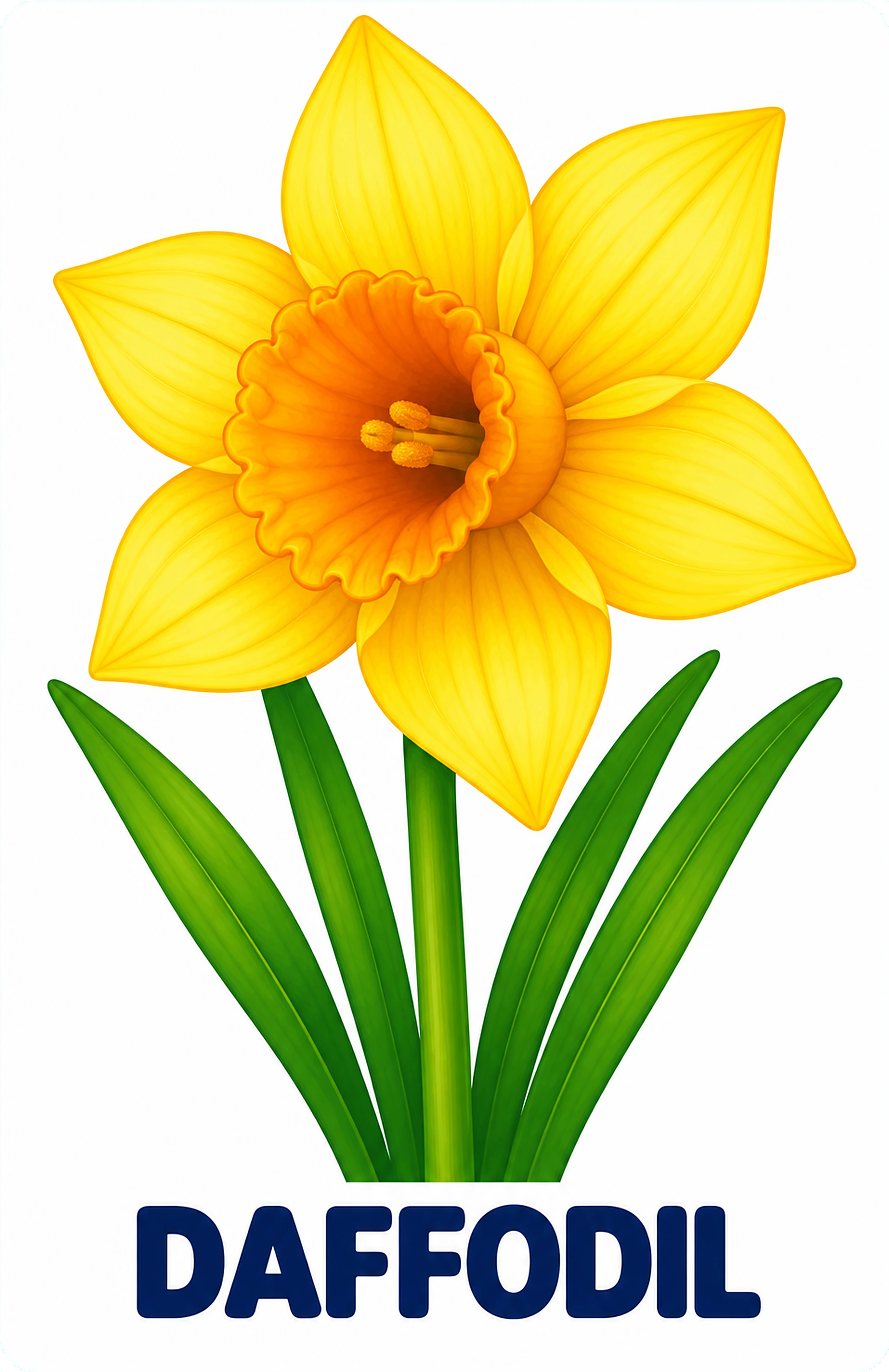
What is this?
A daffodil is a spring flower shaped like a trumpet on a tall stem, in bright yellow. It blooms in big crowds while the air is still cold, and grows back each year from a bulb hiding underground.
What does it mean?
The daffodil is the season’s first headline: colour arrives before the warmth does. For a toddler, a flower that returns every year is a comfortable promise — the world keeps its good things.
What does the child need to know?
Daffodils are the yellow trumpets of early spring; they grow from bulbs that sleep underground all winter. We blow our trumpets at them, count them from the path, and leave every trumpet on its stem.
Why this matters
The trumpet shape is blowable — and blowing is breath control, the same muscle work behind blowing bubbles and blowing noses. A flower that rewards a toot is a flower a toddler will remember forever.
What it teaches
Breath control (the trumpet toot), early-spring seasonal awareness, yellow collecting, counting flower crowds, and the comfort of things that come back — bulbs, birthdays, spring itself.
Words to learn
daffodiltrumpetyellowspringbulbblow
Say this to your child
“"A daffodil! The golden trumpet of spring. When the cold days end, up pop the daffodils — pa-pa-paaa! Can you blow your trumpet? They grow from little bulbs sleeping under the ground, and they come back every single year. Yellow is their colour — how much yellow can we find today?"”
Step by step
- Show the card, say daffodil, and hold your fist to your mouth like a trumpet — pa-pa-paaa! — blowing the sound out over the card.
- Let your toddler toot their own trumpet at the card, then at the window, then at anything yellow you pass today.
- Point out the flower’s parts: the trumpet in the middle, the petals standing behind it like a collar, the tall stem holding it up.
- Tell the bulb story with a surprise voice: under every daffodil sleeps a little bulb, and when winter ends — pop! — up comes the trumpet.
- On your next cold, bright walk, count the daffodils in the parks and verges together — spring is arriving, and your toddler spotted it first.
Look closer at the picture
Hold your fist up as a trumpet and say daffodil into it. Ask your toddler to find the trumpet part on the card — the deep cup in the middle — then toot once, gently, at the flower.
Ask your child
"What colour is the daffodil?" "Can you blow your trumpet?" "Where does the daffodil sleep before spring?" "How many daffodils can we count today?" — answered with a toot, a "yellow!" and a pointing count from the buggy.
What your child can say or do
"Pa-pa-paaa!" Expect trumpet-blowing at every patch of yellow, daffodils announced weeks before they bloom, and bulbs demanded for the garden. Spring may officially begin whenever your toddler says so.
Out in the real world
Daffodils line parks, roundabouts, churchyards and roadsides in early spring — the loudest colour of the year. Every golden crowd is a rerun: toot the trumpet, count from the path, walk on warm.
Try it together
Trumpet parade: march through the house blowing pretend trumpets, stopping at each yellow thing you pass for a solo — banana, sponge, yellow sock. Daffodil cards get the longest fanfare of all.
Understanding check
At the first real daffodil of next spring, watch your toddler’s mouth: if a trumpet rises before any words, the flower and the toot are bonded — the season now has a sound.
Parent tips
Buy a pot of growing bulbs in winter and let your toddler water it — watching the bud swell is weeks of free suspense. Keep the toots gentle indoors; trumpets and sleeping babies negotiate through doors.
Staying safe
Daffodil bulbs and stems are not for tasting — they can make tummies ill, so bulbs stay stored away and cut flowers stay up high. Trumpet arms need elbow room: toot outdoors or in clear space, never at a sibling’s ear.
This lesson pairs with the Daffodil flashcard in the library — print it, show it, keep it on the fridge. Back to Garden Flowers (School Garden).