
Poppy — a step-by-step lesson for grown-up and child
This lesson is built on the loudest colour in the set: your toddler learns the poppy — red as red can be — then hunts red everywhere and dances one very still flower dance.
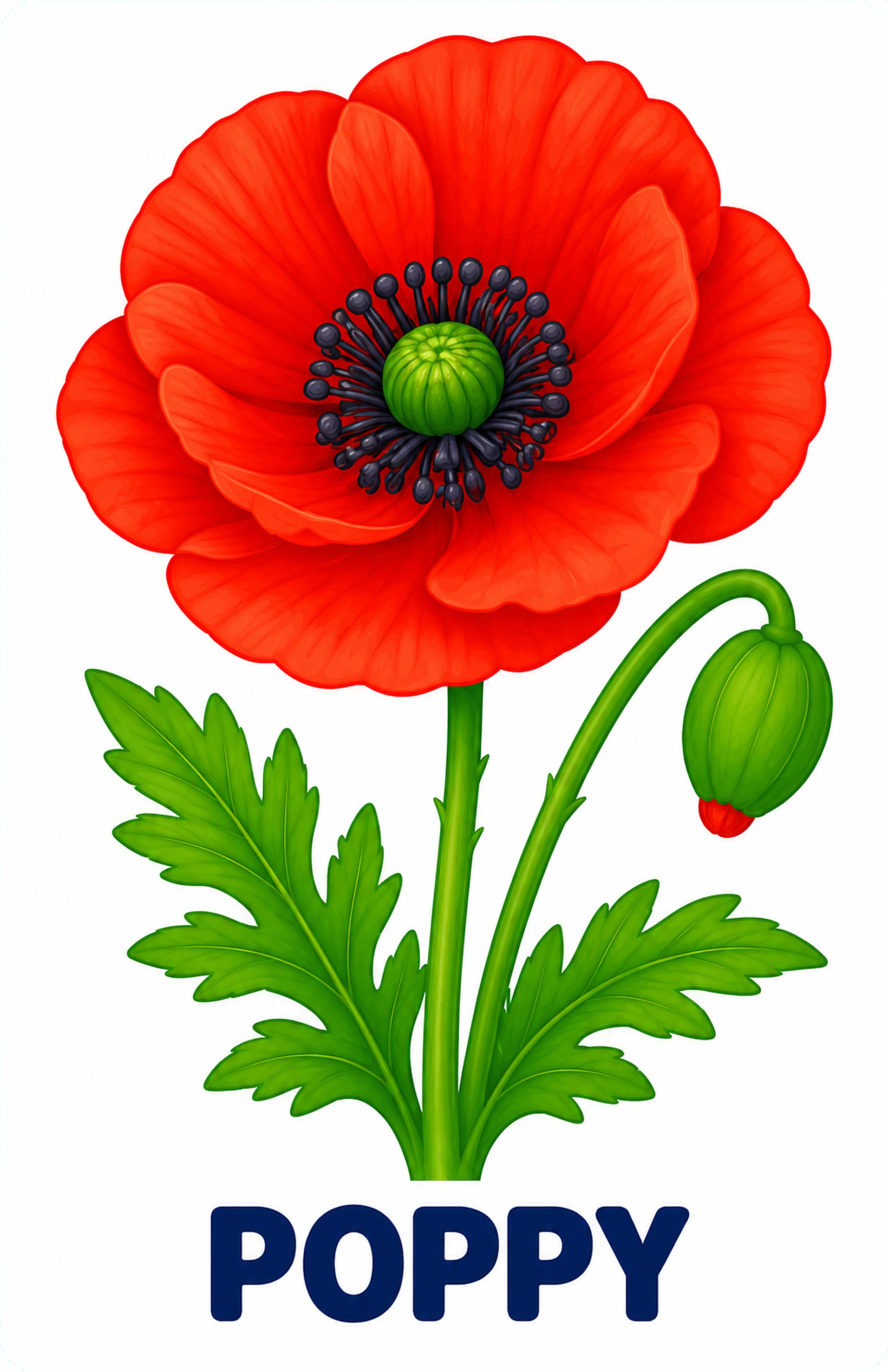
What is this?
A poppy is a flower with big, thin, papery petals in the brightest red. Poppies like open ground and field edges, and their petals crinkle like tissue paper.
What does it mean?
Red is the colour toddlers see first and loudest, and the poppy is red at full volume. The flower also teaches fragility without a single word: petals this thin are for looking, and looking is enough.
What does the child need to know?
Poppies are the boldest red flowers, with petals thin as tissue paper. Our eyes do all the looking, we spot red things everywhere once we know the colour, and the petals wobble in the smallest wind.
Why this matters
Colour-spotting is a toddler’s first search engine, and red is its best keyword — cars, doors, berries, posts. The poppy hands your child a colour word with a picture attached, and the wind-wobble adds a dance.
What it teaches
Colour spotting (red above all), stillness play (be a poppy in the wind), soft-and-thin texture words, field-and-edge place vocabulary, and gentle handling of fragile things — by not handling them.
Words to learn
poppyredpetalsfieldpaperywind
Say this to your child
“"A poppy! Red, red, red — the brightest flower in the garden. Its petals are thin like paper and they wobble in the wind. Can you stand like a poppy? Still, still... here comes the breeze — wobble, wobble! We look at poppies with our eyes and let the wind do the moving."”
Step by step
- Show the card, say poppy, and open your hand flat and still — the poppy stands its petals wide open too.
- Say the colour out loud, twice: red, bright bright red — then ask your toddler to find something red in the room before you move on.
- Feel the papery idea with your hands: flutter your fingers like tissue petals, crinkly and light, ready to wobble in the smallest breeze.
- Play the poppy dance: stand tall, hold still, then wobble when you blow a little wind at them — flower dancing needs a breeze, and you are the breeze.
- End with the rule folded in gently: poppy petals are as thin as paper, so we let them dance where they grow — our eyes do the picking.
Look closer at the picture
Open your hand like a wide petal and say poppy. Ask your toddler to point at the flower on the card, then hold a stillness together — two poppies standing in the room — before the wobble begins.
Ask your child
"What colour is the poppy?" "Can you find something red in this room?" "Are the petals thick or thin?" "Can you stand still like a poppy?" — answered with a red shout, a finger-point and a beautifully held stillness.
What your child can say or do
"Red!" Expect red-spotting from car seats — post boxes, cars, berries — poppies claimed at every field edge, and stillness demanded so the breeze game can begin. The wobble is the part that gets repeated at home.
Out in the real world
Poppies blaze along field edges, road verges and any bit of disturbed ground in summer, and they appear on badges and in books. Every flash of field-red is a rerun — point, hold still, wobble together.
Try it together
Red hunt: choose red as the day’s colour and keep score out loud on your walk — each find earns a cheer, and the poppy card comes along as the team badge. Back home, sort the red toys into one big pile.
Understanding check
Show the card a day later and ask for the colour: an instant "red!" with a finger-petal flutter means the poppy landed. A still-then-wobble on request seals it completely.
Parent tips
Keep red-spotting running for a week — the colour needs a whole street to sink in. If the stillness game becomes a favourite, borrow it for waiting rooms: "stand like a poppy" buys you thirty quiet seconds.
Staying safe
Poppies grow where the ground is rough — field edges and verges with traffic and stings nearby, so spotting happens from the path. All poppies are look-only: petals this thin tear, and unknown plants stay out of mouths.
This lesson pairs with the Poppy flashcard in the library — print it, show it, keep it on the fridge. Back to Garden Flowers (School Garden).