
Hibiscus — a step-by-step lesson for grown-up and child
This lesson goes big: your toddler opens wide like a hibiscus, compares flower-size against face-size, and learns that the grandest blooms keep the shortest running times.
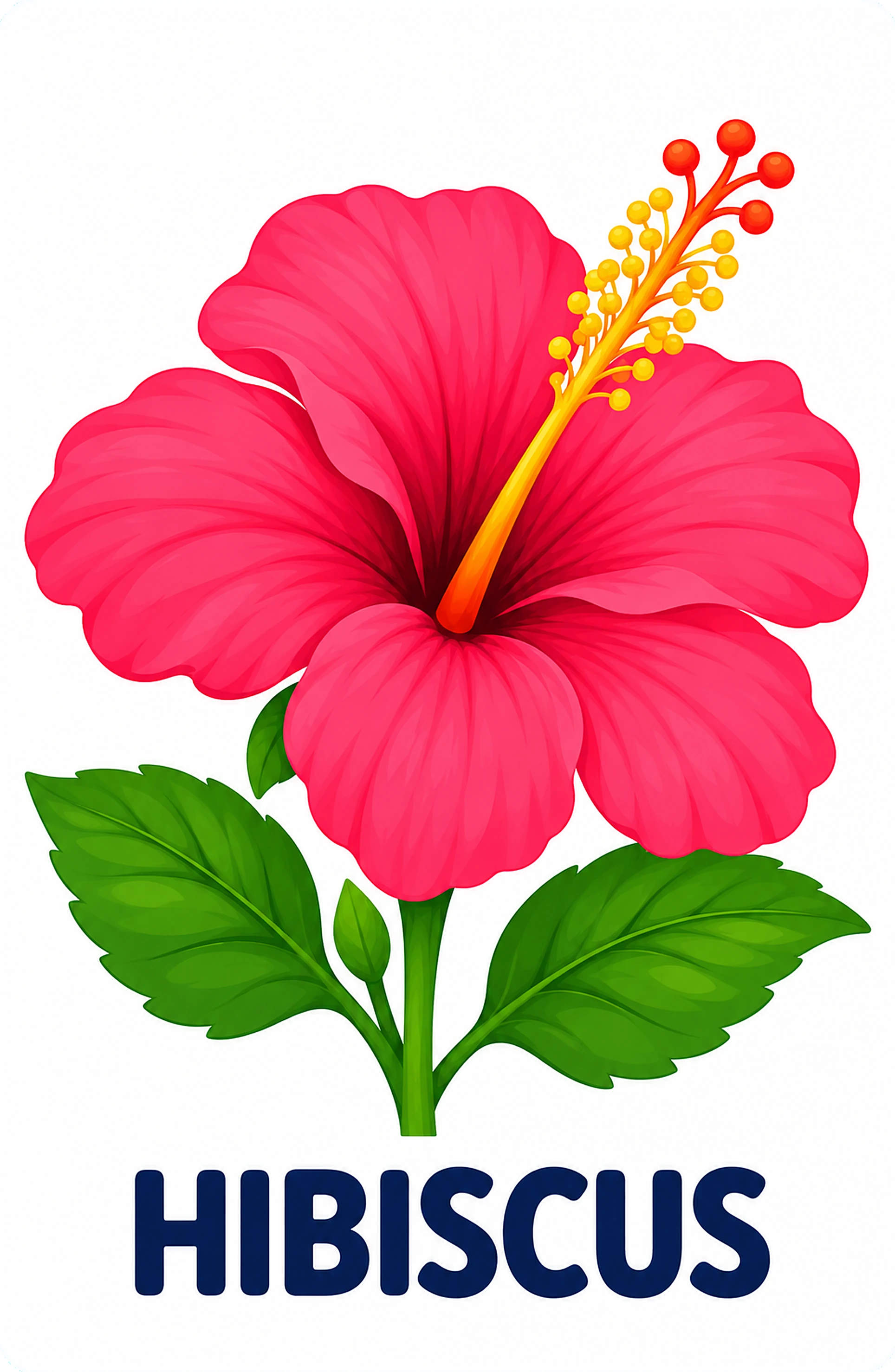
What is this?
A hibiscus is a flower of warm places with enormous open petals — pink, red or orange — as wide as a saucer. Each bloom opens wide for a day or two and then folds closed.
What does it mean?
The hibiscus is the set’s size card: everything about it says wide, open, enormous. Comparing flower to face is your toddler’s first honest measurement, and big-bigger-biggest is comparison practice in game form.
What does the child need to know?
Hibiscus flowers open as wide as a saucer and live in warm, sunny places. Each big bloom only lasts a day or two — the biggest show has the shortest run — and then the flower folds up.
Why this matters
Size words need dramatic examples, and wide-as-a-saucer is as dramatic as flowers get. The short bloom also plants a first idea of change over time: big today, folded tomorrow, and that is how flowers work.
What it teaches
Size comparison (big, bigger, biggest), arm-stretching whole-body play, warm-climate awareness, day-scale time words (today, tomorrow), and expressive open-wide face-and-body imitation.
Words to learn
hibiscusbigwidepetalsopenwarm
Say this to your child
“"A hibiscus! Open your arms — thiiis wide! It is the biggest flower on our cards, as wide as a saucer. It lives where it is warm and sunny. Can you be a hibiscus? Open wide... and hold it! And here is a secret: the biggest flowers close up the soonest."”
Step by step
- Show the card, say hibiscus, and open your arms as wide as they will go — this flower is the wide one, and your arms are the petals.
- Play big-bigger-biggest: hands small, hands wider, arms widest — three rounds, ending in a full hibiscus star each time.
- Compare sizes honestly: is the hibiscus bigger than your face? Hold the card up and let your toddler decide with their own eyes.
- Tell the warm-places story: this flower loves the sun and lives where it is hot, which is why it looks like summer itself.
- End with the surprise: the biggest bloom in the set closes up after only a day or two — big shows, short runs — then opens fresh on another stem tomorrow.
Look closer at the picture
Open your arms wide and say hibiscus into the middle of them. Ask your toddler to find the big petals on the card, then hold the card beside a face — is the flower bigger? Let them measure.
Ask your child
"Is the hibiscus big or small?" "Can you open your arms this wide?" "Where does it like to live — warm or cold?" "Which is bigger, the flower or your face?" — answered with an arm-star, a warm word and a face-to-flower measurement.
What your child can say or do
"Big one!" Expect arm-star poses at random, hibiscus claims on every large flower, and big-bigger-biggest applied to everything from spoons to dogs. Being measured against a flower is now a legitimate afternoon activity.
Out in the real world
Hibiscus blooms in warm gardens and holiday hotels, and stars in books about tropical places; in cooler homes it lives by sunny windows in pots. Every enormous bloom is a rerun of the arm-star.
Try it together
Flower measuring: hold the card up against faces, teddies and feet — bigger or smaller? Then lie on the floor and open into hibiscus stars, one at a time, and compare your widest to your widest.
Understanding check
Ask which flower on our cards is the biggest: "hibiscus!" with arms opening wide means the size lesson landed — the flower now lives in your toddler’s wingspan.
Parent tips
Keep the arm-wide game as your go-to stretch break — it empties wiggles and fills vocabulary at once. If the short-bloom idea puzzles your toddler, act it: open wide, then slowly fold — the flower has finished its show.
Staying safe
Big arm movements need big clear space — petals and elbows both knock things over. Real hibiscus blooms are look-only, and any plant from a warm climate stays out of the mouth: look, open wide, hands down.
This lesson pairs with the Hibiscus flashcard in the library — print it, show it, keep it on the fridge. Back to Garden Flowers (School Garden).