
Lavender — a step-by-step lesson for grown-up and child
This lesson is the calm one: a slow breath like smelling lavender, a quiet minute watching a busy bush, and the first friendly rule about bees — look at the workers, never touch them.
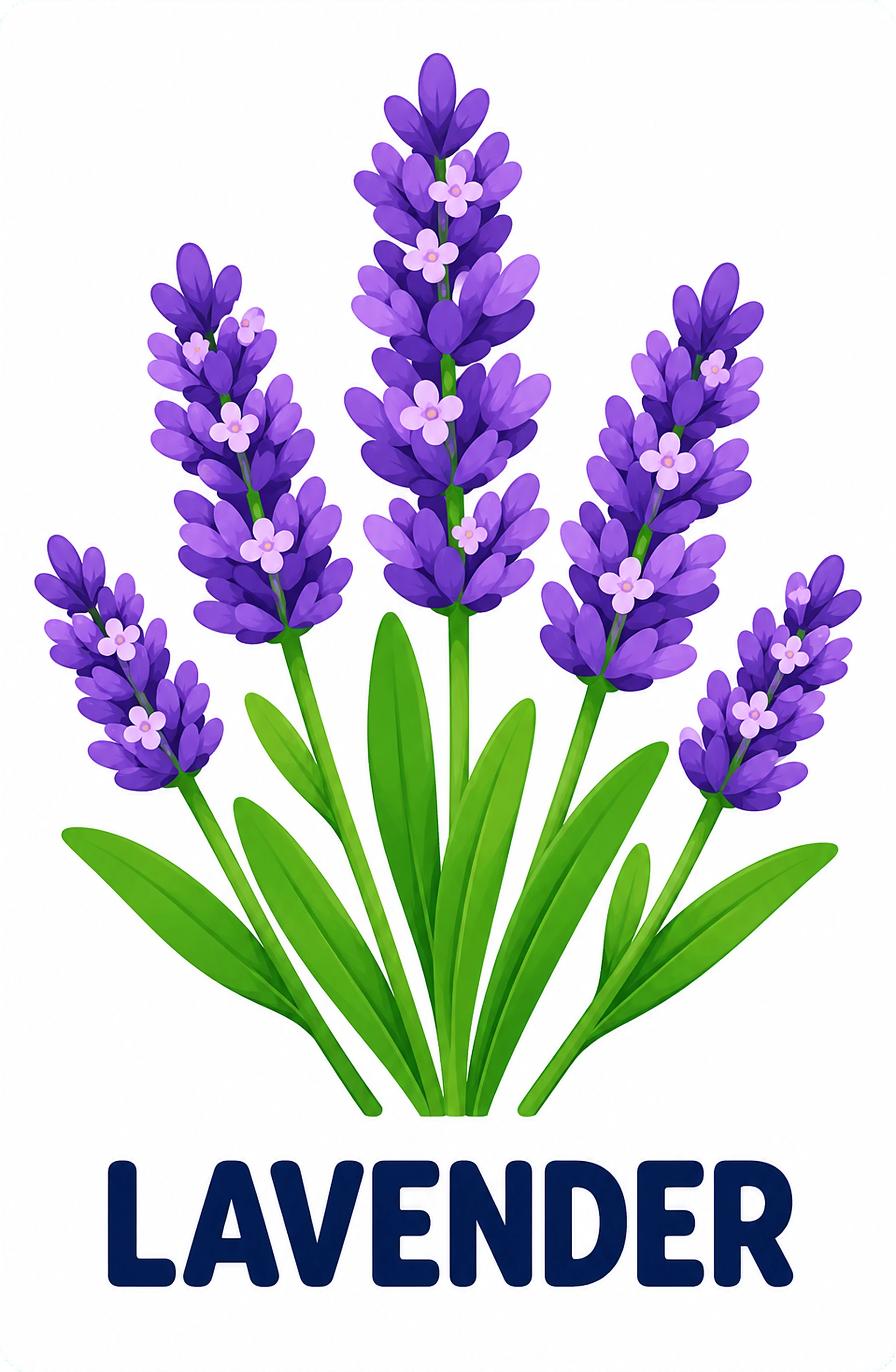
What is this?
Lavender is a bush full of slim purple spikes that smell wonderful, even when dried. Bees love it and visit all summer, buzzing from spike to spike.
What does it mean?
Every toddler set needs a slow-down card, and lavender is it. The smell invites one long calm breath — a genuine self-soothing tool — and the bees open the door to watching small creatures work.
What does the child need to know?
Lavender smells lovely and stays purple even when dry; bees come to it all day long. We take one slow breath, we watch the bees from a step away, and our hands stay down — the bees are working.
Why this matters
One calm breath is the toddler version of a meditation practice, and lavender gives it a smell to hang on. Watching bees teaches focused attention on something tiny, busy and best admired from stillness.
What it teaches
Slow-breath control (in through the nose, out long), calm-state practice, colour word (purple), bee awareness with a safe distance built in, and scent memory — smells stick longer than pictures.
Words to learn
lavenderpurplesmellbeesbreathcalm
Say this to your child
“"Lavender — purple and calm. Can you smell it? Take a slow breath in... and let it out, slow and soft. The bees love this flower too — they buzz all day, working hard. We watch them quietly and keep our hands down. One lavender breath is all we need to feel calm."”
Step by step
- Show the card, say lavender, and take one big slow breath in through your nose, then out even slower — let your toddler hear the calm.
- Practise the lavender breath together three times: in like smelling a flower... out like blowing a dandelion. Slow every time.
- Point out the spikes on the card — not one big flower but a hundred little ones on one bush.
- Tell the bee story softly: bees come to the lavender to work, gathering food, and they like us best when we are still and quiet.
- End with a lavender minute: sit by a bush or just breathe slowly together, calm as can be, before the day’s next big feeling arrives.
Look closer at the picture
Take one slow, showy breath beside the card and say lavender as you let it out. Ask your toddler to find the little spikes on the card, then breathe together — in slowly, out slower.
Ask your child
"What does the lavender smell like?" "Can you take one slow breath?" "Who visits the lavender — bees or cats?" "Do our hands touch the bees, or watch them?" — answered with a breath, a buzz and hands firmly folded.
What your child can say or do
"Lavender!" — often said with a big dramatic sniff. Expect slow breaths offered at bedtime, bees reported on every lavender bush, and the calm-breath trick deployed by your toddler mid-tantrum. That last one is the triumph.
Out in the real world
Lavender grows in gardens, parks and tubs by front doors, humming with bees all summer; its smell survives in dried bags and shops. Every purple bush is a breathing station — one slow sniff and pass on.
Try it together
Bee counting: stand by a lavender bush and count the bees you can see visiting — one, two, three — quietly, from stillness. Indoors, be bees yourselves: buzz from cushion flower to cushion flower, gentle and slow.
Understanding check
At the next big feeling, offer the lavender breath: if a slow sniff-and-blow arrives and the shoulders drop, your toddler owns a calm-down tool for life — the lesson is complete.
Parent tips
Practise the breath when nobody needs it, so it is ready when somebody does. Keep bee-watching still and hand-free; bees sting only when grabbed or squashed, and lavender teaches exactly that.
Staying safe
Bees are for watching, never touching — and bee-watching happens from a step back so nobody steps on a worker. Lavender itself is safe to smell, but not to eat; and calm-breath practice needs sitting space, not pavement edges.
This lesson pairs with the Lavender flashcard in the library — print it, show it, keep it on the fridge. Back to Garden Flowers (School Garden).