
Turtle — a step-by-step lesson for grown-up and child
This lesson celebrates the opposite of hurry: your toddler walks as slowly as they can, tucks into a shell and discovers that slow is a kind of clever.
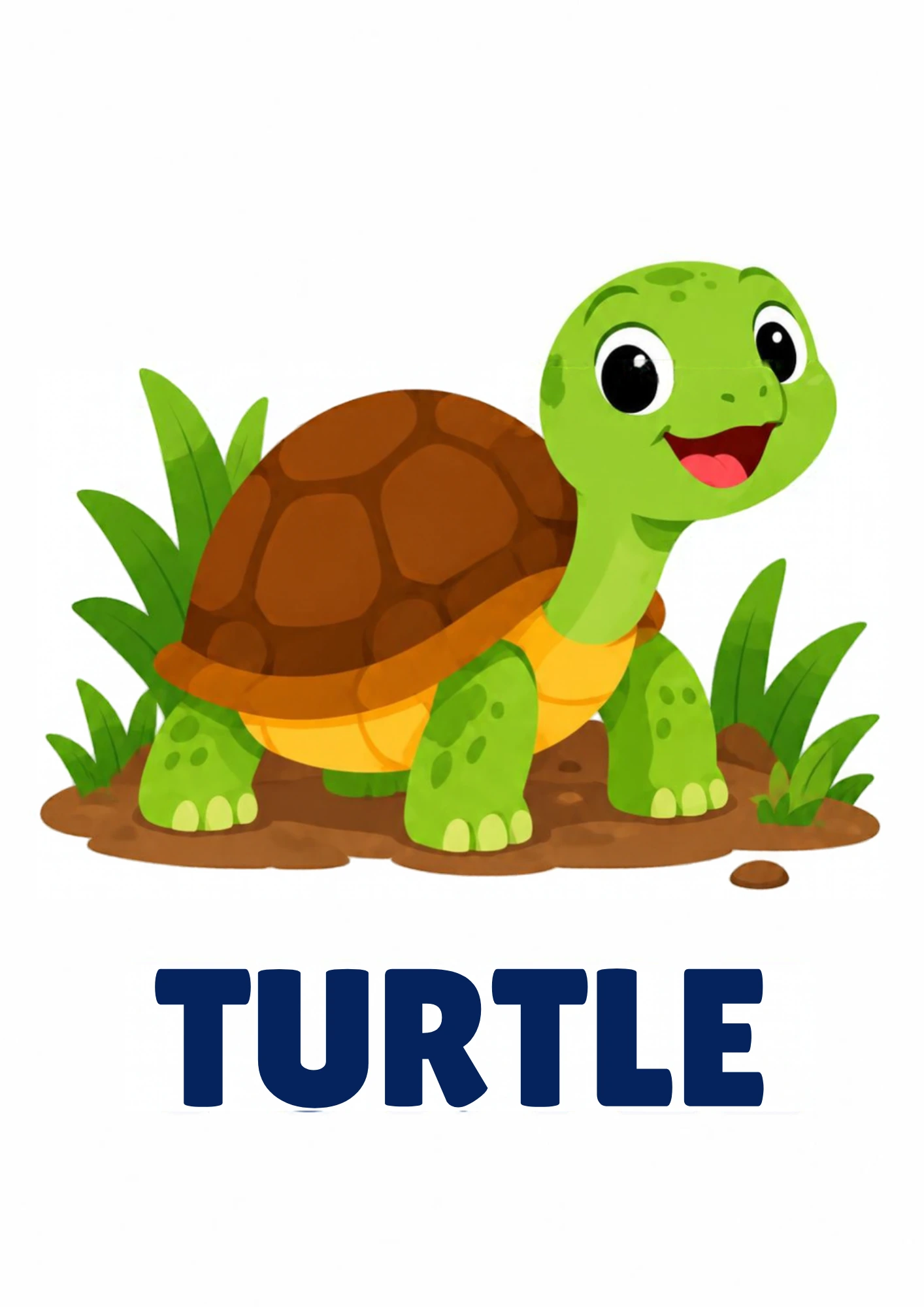
What is this?
A turtle is an animal that carries its hard shell on its back and moves very slowly. The shell is its house — when it feels unsafe, its head and legs pull inside.
What does it mean?
At two, everything is fast: legs, moods, days. The turtle card gives your child permission to try the other speed, and slowness turns out to be a skill they can practise and show off.
What does the child need to know?
Turtles carry their house everywhere and never rush. The game is to move slow... so slow — and the shell rule: when a turtle tucks in, it is asking for quiet, so we give it space.
Why this matters
Slow-motion control is genuinely hard for toddlers and builds exactly the body regulation they will need for waiting, listening and sitting at preschool. Practising it as turtle play feels like play, not practice.
What it teaches
Motor control at both extremes (very slow walking after weeks of dashing), patience in seconds-long doses, the shell-as-home idea, and pretending — the first kind of imaginative play with a rule.
Words to learn
turtleslowshellhousewaitwalk
Say this to your child
“"A turtle! Slow... so slow. The turtle carries its house on its back — hard and strong — and pulls its head in when it wants quiet. Can you walk like a turtle? Slower... slower... wonderful. The turtle is never in a hurry, and it always gets there."”
Step by step
- Show the card, say turtle, and walk one exaggerated ultra-slow step — your toddler will match your pace before they match your word.
- Hold a slow-motion race: cross the whole room as slowly as possible; the loser is whoever speeds up, so dawdle shamelessly.
- Play shell: hug your own knees, tuck your head, then peek out — and let your toddler take a turn being the shell.
- Put a cushion on their back during a turtle walk and see if they can carry their house without tipping it — slow becomes necessary.
- End with the turtle fact as a lullaby-line: turtles carry their home everywhere, and they are never, ever late — turning up exactly when they turn up.
Look closer at the picture
Say turtle and ask where its house is — on its back, carried everywhere. Then walk one exaggerated slow-motion step so the card’s speed becomes the room’s speed. Slower... good.
Ask your child
"Where is the turtle’s house?" "Can you walk slow like a turtle?" "Is the turtle fast or slow?" "What does a turtle do when it feels shy?" — answered with a dawdle, a tuck and a whisper.
What your child can say or do
"Sooo slow!" Expect slow-motion walking demanded at bedtime, cushions balanced on backs, and the shell game played under tables. "Turtle" may become your family’s word for taking it easy — that is a gift.
Out in the real world
Turtles show up at ponds, in books and at the pet shop window; tortoises in warm gardens count too. Every slow sighting is a rerun — and any queue, wait or long car ride is turtle-training time.
Try it together
Turtle school: crawl under a table or blanket with a cushion shell, carry it around a chair, and park it back on the rug without dropping it. Slow wins, always — that is the whole syllabus.
Understanding check
Next time waiting is hard — a queue, a lift, dinner on the way — try "let us walk like a turtle there": if the pace drops and the mood lifts, the lesson is living in your toddler.
Parent tips
Grown-ups must genuinely lose the slow race now and then; nothing cements a game like beating the adult. Keep the cushion light and the shell brief — a minute of turtle is a full session at two.
Staying safe
Cushion shells stay light and never cover faces — no blankets over heads during shell play. Real turtles and tortoises are watched, not picked up; their beaks nip and their space is their own.
This lesson pairs with the Turtle flashcard in the library — print it, show it, keep it on the fridge. Back to Garden Friends (School Garden).