
Ambulance — a step-by-step lesson for grown-up and child
This lesson pairs the siren with the care: the ambulance rushes, the paramedic checks, the teddy gets an examination and a cuddle — empathy practice wearing a siren.
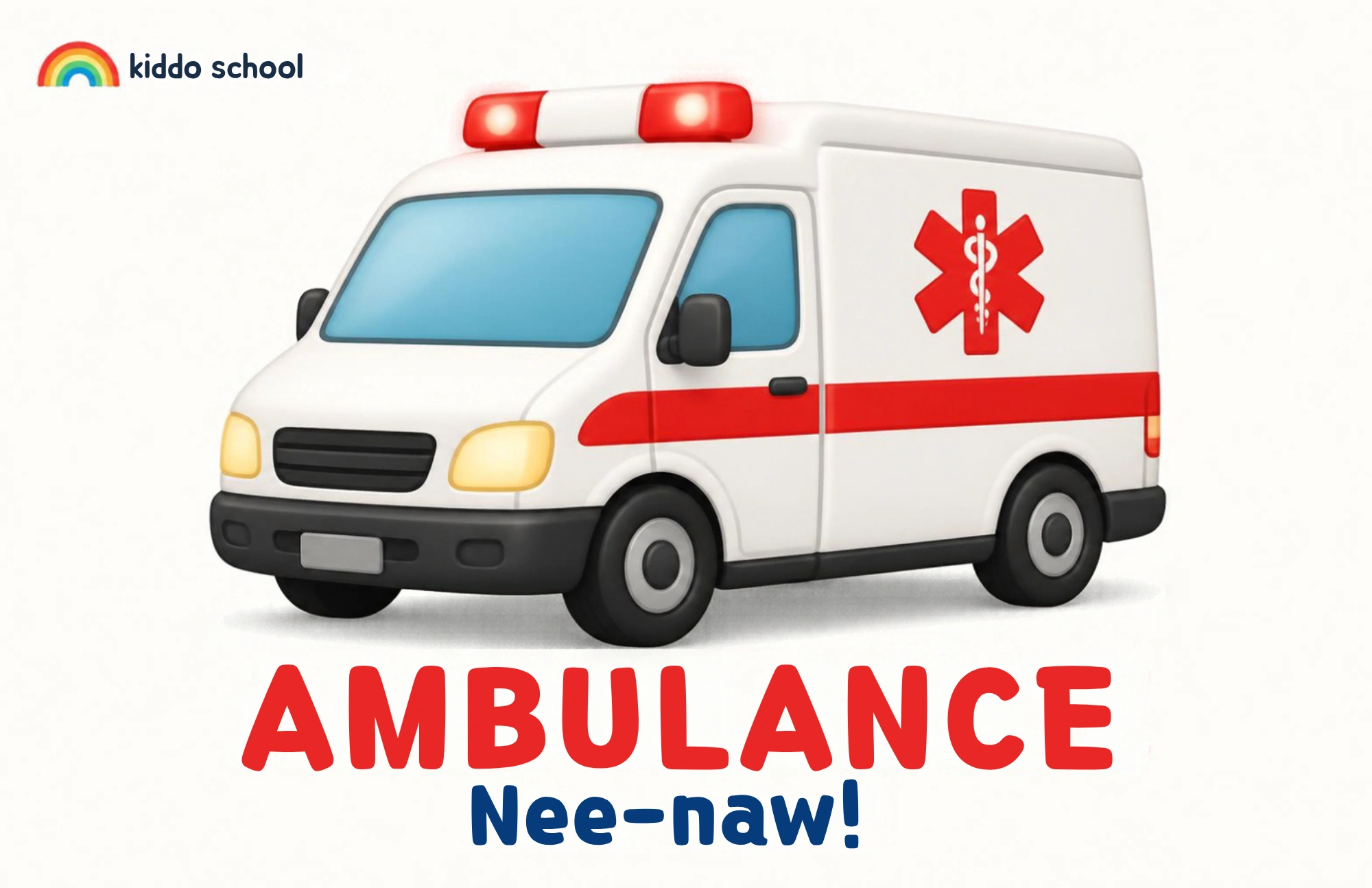
What is this?
An ambulance is a white van with flashing lights that carries helpers to people who need a doctor — and it goes nee-naw, same notes as the fire truck.
What does it mean?
Same siren, different job: the ambulance and fire truck make one matching game and one first sorting lesson — two vehicles, one sound, two kinds of helping.
What does the child need to know?
Ambulances carry paramedics, whose whole job is helping people feel better. If your toddler ever rides one, the familiar sound and story make a hard day easier.
Why this matters
The caring play is the payload here: checking a teddy’s heartbeat, wrapping a blanket, delivering a cuddle. Naming the feeling of being helped is the beginning of empathy.
What it teaches
Pretend care routines, helping-vocabulary, sound matching between vehicles, and the reassurance that loud scary moments have calm, kind people inside them.
Words to learn
ambulancenee-nawhelpparamediccuddlebetter
Say this to your child
“"Ambulance! Nee-naw, nee-naw — the same song as the fire truck. The ambulance carries helpers. Teddy feels unwell — quick, drive over! Tap, tap… all better. What a kind paramedic."”
Step by step
- Show the card and say ambulance, then nee-naw — and note out loud that the fire truck makes the same sound.
- Run a teddy rescue: one bear feels poorly, the ambulance speeds over, and your toddler gives the check-up with a gentle tap-tap on the chest.
- Hunt ambulances in books and from the window; every real sighting gets its calm sentence — "ambulance, going to help someone."
- When the siren arrives but the caring does not, add the care yourself: wrap the teddy, ask your toddler to pat it better, and hand the role over next round.
- End every rescue with better now! and a cuddle — the happy ending is the lesson’s whole shape.
Look closer at the picture
This card is labelled Ambulance with Nee-naw underneath. Ask what colour the van is painted, then find the siren words and sing them once.
Ask your child
"Where is the ambulance?" "What does the ambulance say?" "Who rides inside the ambulance?" "Can you make teddy all better?"
What your child can say or do
"Nee-naw!" plus a teddy carried gently to the rug-clinic. Some toddlers will pat every family member better for a week — the caring half of the lesson is the one worth encouraging.
Out in the real world
Ambulances pass with their lights on; say the calm sentence each time. A first-aid open day or a ambulance visit at a toddler group is the big-field-trip version of this card.
Try it together
Teddy clinic: line up three unwell toys, drive the ambulance between them, and let your toddler diagnose each one — "pat, pat… better!" — before the last cuddle closes the clinic.
Understanding check
Ask what the ambulance says and who rides inside. A nee-naw plus helpers passes. The real test is a sibling or teddy taking a tumble — if the ambulance game appears to comfort them, the lesson bloomed.
Parent tips
Keep the helping bigger than the siren: the sound grabs attention, the caring holds it. If sirens in real life cause worry, act the sound out at home on your own terms until it shrinks.
Staying safe
Real ambulances mean step aside and let them through — hold hands and move to the wall together. If your own family ever needs one, name it plainly: loud noise, kind people, help coming.
This lesson pairs with the Ambulance flashcard in the library — print it, show it, keep it on the fridge. Back to Vehicles & Sounds (Toddler 6).