
Fire Truck — a step-by-step lesson for grown-up and child
This lesson turns the loudest hero on the road into a rescue game: nee-naw around the rug, put the fire out, park the truck — with real sirens made familiar instead of scary.
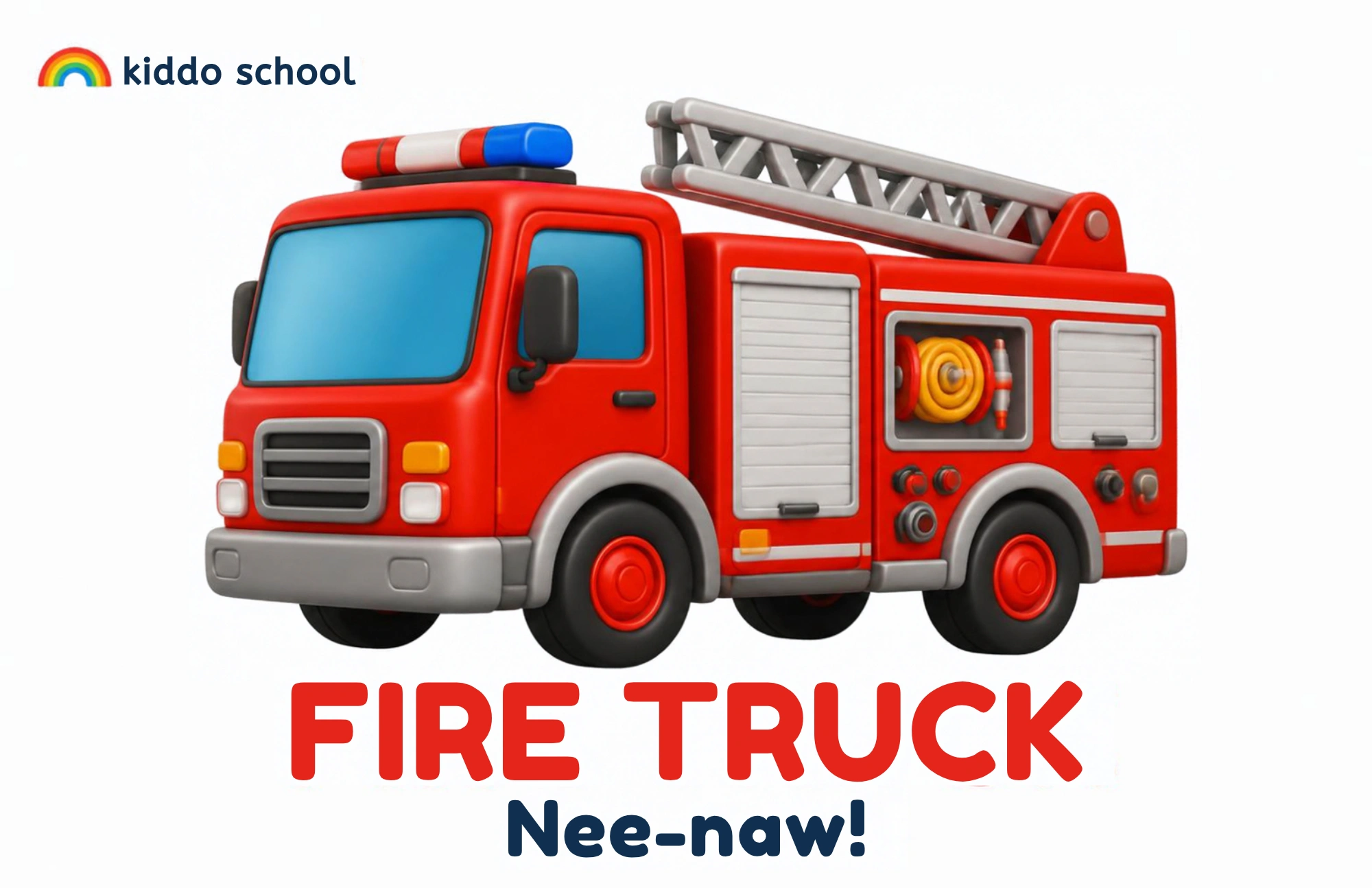
What is this?
A fire truck is a big red rescue vehicle with a ladder and a siren that goes nee-naw — the sound toddlers master fastest of all the emergency noises.
What does it mean?
Nee-naw is a sliding two-note sound: pitch going up and down in one word. Sliding pitch is ear-training for the melody of speech, smuggled inside a siren.
What does the child need to know?
Fire trucks go out when there is a fire and help people — say that plainly. If real sirens worry your toddler, playing the sound on purpose shrinks it back down to size.
Why this matters
This is the deck’s drama card. The rescue game gives big feelings a storyline with an ending — fire out, everybody safe, truck parked — which is exactly how toddlers like their stories.
What it teaches
Pitch sliding and imitation, pretend play with a clear beginning and end, and the first idea of helpers — people whose job is to come when things go wrong.
Words to learn
fire trucknee-nawladderredrescuehero
Say this to your child
“"Fire truck! Nee-naw, nee-naw! Make the siren sound with me — up and down, nee-naw. The fire truck is red with a big ladder, and it drives fast to help. Rescue done — park the truck!"”
Step by step
- Show the card and say fire truck, then nee-naw — let the sound slide up and down like the real siren.
- Push a cushion-fire-truck around the room together, nee-nawing at full volume until the pretend fire is out.
- Hunt fire trucks in books and toy boxes; find the ladder on each one and name it every time.
- When the siren comes out as a shriek or a whisper, take either — the slide matters more than the volume, and both are practice.
- Give rescues their slot this week: one fire, one rescue, one proud parking at the end, and the game closes itself neatly.
Look closer at the picture
The card says Fire Truck at the top with Nee-naw written beneath. Hunt for the siren words, then hunt for the ladder riding on top.
Ask your child
"Where is the fire truck?" "What does the fire truck say?" "Can you slide your nee-naw?" "What does the fire truck do after the fire is out?"
What your child can say or do
"NEE-NAW!" at whatever volume the day allows, or a sliding siren with no words at all. Some toddlers park their cushion trucks and announce done! — the ending is part of the story they learned.
Out in the real world
Real sirens pass on real streets. Name them calmly — "fire truck, nee-naw, going to help" — and the sound becomes information instead of alarm. Fire stations sometimes let small visitors sit in the truck; worth a call.
Try it together
Rescue the teddy: a bear is stuck on the sofa mountain, the fire truck rushes over, the ladder (your arm) extends, the bear is saved, the truck parks. A story with an ending, every single time.
Understanding check
Ask what the fire truck says and what colour it is. A nee-naw plus red passes. The deeper pass is the calm one — a real siren outside that gets a nod instead of a wobble.
Parent tips
Always finish the rescue and park the truck; the ending is what makes the game repeatable without escalation. When a real siren startles, narrate first and reassure second — information calms better than shushing.
Staying safe
Real fire trucks mean move aside and let them pass — teach that with a step to the side and a hand held. At home, cushion rescues stay on the floor; no climbing the actual furniture for the sake of a teddy.
This lesson pairs with the Fire Truck flashcard in the library — print it, show it, keep it on the fridge. Back to Vehicles & Sounds (Toddler 6).