

Cup — a step-by-step lesson for grown-up and child
Of everything in your house, this may be the object your baby knows best — it appears at every single feed, which makes its name some of the most valuable vocabulary you can offer. This lesson pins the word to the routine that already runs your day.
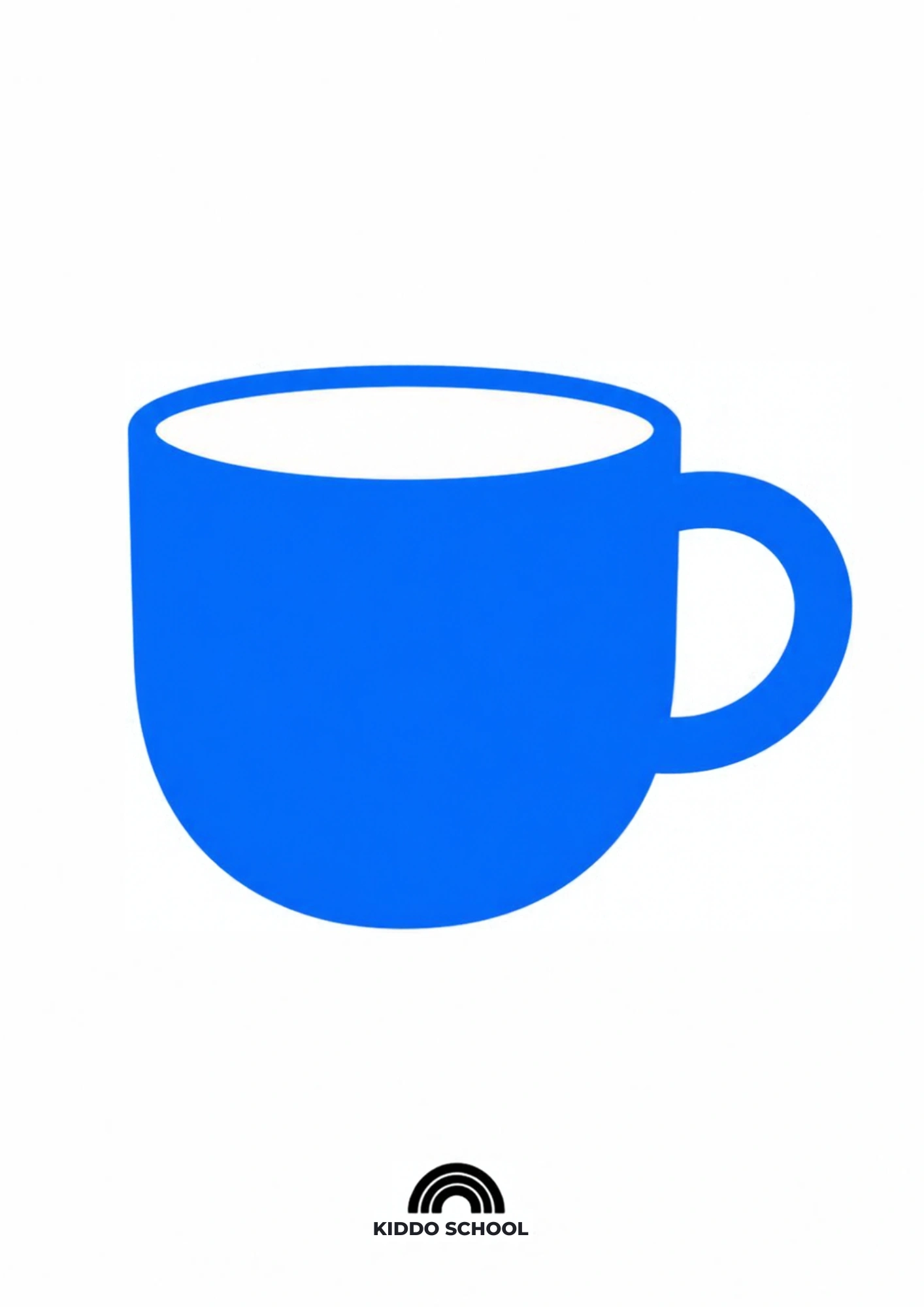
What is this?
A cup is a drinking vessel, and your baby has studied it in action for months — lifted, tipped, emptied, refilled. The card gives the daily prop a still portrait; the routine supplies everything else.
What does it mean?
Words attached to routines get hundreds of free rehearsals: every feed is another performance of cup. And because the routine is deeply familiar, the word lands on ground that is already prepared — no explanation needed, only repetition in the same warm voice.
What does the child need to know?
One word, one tone, many moments — that is the whole method. The card at quiet time, the real cup at mealtime, the word said the same way in both places. Your baby is learning that a word belongs to the thing wherever it appears, not to one picture.
Why this matters
High-frequency routine words are the spine of a first vocabulary: they repeat, they matter emotionally, and they attach to events the baby can predict. Cup will be heard, seen and soon perhaps reached-for every single day — word and world in permanent partnership.
What it teaches
Word-object mapping across settings, anticipation of routines, mealtime attention, and listening memory — hearing one word in many places until it becomes portable.
Words to learn
cupdrinkmilkmoreemptyfull
Say this to your child
“"Cup! Here is the picture cup. And here comes our real cup, arriving for milk, just like always. Card cup, feeding cup — same word, same cup, every day. You know this friend better than anyone."”
Step by step
- At a calm moment, show the card at close range and name it: "Cup. Your old friend the cup."
- Trace its outline with one finger — the round body, the handle if it has one — while your baby watches.
- At the next feed, say "cup" in the identical voice before the real cup arrives, then bring the cup into view.
- Let the feed proceed normally; the word has been planted and the routine will water it.
- Keep the pairing going daily — card at quiet time, word at feed time — and listen for babbling that starts to sound like an answer.
Look closer at the picture
The artwork is a simple, clear cup — say that much and no more. The live noticing: when the word comes before the object at feed time, does your baby’s attention jump ahead to where the cup always appears? Prediction is the visible half of vocabulary.
Ask your child
Watch the routine: does the word "cup" collect a look before the object arrives? Does the card itself get a calmer, longer study than it used to? Wonder aloud: "I wonder if you already know what happens after the word cup."
What your child can say or do
A head-turn to the usual cup-spot at the word, excited leg-thumping as the feed begins, babbling bursts around mealtimes, or hands that reach for the real cup now as well as the card — reaching for the named thing is a milestone wearing ordinary clothes.
Out in the real world
Cups fill every room: the kitchen shelf, the bath, the café table, grandma’s house. Each sighting can carry one warm "cup" — and unlike most vocabulary, this word pays rent daily, at every drink, for years.
Try it together
Two-cup surprise: show the card, then bring two different real cups into view one after the other, saying "cup" for each. Different shapes, same word — your baby gets an early lesson that names cover a whole family of things.
Understanding check
Parent self-check: did the word "cup" sound the same at card time and at feed time today? Consistency of voice is the invisible ingredient — it is what lets your baby trust that one sound means one thing.
Parent tips
If feeds are rushed or fussy, drop the feed-time version and keep only the card — never let the word arrive with stress attached. The pairing works because both ends are pleasant; protect that, and the vocabulary builds itself.
Staying safe
The cup you name stays cool and baby-appropriate — hot drinks ride on high shelves, never across a feeding lap. The card itself stays out of the splash zone; a card that has met the milk goes straight to the recycling.
This lesson pairs with the Cup flashcard in the library — print it, show it, keep it on the fridge. Back to First Words & Familiar Things (Infant 2).