

Shoe — a step-by-step lesson for grown-up and child
Some words come with their own schedule, and shoe is the best example: it shows up at every doorway, twice, forever. This lesson attaches the card to the routine that never stops.
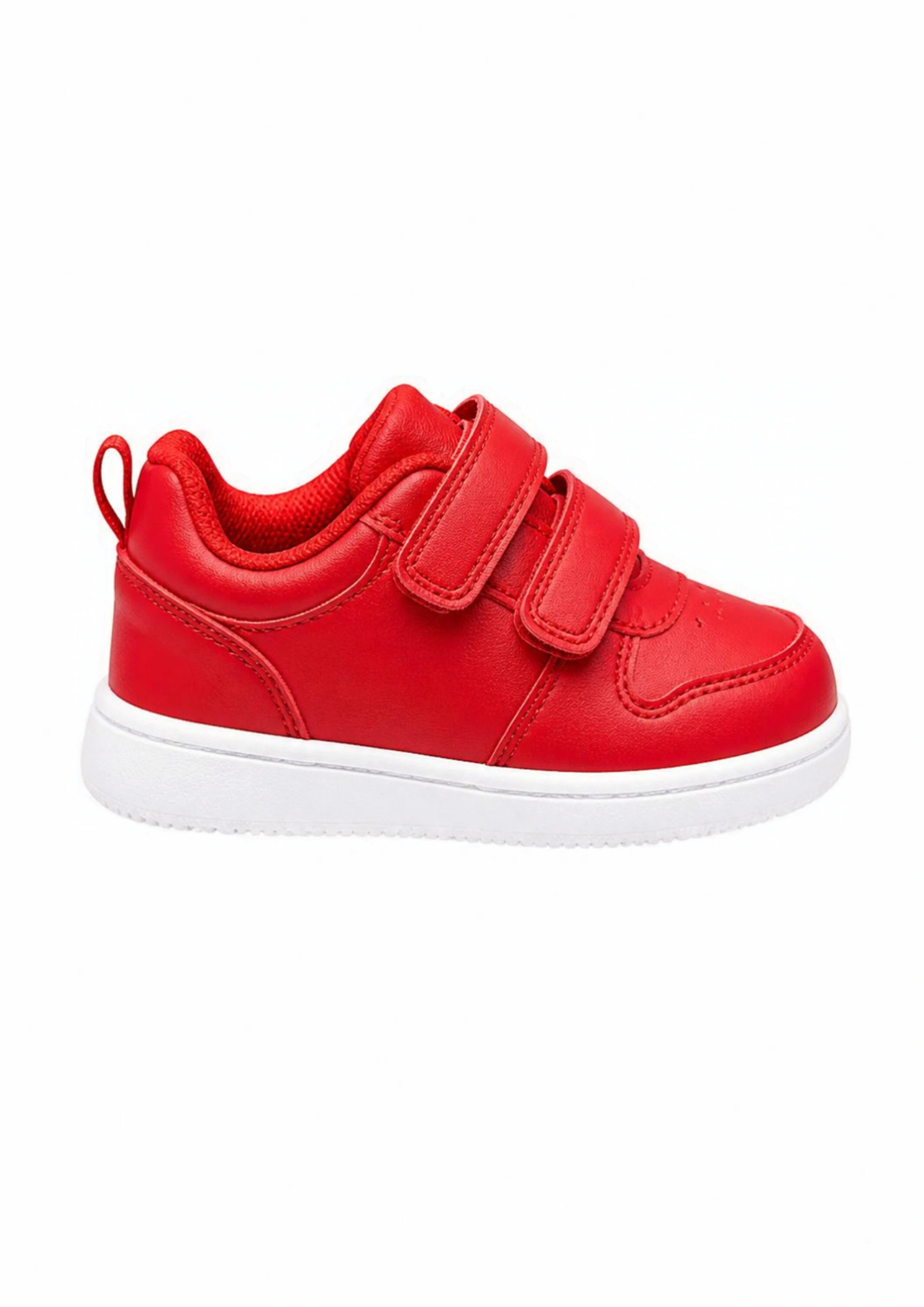
What is this?
A shoe is a foot covering that marks the border between home and world — shoes off inside, shoes on outside, all day, every day. Your baby has watched this ritual since birth; the card gives it a picture and a name.
What does it mean?
Routine words are the highest-frequency words in a baby’s life: they repeat not because you drill them but because the day does. Shoe arrives at predictable moments — the mat, the door, the pushchair — and predictability is what makes words stick.
What does the child need to know?
The twin moment happens at the next doorway: touch a real shoe as it goes on and say the word once. No lesson-drama needed — the routine is the lesson. Your baby will hear shoe dozens of times a week anyway; the card just makes sure the word has a face.
Why this matters
Learning the words of routines gives a baby a map of the day: shoe means going out, bath means water, cup means milk. That map is early security — a baby who can read the day’s signals fights its transitions less. Few cards buy this much calm per word.
What it teaches
Routine recognition, word-event association at real transitions, anticipation (shoes mean outside), and the body-awareness seed that shoe connects to foot.
Words to learn
shoeonoffsocktoesoutside
Say this to your child
““Shoe! Here is the picture shoe. And look — here is your little foot, with its sock. Shoes go over socks, and shoes mean outside. Shoe on — we are going somewhere! Shoe off — we are home. What a useful word to know.””
Step by step
- Show the card at a calm moment: “Shoe! Shoes go on, shoes come off — all day long.”
- Trace the sole and the laces or strap, naming the parts as your finger goes.
- Hold the card near your baby’s own feet, then touch their sock — the card-to-body link is the quiet centre of this lesson.
- At the next doorway, touch the real shoe as it goes on: “shoe.” Same word, same calm, no fuss.
- Repeat at every shoe-moment this week — on, off, on — and let the routine do the hundreds of repetitions for you.
Look closer at the picture
The card is a simple shoe, plain and easy to read. The part worth watching happens below the waist: say the word near your baby’s feet and see whether a kick or a wriggle answers. Feet respond early at this age, and the shoe-word is one of the few words aimed straight at them.
Ask your child
Watch the doorway: does your baby’s attention come to the shoe as it goes on, or to your face? Does the word alone start to mean “outside is happening”? Wonder aloud: “I wonder if you like the going-out shoe or the coming-home shoe better.”
What your child can say or do
A foot-kick at the word, watching the shoe’s approach with total focus, grabbing for the strap mid-fitting, or a full-body wriggle of excitement at the door — shoe moments are high-information moments, and your baby is fluent in all of them.
Out in the real world
Shoe-moments run the week: the door mat, the car seat, the pushchair basket, the pile by grandma’s door. Every one is a repetition of this card — and unlike most vocabulary, this word’s rehearsals are scheduled by life itself.
Try it together
Feet hello: at nappy changes, touch each sock and say “sock”, then hold the shoe near and say “shoe”. Three seconds, twice a day. The feet become a named country, and your baby is its most attentive cartographer.
Understanding check
Parent self-check: did a real shoe get its word at a real doorway today, and did the card-to-foot link happen at least once? The body connection is what separates this word from a picture — shoes live on feet, and feet live on your baby.
Parent tips
Say the word at the calmest shoe-moment of the day, not the rushed one — words said in hurry carry hurry. If your baby grabs for shoes constantly, that is stage-typical exploration: the named shoe is the chewed shoe; wash, repeat, continue.
Staying safe
Shoes off for sleep and never a plaything in the cot — street shoes track in what streets track. Keep the fitting calm: a wiggly foot plus a distracted grown-up is how little toes get squeezed, and the word should always predict a kind shoe.
This lesson pairs with the Shoe flashcard in the library — print it, show it, keep it on the fridge. Back to Animals & Everyday Objects (Baby 1).