

Fish — a step-by-step lesson for grown-up and child
Every animal set needs a calm card, and the fish is it — no barking, no flapping, just a serene swimmer with a mouth that opens and closes like a tiny joke. This lesson plays the mouth.
What is this?
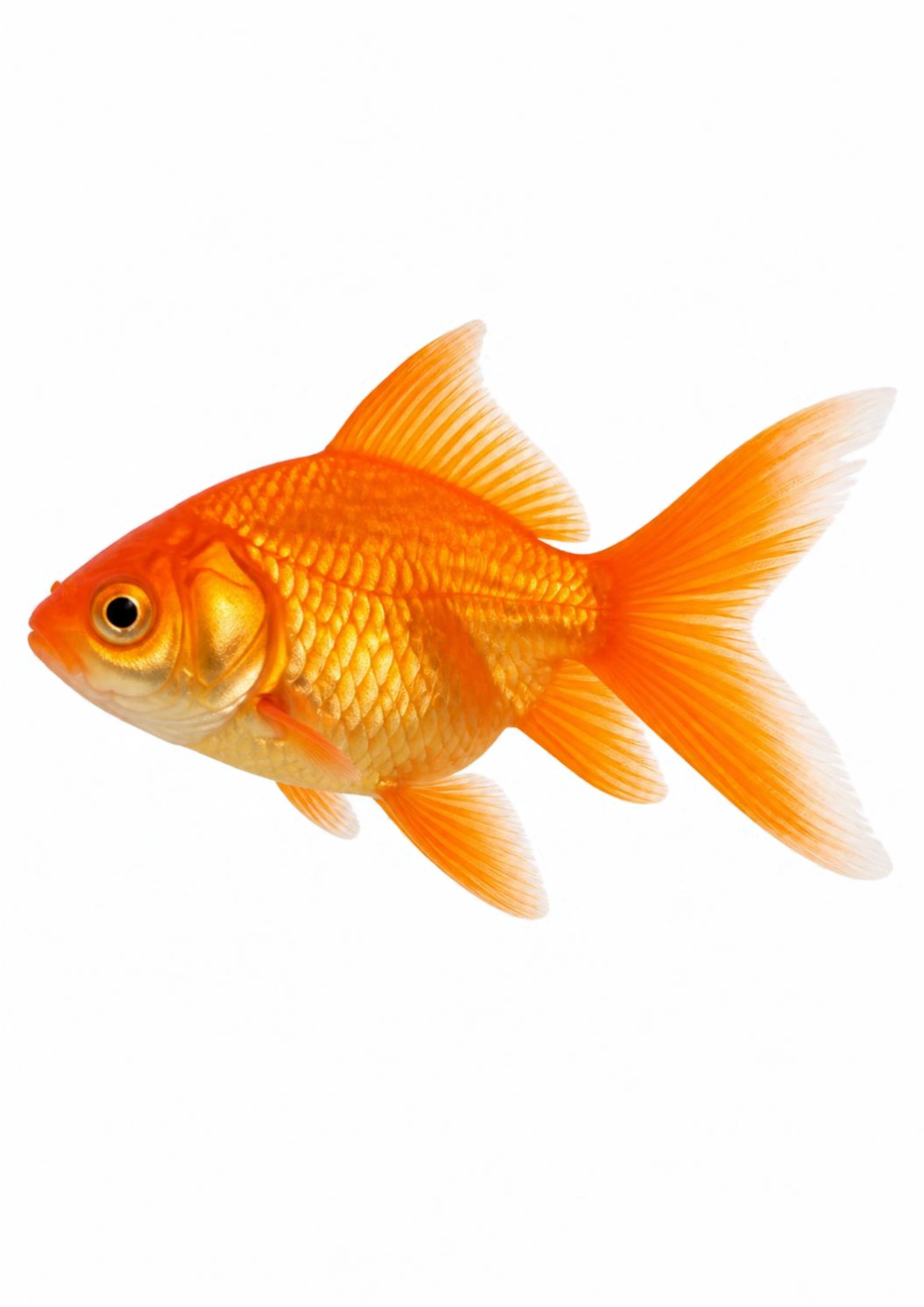
A fish is a swimming animal with fins, scales and a famously round, gulping mouth. The card gives a clear, friendly portrait; your face gives the performance; and 6–9-month babies are the perfect audience, because they study mouths for a living.
What does it mean?
Babies at this stage watch mouths intensely — it is where words come from, and they are quietly taking notes. A fish face is mouth-theatre: the opening and closing gives your baby exactly the movement their own mouth is practising, wearing a funny costume.
What does the child need to know?
Make the fish face — lips pushed out, opening and closing slowly — and add a soft “glub” if the mood allows. Then wait. If there is an aquarium or even a fish picture anywhere in your world, that is the word’s real twin; visit it within the week.
Why this matters
Fish is a quiet word with a hidden curriculum: mouth-play builds the exact muscles and attention that babbling runs on. And as the calm card in a loud set, it teaches range — sounds can be big like woof or small like glub, and language owns both.
What it teaches
Mouth-movement watching (pre-speech work), imitation of facial play, sound-volume range from quiet to loud, and animal recognition in the water category.
Words to learn
fishglubswimbubblesmouthquiet
Say this to your child
““Fish! Here is the fish, gliding through the water, quiet as a bubble. Look at its little mouth — open, and closed, and open. Glub! Can you see? Fish never make a fuss. Fish just swim, and their mouths do this all day.””
Step by step
- Lift the card into view and keep your voice low: “Fish — a quiet fish, swimming along.”
- Trace the fin and the round mouth with your fingertip — the mouth is the star, so visit it last.
- Make the fish face at your baby: lips out, opening and closing in slow motion. Hold it longer than feels dignified.
- Add one soft “glub”, then stop and watch. Some babies freeze, some grin, some try a mouth-shape back.
- Close with a second slow fish face and the word once more — this card should feel like a whisper between the loud animal cards.
Look closer at the picture
The artwork is a round, friendly fish with its mouth visible — say that much. The live noticing: during the fish face, where are your baby’s eyes — your mouth, the card’s mouth, their own hands? Mouth-watching at your face is pre-speech behaviour happening in real time.
Ask your child
Watch the mouth-work: does your baby study your lips, or the card’s? Do they try a mouth-shape back, or a rasp of a sound? Wonder aloud: “I wonder if you know your mouth and mine are doing the same trick.”
What your child can say or do
A fixed stare at your working lips, a slow grin mid-face, a babble that rises right after the glub, or a hand that pats the card’s mouth — and sometimes, weeks later out of nowhere, a fish face of their own. That one is worth the whole set.
Out in the real world
Fish live in frames and tanks: the aquarium at the dentist, the goldfish bowl at grandma’s, the fish on the bath thermometer. Any real fish, named once, anchors the word — and bath time offers fish-shaped toys as understudies.
Try it together
Bubble voice: make a gentle b-b-b-b sound with closed lips — motorboat style — as you trace a swimming path with the card through the air. Sound plus motion plus mouth-play, all quiet, all silly, all repeatable at bath or mat time.
Understanding check
Parent self-check: did you hold the fish face long enough to feel silly, and did the session stay quiet from start to finish? The silliness is the bait; the quiet is the lesson. Both, or neither.
Parent tips
This is the breather card — slot it between dog and duck rather than opening with it. If your baby is fractious, fish faces work almost like a reset: slow mouths calm fast babies more reliably than shushing does.
Staying safe
Water-zone versions of this card — aquarium visits, bath toys — keep hands outside glass and toys inside supervision. And keep the glub small: this card’s job is contrast, and a shouted glub is just another woof.
This lesson pairs with the Fish flashcard in the library — print it, show it, keep it on the fridge. Back to Animals & Everyday Objects (Baby 1).