

Clapping — a step-by-step lesson for grown-up and child
From here the set turns from body parts to actions, and clapping leads the way: the card holds the move still, and your baby gets to set it going. This lesson paces the imitation so the first clap has room to arrive.
What is this?
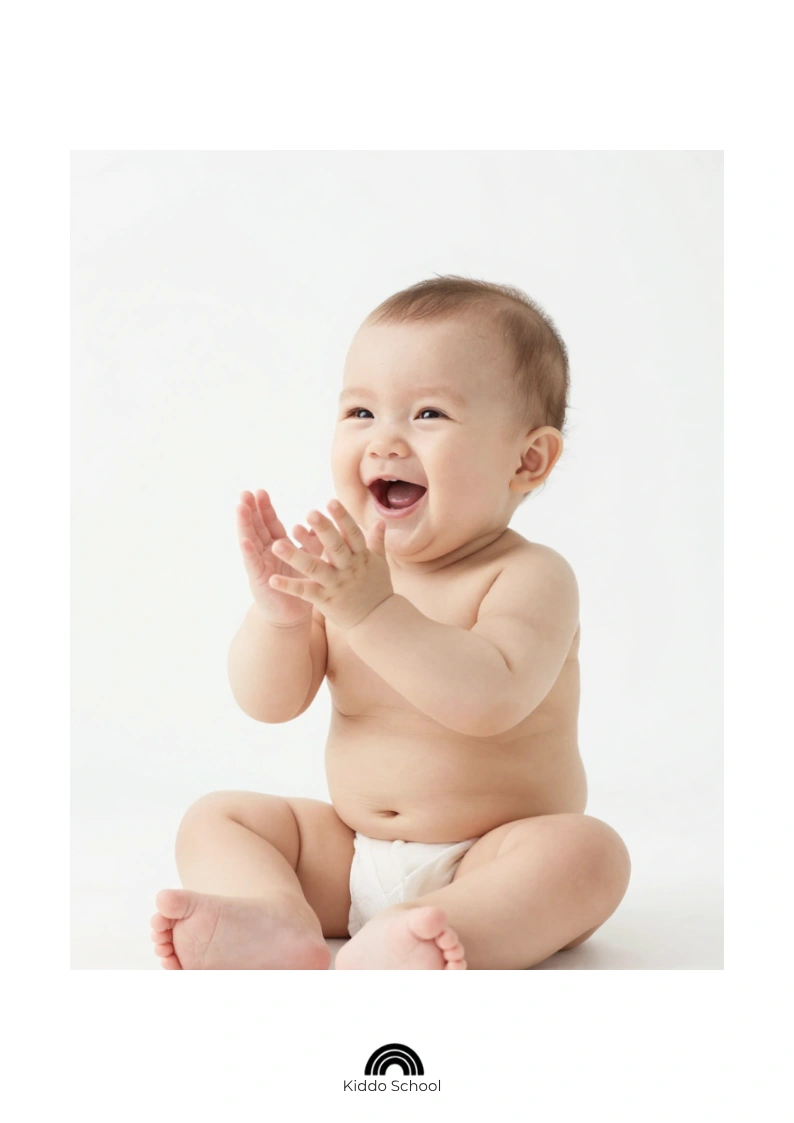
Clapping is two hands meeting in a slap of celebration — and at 9–12 months it is the imitation trick of the age: show the move, wait, and many babies join within days or weeks. The card shows two hands mid-clap and names the action.
What does it mean?
A first clap is not just cute; it is proof of imitation — your baby saw a movement, kept it in mind and produced it back. That copy-me circuit is the engine of everything this stage teaches, and clapping is usually where it first shows.
What does the child need to know?
Model slowly and loudly enough to notice: clap, pause, clap, pause. Then one guided clap, your hands closing softly over your baby’s, then open space and silence — the wait after the model is where self-made claps are born. Do not fill it.
Why this matters
Imitation is how babies download culture: waving, spoon use, finger foods, eventually every game and every word. The first clap is the first time the copy-me circuit visibly completes, which is why the whole room cheers when it does.
What it teaches
Motor imitation (the milestone beneath the milestone), two-handed coordination, rhythm and timing, and social celebration — clapping as shared joy, not just noise.
Words to learn
claphandspatbangmorehooray
Say this to your child
“"Clapping! Clap, clap, clap. Hands come together — clap! Pat, pat, pat goes the baby. Clap for the ball, clap for the dog, clap for you. Hooray! Clapping says hooray without a word."”
Step by step
- Show the card and say the word in rhythm: "Clapping! Clap, clap." Tap the two pictured hands as you say it.
- Model two slow claps with a full pause between — slow enough that the hands coming together can actually be watched.
- Take your baby’s hands and make one gentle clap together, then let go and stay quiet for five whole seconds.
- If no clap comes, model once more and let the silence stand; if a clap comes — self-made, sloppy, magnificent — cheer like it is news, because it is.
- End by clapping about something real: "Clap for the cup! Clap for you!" Actions need occasions, and this age has them everywhere.
Look closer at the picture
The artwork shows a pair of hands clapping, frozen at the moment of contact — big and clear. Say that, then produce the live version an arm’s length away; the card shows the move, your hands prove it repeats.
Ask your child
Watch the wait after your model: do the hands drift towards each other, pat the card, bang the tray instead? Wonder aloud: "I wonder which part of that you are practising in there."
What your child can say or do
One self-made clap after days of watching, both hands beating a joyful rhythm on the high-chair tray, hands patted part-way together and closing in over the week, or a first clap delivered right on "hooray" — all of it is imitation coming online.
Out in the real world
Clapping fills the week: applause at the park, a song with actions, a "yay" after a mighty sneeze. Wherever hands meet, one word — "clap!" — turns the moment into a replay of this card.
Try it together
Clap-and-wait is the whole game: you clap twice, stop, and look expectant. The expectant face after the pause is the invitation; skip it and your baby stays an audience instead of becoming a performer.
Understanding check
Parent self-check: did you leave a real silence after modelling — five seconds, no prompting — and did you celebrate any attempt, however partial? The wait is your half of the skill; the attempt is theirs.
Parent tips
Resist hand-over-hand marathons: one guided clap per session is plenty, because the goal is a self-started move, not a puppet show. Bang-on-tray days count too — name the banging, and the clapping arrives when the hands agree.
Staying safe
Clap facing your baby, away from table edges and hard corners — enthusiastic slapping and furniture negotiate badly. Keep the guided clap gentle; small wrists prefer applause to force.
This lesson pairs with the Clapping flashcard in the library — print it, show it, keep it on the fridge. Back to First Actions & Body Parts (Baby 2).