

Mouth — a step-by-step lesson for grown-up and child
The mouth card names your baby’s headquarters: food goes in, sounds come out, and everything interesting happens in between. This lesson names it during the things the mouth already does all day.
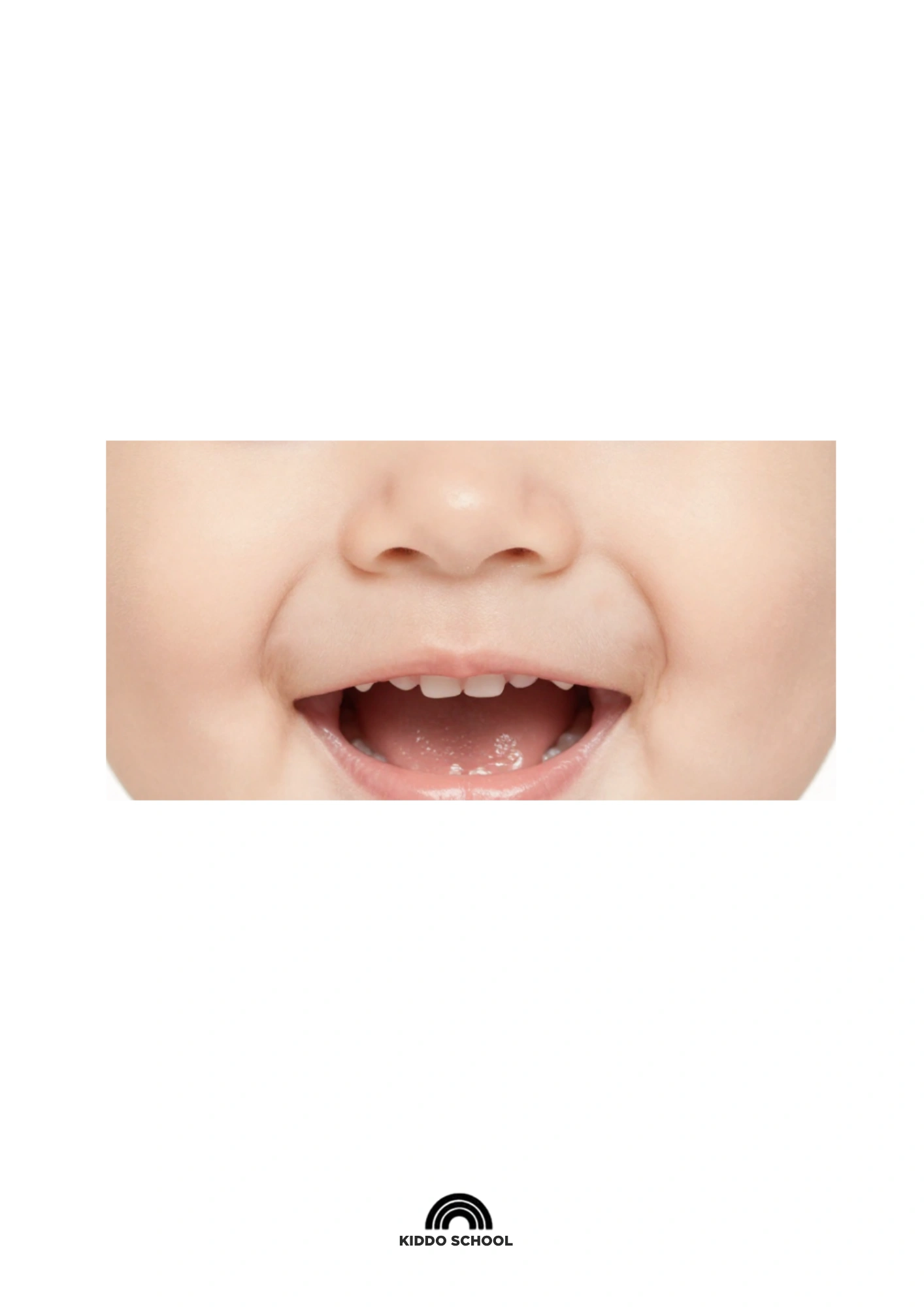
What is this?
A mouth is the opening your baby eats, babbles and blows raspberries with — at 9–12 months possibly the hardest-working part of the whole body. The card shows a simple, friendly mouth and gives the busy thing a name.
What does it mean?
Babies this age watch mouths intently — it is how they study how sounds are made. Naming the mouth while it works hands that intense watching a word, and the word a hundred natural rehearsals between breakfast and bath.
What does the child need to know?
Slow open-and-close is the demonstration that hooks attention: open your mouth wide, close it, then say "mouth". Your baby is old enough to study the movement and young enough to find it gripping — three rounds, then stop.
Why this matters
Mouth-watching feeds straight into speech: babies copy the shapes they see before they manage the sounds they hear. A named mouth also links forward to eating words — it is where every eating word eventually lands.
What it teaches
Speech preparation through mouth-watching, body-part vocabulary, oral-motor practice (babbling, raspberry-blowing), and early imitation of facial movement.
Words to learn
mouthopencloseyumblowkiss
Say this to your child
“"Mouth! Here is a mouth. My mouth opens wide — ahh — and closes. Your mouth babbles: mamama, bababa. The mouth says yum at dinner, and the mouth blows kisses. What a busy little mouth."”
Step by step
- Show the card and name it: "Mouth. This is a mouth."
- Open and close your own mouth slowly and silently, three times, then say "mouth" — the pause lets your baby connect the moving lips with the word.
- Touch your baby’s mouth area lightly with the back of your hand and say it once more: "Your mouth."
- Blow a gentle raspberry and name it: "Mouth! The mouth goes pbbbt." Silly sounds are mouth advertising, and this age buys it every time.
- If a babble comes back, answer it warmly — your baby is using their mouth to talk to you, which is the whole point of the card.
Look closer at the picture
The artwork is a simple, friendly mouth — plainly drawn, nothing else on the card. Name it and move on quickly, because the interesting mouth in the room is the one currently babbling at you; that one is the live version.
Ask your child
Watch during the slow open-and-close: does your baby’s own mouth move along, or do the eyes lock onto your lips? Wonder aloud: "I wonder which shape you are saving up for later."
What your child can say or do
A babble burst aimed at you, lips opening and closing in copycat slow motion, a raspberry returned with interest, or a mouth already opening at the word "yum" — the mouth answering about the mouth is this card at its best.
Out in the real world
The mouth performs all day: yawning at wake-up, humming through dinner, blowing bubbles in the bath. Name it at one or two of those moments and the card has been shown a dozen times without ever being picked up.
Try it together
Copy-cat mouths: slow open, slow close, tiny "o", big grin — hold each shape for two seconds. You are not drilling; you are showing that faces make moves, and moves can be answered.
Understanding check
Parent self-check: did you hold the slow mouth-watching long enough for your baby to study it, and did a babble or a copy land in the quiet afterwards? The stillness between moves is where the learning happens.
Parent tips
Narrate, do not demand: no "say mama" pressure — the word today is mouth, and the babbling is your baby’s own business. If mealtimes are calmer than playtimes, run the card then; mouths are most watchable when they are working.
Staying safe
Keep fingers and card away from the mouth itself — hands washed, card edges inspected — because at this age everything arrives there eventually anyway. Chewing the corner is data, not misbehaviour; pulped corners go in the bin.
This lesson pairs with the Mouth flashcard in the library — print it, show it, keep it on the fridge. Back to First Actions & Body Parts (Baby 2).