

Drinking — a step-by-step lesson for grown-up and child
Drinking is eating’s quieter sibling: on schedule, all day, and full of new skill at this age as open cups and beakers enter the picture. This card names the routine your baby is currently mastering.
What is this?
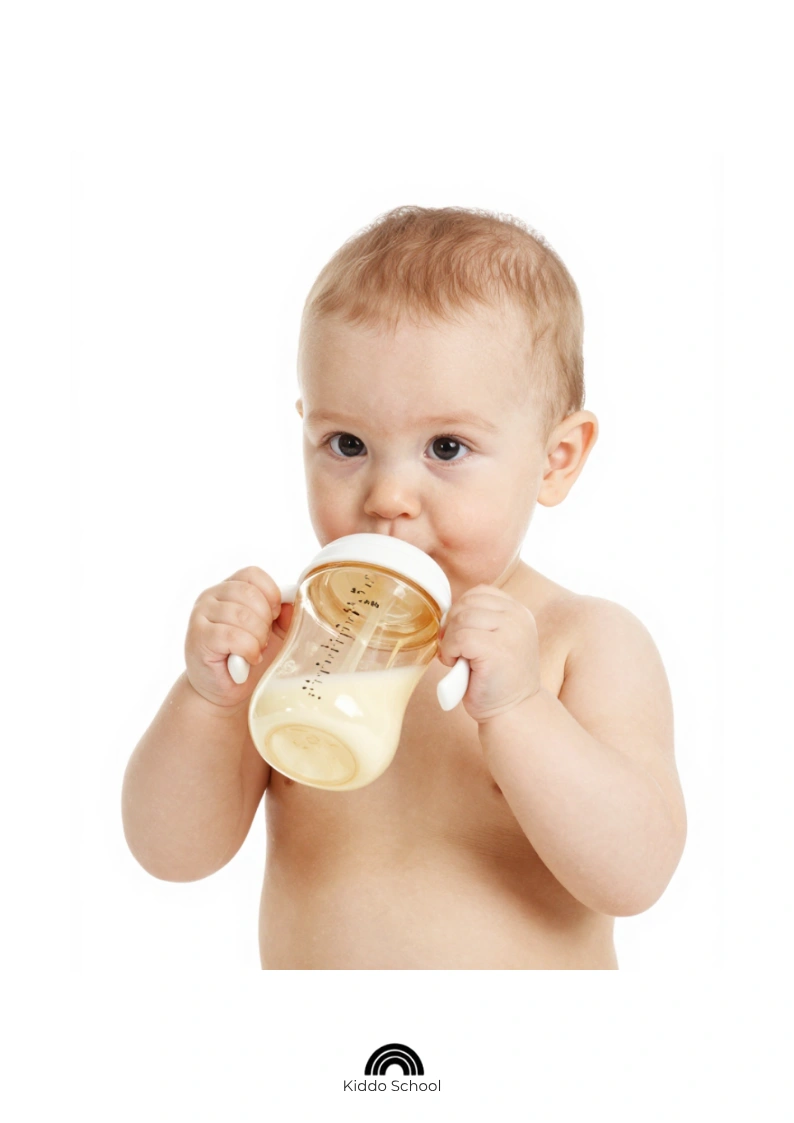
Drinking is taking liquid in — from cup, beaker or straw. The card shows a baby at a cup, mid-sip; your baby is learning the two-handed hold, the tip, and the inevitable soak. The word arrives exactly when the skill does.
What does it mean?
Drinking is one of the first actions your baby both performs and controls: nobody can drink for them. Naming it hands over a word for something they own, and pairs it with eating as the start of a verb collection for daily life.
What does the child need to know?
Name it at the sip: "Drinking. Sip, sip." Then name your own — "Mummy is drinking too" — the same word for a bigger cup. The two-version naming teaches that one word covers many drinkers, which is how vocabulary scales.
Why this matters
Cup drinking at 9–12 months is a real developmental project: hand-to-mouth coordination, tipping, swallowing control. A word for the project marks progress and lets your baby recognise the routine in language before they can request it.
What it teaches
Two-handed grip and tip control, hand-to-mouth coordination, routine vocabulary, and the pairing of thing (cup) with action (drinking) that later grammar stands on.
Words to learn
drinksipcupgulpthirstyahh
Say this to your child
“"Drinking! Sip, sip, sip goes the baby. Up comes the cup, down goes the drink. I am drinking too — ahh! Two hands on the cup, just like a big one. All gone! Drinking is thirsty work."”
Step by step
- Show the card at a calm drink moment — after the first sip, while hands are briefly free: "Drinking! The baby is drinking."
- Hold the card next to your baby’s real cup: same word, two pictures. "Cup. Drinking."
- At the next sip, say it quietly mid-drink: "Drinking. Sip, sip." No fanfare; the routine is doing the teaching.
- Take a loud, obvious sip of your own drink and narrate it: "I am drinking too. Ahh." Exaggeration is welcome here.
- Finish with the empty cup: "All gone!" — the end of drinking is its own scene, and naming it teaches sequence.
Look closer at the picture
The artwork shows a baby mid-drink, cup held steady and plainly drawn. Name the action and the cup, then compare with the live version on the tray — the card is the portrait, your baby the performance.
Ask your child
Watch the cup-handling across the week: is the two-handed hold steadier today than on Monday, does the tip arrive earlier? Wonder aloud: "I wonder how long until you drink without wearing any."
What your child can say or do
Both hands wrapping the cup and lifting it alone, a tip that finally works, sips offered and then refused with a turned head — refusing is communicating too — or a satisfied "ahh" after a long gulp: every one is the drinking card, lived.
Out in the real world
Drinks mark the day: morning milk, water after the park, the beaker at lunch. Each one is a replay — one soft word at one real sip keeps the card running between lessons.
Try it together
Cheers! Tap your cup gently against your baby’s, then both drink. The toast makes drinking a two-person game, and the clink is an accident of joy this age finds hilarious.
Understanding check
Parent self-check: did you name both the baby’s drink and your own with the same word, and did the naming stay under three mentions? Restraint keeps routines restful and words welcome.
Parent tips
Spills are tuition fees, not failures — name the drinking, wipe the water, move on. If your baby prefers to dunk the card rather than study it, retrieve and dry; this card was always going to meet the cup eventually.
Staying safe
Stay within arm’s reach for every drink at this age; tipping cups and lying backs disagree. Keep sips upright and skip drinks in the cot altogether — upright drinking is the safe kind. Choose cups small hands can actually grip.
This lesson pairs with the Drinking flashcard in the library — print it, show it, keep it on the fridge. Back to First Actions & Body Parts (Baby 2).