

Sleeping — a step-by-step lesson for grown-up and child
Every set needs a quiet card, and this is it: a baby asleep, a hush built in. Shown at the same point each day, it becomes less a lesson and more a cue — which is the lesson.
What is this?
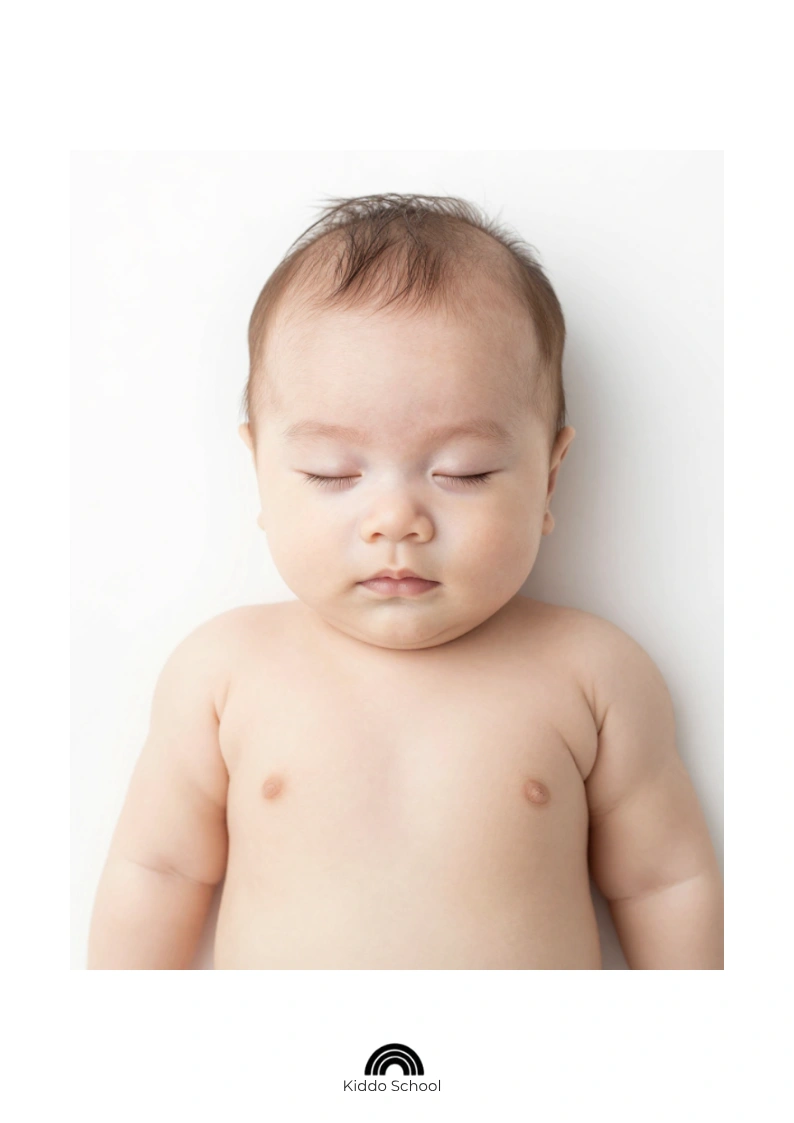
Sleeping is the resting state your baby visits several times a day and contests fiercely at bedtime. The card shows a baby fast asleep, eyes shut; the word, said softly at the right moment, becomes part of the wind-down itself.
What does it mean?
Babies learn words from the texture around them as much as from the sound: a word said in a lowered voice, at the same point of the same routine, gets a special tag — predictable, safe, sleepy. That tag is why routine words stick so well.
What does the child need to know?
The trick is the voice: show the card and drop to a near-whisper — "Shhh. The baby is sleeping." Babies read a dropped voice instantly, and many soften with it. The card is a cue for you as much as for them.
Why this matters
Understanding "sleeping" helps your baby predict what comes next, and prediction is comfort: the card before the nap becomes the signal that sleep is safe and coming. A named nap-time routine gives the day a shape your baby can trust.
What it teaches
Routine and sequence understanding, word learning through tone and context, self-settling cues, and the first ideas that actions end and begin — awake, sleeping, awake.
Words to learn
sleepingshhhsleepynight-nightrestquiet
Say this to your child
“"Shhh — sleeping. The baby on the card is sleeping. Eyes closed, all quiet. You are sleepy too, little one. Night-night, sleeping baby. We will say hello when you wake up."”
Step by step
- Show the card at the start of the wind-down, your voice already low: "Shhh. Sleeping. The baby is sleeping."
- Point at the closed eyes on the card, then close your own — the comparison teaches without another word.
- Say one sentence about the routine, quietly: "You are sleepy too. Soon it is your turn."
- Put the card away together before the nap, with a whispered "bye-bye, sleeping baby" — endings are part of the ritual.
- On waking, reopen the story brightly: "You woke up! Hello!" The contrast between sleeping and awake is the day’s real vocabulary lesson.
Look closer at the picture
The artwork shows a baby asleep — closed eyes, soft lines, the quietest picture in the set. Describe it in a whisper and let the hush do the rest; this card’s job is to lower the temperature of the room.
Ask your child
Watch the wind-down across a week: does the low voice alone start the softening before the card even appears? Wonder aloud, very quietly: "I wonder when the whisper became the signal."
What your child can say or do
A body that settles as your voice drops, eyes closing mid-look at the card, a rub of their own eyes at the word "sleepy", or — the honest version — an arch and a protest, because some days the cue simply arrives too early.
Out in the real world
Sleeping happens all around your baby: a sibling napping, a dog asleep on the rug, the pram at the park, dark rooms after lunch. Each quiet scene is a chance for one whispered "sleeping" — the softest replay in the set.
Try it together
Bedtime for teddy: tuck a bear under a cloth, whisper "shhh, sleeping", and pat it gently. Pretend sleep is the rehearsal of the real thing — and this age takes teddy care extremely seriously.
Understanding check
Parent self-check: did the card appear at the same point of the routine several days running, and did you manage the whisper? Consistency, not repetition, is what turns this card into a cue.
Parent tips
Run this card as a ritual, never as a lesson — rituals hate being rehearsed. If naps are falling apart this week, shelve the card; sleep regression and flashcards should not meet. The word keeps, and the routine comes back.
Staying safe
Cards stay out of the cot — sleep surfaces hold nothing soft, loose or papery, full stop. Wind-down happens in your lap or on the floor, and the card goes away with you before sleep begins.
This lesson pairs with the Sleeping flashcard in the library — print it, show it, keep it on the fridge. Back to First Actions & Body Parts (Baby 2).