

Eyes — a step-by-step lesson for grown-up and child
Your baby has been reading eyes since the day they were born; this card simply attaches a word to the favourite subject. The lesson is a three-stop naming tour, then quiet watching.
What is this?
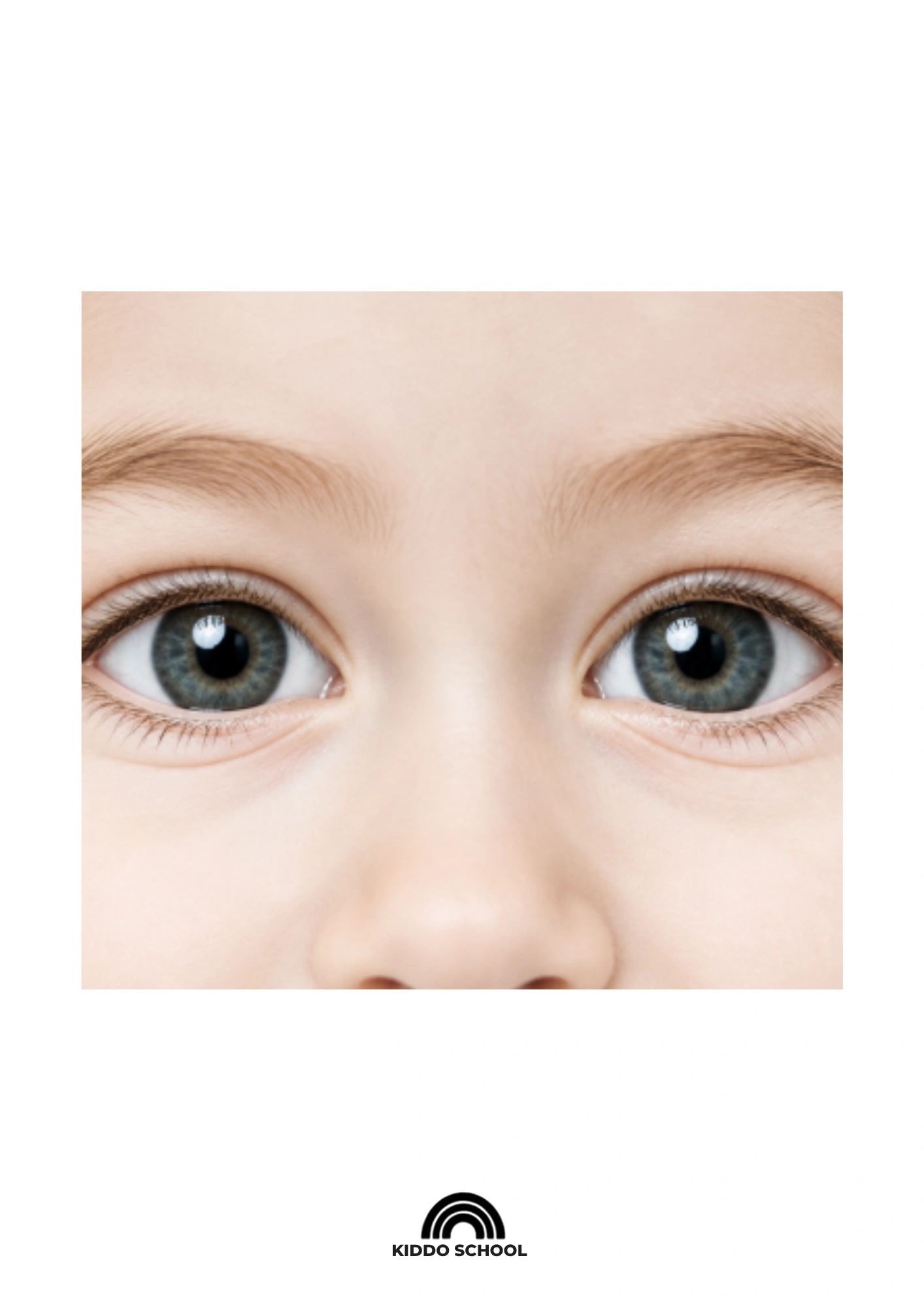
Eyes are the organs of looking — and at 9–12 months they carry a second job: reading. Your baby checks your eyes to know whether a moment is safe, funny or worth crying about. The card shows a pair of bright eyes and names them.
What does it mean?
Naming the eyes works twice. It gives your baby a body word they already love to look at, and it sharpens the social tool they use most — the glance that asks you how a moment is going, and waits for your eyes to answer.
What does the child need to know?
Use the three-stop tour: touch the card’s eyes, then your own, then your baby’s, saying the word once at each stop. Three landings in five seconds teach more than ten repetitions in one place — and the third stop is the one that counts.
Why this matters
Understanding body words is a language milestone that arrives before speaking does, and eyes are usually among the first understood — they turn up in songs, games and mirror play. The card turns a favourite game into a word.
What it teaches
Body-part vocabulary, shared attention (looking where you look), eye contact as conversation, and the visual skills this stage keeps polishing.
Words to learn
eyesblinklookpeekbrighthere
Say this to your child
“"Eyes! I see you with my eyes. Blink, blink. Here are your eyes — bright and busy. Peek-a-boo, the eyes come back. Eyes look, eyes blink, eyes say hello without a sound."”
Step by step
- Show the card and touch the pictured eyes: "Eyes. These are eyes."
- Move to your own eyes and point: "My eyes. I am looking at you." Hold the gaze a beat — your baby is reading you.
- Finish the tour on your baby: touch gently beside their eyes — "Your eyes" — and wait for a blink, a squint or a stare back.
- Play one slow blink of your own; many babies this age blink back or laugh, and either reply means the game is working.
- Close with a round of peek-a-boo, the card over your face — the eyes reappearing is the joke, and the word rides on the laugh.
Look closer at the picture
The artwork is a pair of bright eyes and nothing else — a big, clear picture of the exact thing your baby seeks out in every face. After the naming, let your baby’s eyes be the exhibit: where do they look when you look away?
Ask your child
Watch the three stops: does the gaze follow your finger from card to your face? Does the slow blink pull a reply? Wonder aloud: "I wonder how long you have known which part is which."
What your child can say or do
Eyes that track your pointing finger, a blink offered back, a stare that holds on your face instead of the card, or a crow of delight at the peek-a-boo reveal — answering with looks rather than words is exactly how this age talks.
Out in the real world
Eyes run through the whole day: yours over the cot rail, a sibling making faces, the mirror at bath time. Each glance is a chance for the word — said once, softly, at the moment the eyes meet.
Try it together
Mirror glance: hold your baby at a mirror, point at the four eyes in the glass, then at the real ones. Doubles and originals — your baby will not sort them out for months, but the staring contest it starts is glorious.
Understanding check
Parent self-check: did you complete all three stops of the naming tour, and did your baby answer at least one look with a look? The exchange — not the pointing — is the true lesson of this card.
Parent tips
Do not chase the word with repetition; three landings, then quiet. If your baby is more interested in grabbing the card than studying it, let the grab happen on your terms and keep naming. Interest in eyes never needs manufacturing at this age — only naming.
Staying safe
Keep tour fingers on brows and cheeks, away from the eyes themselves. Hold the card firmly during blink games — a snatched edge can flick — and hand it back to your own hand after each round.
This lesson pairs with the Eyes flashcard in the library — print it, show it, keep it on the fridge. Back to First Actions & Body Parts (Baby 2).