

Foot — a step-by-step lesson for grown-up and child
The foot card brings the word down to floor level, where your baby actually lives. This lesson names feet where they work — kicking, stamping, standing — and lets a toe-count be the encore.
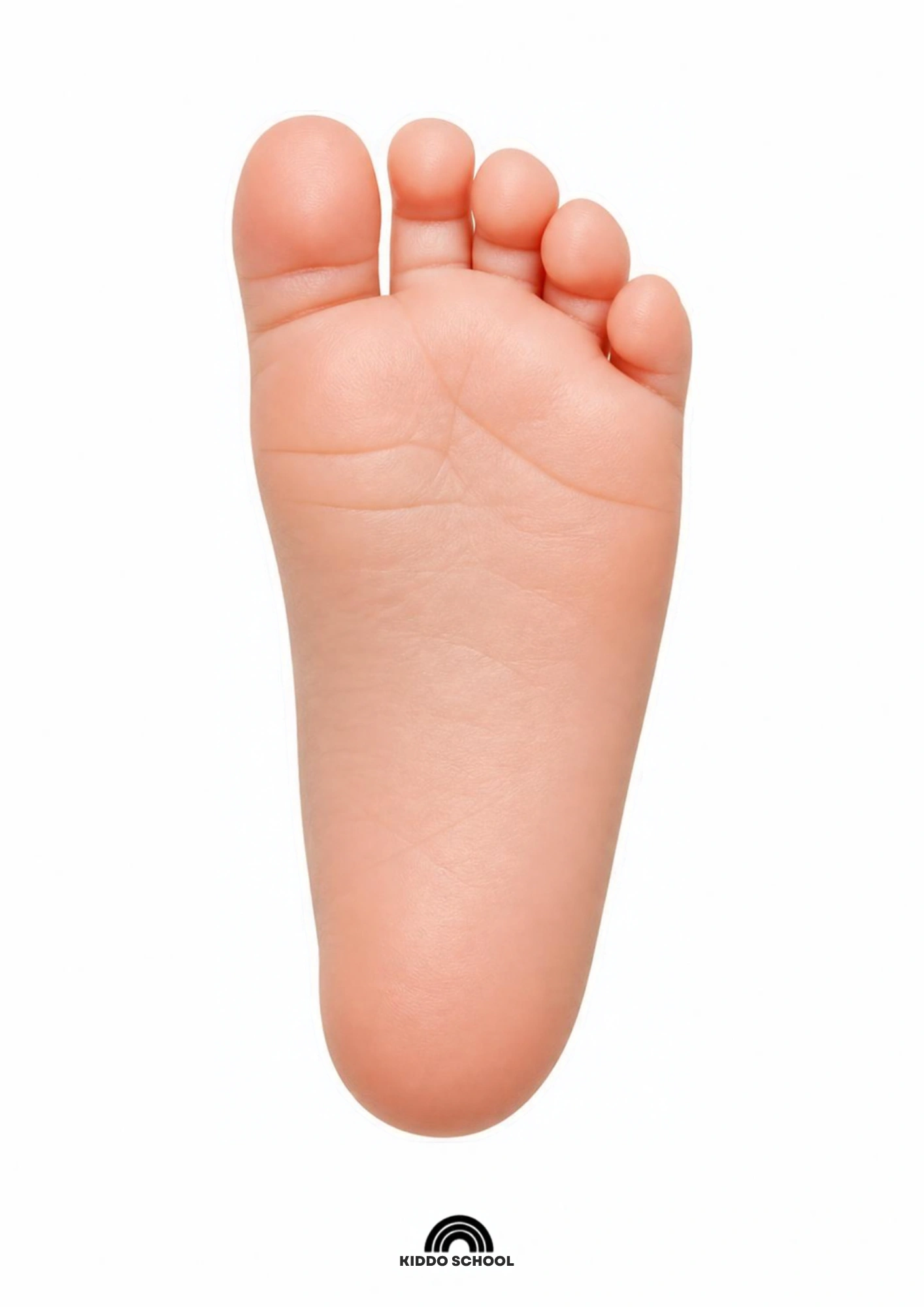
What is this?
A foot is the body part your baby stands, kicks and cruises on, ten toes included. The card shows a friendly bare foot so the word has a clear picture, and your baby supplies the wriggling originals.
What does it mean?
At 9–12 months many babies pull to stand, cruise the furniture and discover that feet are transport. Naming the foot while it kicks or stamps ties the word to the strongest body sensation your baby has — which is exactly why it sticks.
What does the child need to know?
Feet come with built-in games: toes to count, soles to tickle, socks to battle off. Borrow the moments that already happen — the nappy change, the bath, the sock fight — and the word collects dozens of honest rehearsals a day.
Why this matters
Body words learned on the body become the base of self-awareness: your baby is mapping "me" part by part. The foot also carries early independence — standing, cruising, the first steps — so its name rides along with every milestone.
What it teaches
Body mapping, standing and cruising strength, toe awareness, and vocabulary understanding — words known long before they are said.
Words to learn
foottoesticklekickstampbare
Say this to your child
“"Foot! One little foot. Toes — one, two, three, four, five. Kick, kick, goes the foot. Tickle, tickle, little toes. Where does the foot go? The foot goes everywhere."”
Step by step
- Catch a barefoot moment — after the sock battle or before the bath — and bring the card down to floor level: "Foot. This is a foot."
- Touch the card’s foot, then hold your baby’s foot gently: "Foot. Your foot." The word lands where the part lives.
- Count the toes out loud with a slow touch each: "One, two, three, four, five toes." You are not teaching numbers; you are making the foot interesting.
- Let your baby kick or stamp the card where it lies, and name it as the foot lands: "Foot! Kick."
- Finish with one quick toe wiggle-tickle and a last "foot" — ending on a laugh is how this word earns its keep.
Look closer at the picture
The artwork shows a friendly bare foot, drawn simply with nothing else on the card. Name heel and toes as far as the picture plainly offers, then watch the better artwork: the kicking, grabbing feet on your lap.
Ask your child
Watch the feet while you name: a kick at the card, toes curling at the touch, a grab for the opposite foot? Wonder aloud: "I wonder whether that kick was a yes."
What your child can say or do
A double kick that thumps the card, toes seized proudly in one fist, a foot hoisted up to hand for inspection, or the first wobbly pull-to-stand on your knees — all foot-card answers, and the standing one is a milestone in costume.
Out in the real world
Feet work all day: kicking in the bath, stamping on the kitchen floor, escaping their socks at every change. Each bare foot is a replay — one word, "foot", and the card lives again.
Try it together
This little piggy, once through, then stop. The slow build and the sudden wiggle at the end is a full comedy show at this age — and it keeps toes interesting long enough for the word foot to ride along.
Understanding check
Parent self-check: did the word land during a real foot moment rather than a drill, and did your baby laugh or kick at least once? Two yeses and the foot card has done its work for the day.
Parent tips
The sock fight is not an obstacle — it is the lesson. Naming feet while socks come off beats any table-top session. If your baby spends the week pulling socks off, fine: the foot is the star and the socks are the curtain.
Staying safe
Feet on a paper card are fine; the card under standing feet is not — it slides. Keep sessions seated or lying, and keep the card out of the cot, where a busy foot will find it at 3 a.m. for entirely different purposes.
This lesson pairs with the Foot flashcard in the library — print it, show it, keep it on the fridge. Back to First Actions & Body Parts (Baby 2).