
Van — a step-by-step lesson for grown-up and child
This lesson delivers: your child switches on a throat-buzz with teeth resting on their lip, loads a laundry basket with parcels and drives the whole house one vvv at a time.
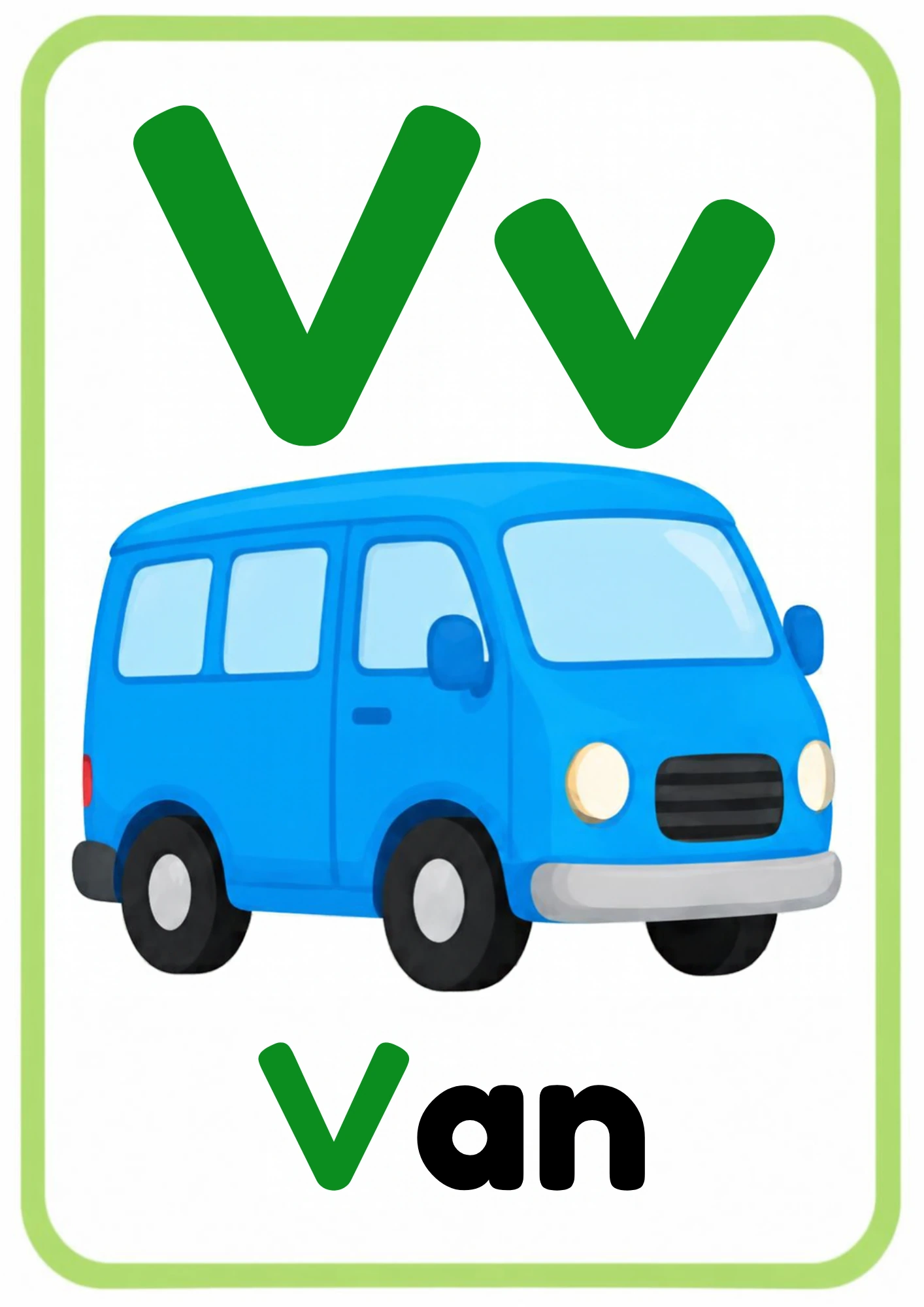
What is this?
V is the twenty-second letter of the alphabet. Big V and little v make the v sound — vvv, made by setting your top teeth against your bottom lip and letting the voice hum. Hold your throat: the engine is running.
What does it mean?
V is F’s twin with the motor switched on: same lips, one purrs and one whispers. Children feel that difference in their throat long before they can explain it, which is the perfect order to learn it in.
What does the child need to know?
The letter is called V; the sound is vvv — teeth on lip, voice buzzing, no puff. Hold it as long as breath allows; the van never stops idling. F is the quiet twin, one throat-check away.
Why this matters
Vans arrive at real doors most weeks, so the word renews itself in the wild. And a sound with a built-in engine invites a whole driving game — buzzing is the fuel and the phonics at once.
What it teaches
Voiced friction sound production, throat-feeling for voice-on versus voice-off, letter recognition in two cases, basket-lugging and route-planning pretend play, and polite door-knocking turn-taking.
Words to learn
Vvanvvvbuzzteethparcels
Say this to your child
“"This is the letter V — hello, V! V says vvv — teeth on your lip, and switch your voice on: vvv. Feel your throat buzzing? That is the engine! Now load the van — vvv, vvv, van! — and drive it to the door. Beep beep! Parcel for the teddy, please."”
Step by step
- Show the card and listen: this is the letter V, and this is a van — hear that engine? It is already saying the sound.
- Make the buzz: top teeth rest on your bottom lip and the voice hums — vvv. Hold your throat and feel it running. Try a long vvv, then vvv-van.
- Trace big V — two lines sliding down to meet at a point — and little v: the same shape, smaller. Both look like a bird’s beak.
- Load the van: parcels into a laundry basket, then drive the route — vvv, vvv, van! — around the house with beeps at the corners.
- End with a v-hunt: deliver three parcels to three rooms, one vvv per doorstep, and knock politely — vvv is also for visitor.
Look closer at the picture
Find the big uppercase V and the little lowercase v on the card, then the van and the word Van. Ask what shape the letters make — two lines sliding down to meet in one sharp point, like a beak.
Ask your child
"What is this letter called?" "What sound does V make?" "Can you feel the engine in your throat?" "Where shall we deliver the next parcel?" — answered with a name, a buzzing vvv, a hand on the throat and a route plan.
What your child can say or do
"Vvv! Vvv-van!" Expect engine sounds on every delivery day, v-sounds offered to vegetables and violins, and baskets driven through the house at respectable speeds. Parcels may be wrapped in everything. The buzz has been switched on.
Out in the real world
V vrooms through the week: vans at the door, vegetables at dinner, visits to grandma. Every buzzing vvv is the card idling — and every real van spotted at the lights is the lesson driving past, beep beeping.
Try it together
Parcel run: wrap two or three toys in tea towels, load the basket-van and deliver each one with a long vvv, a beep beep and a polite knock. Swap driver and customer; the customer answers the door saying vvv.
Understanding check
Ask what V says: a buzzing vvv with teeth resting on the lip means the sound landed with its engine running. A little v traced in the air — two lines to a point — completes the delivery round.
Parent tips
V and f are the same mouth shape, so compare them at the throat once — the purr is V, the whisper is F — then let the driving game do the rest. Buzz length is free practice: long vvv, short vvv, vvv-van.
Staying safe
Driving games keep baskets on the floor and routes free of stairs and cables. Beeping stays at indoor volume, parcels contain nothing breakable or small enough to swallow, and parking happens before teatime.
This lesson pairs with the Van flashcard in the library — print it, show it, keep it on the fridge. Back to Alphabet A–Z (Preschool).