
Pig — a step-by-step lesson for grown-up and child
This lesson follows the nose. Oink is the only animal sound in the set that comes out upside down — squeezed up through the snout instead of out of the mouth — and your child is about to discover that their own nose can talk.
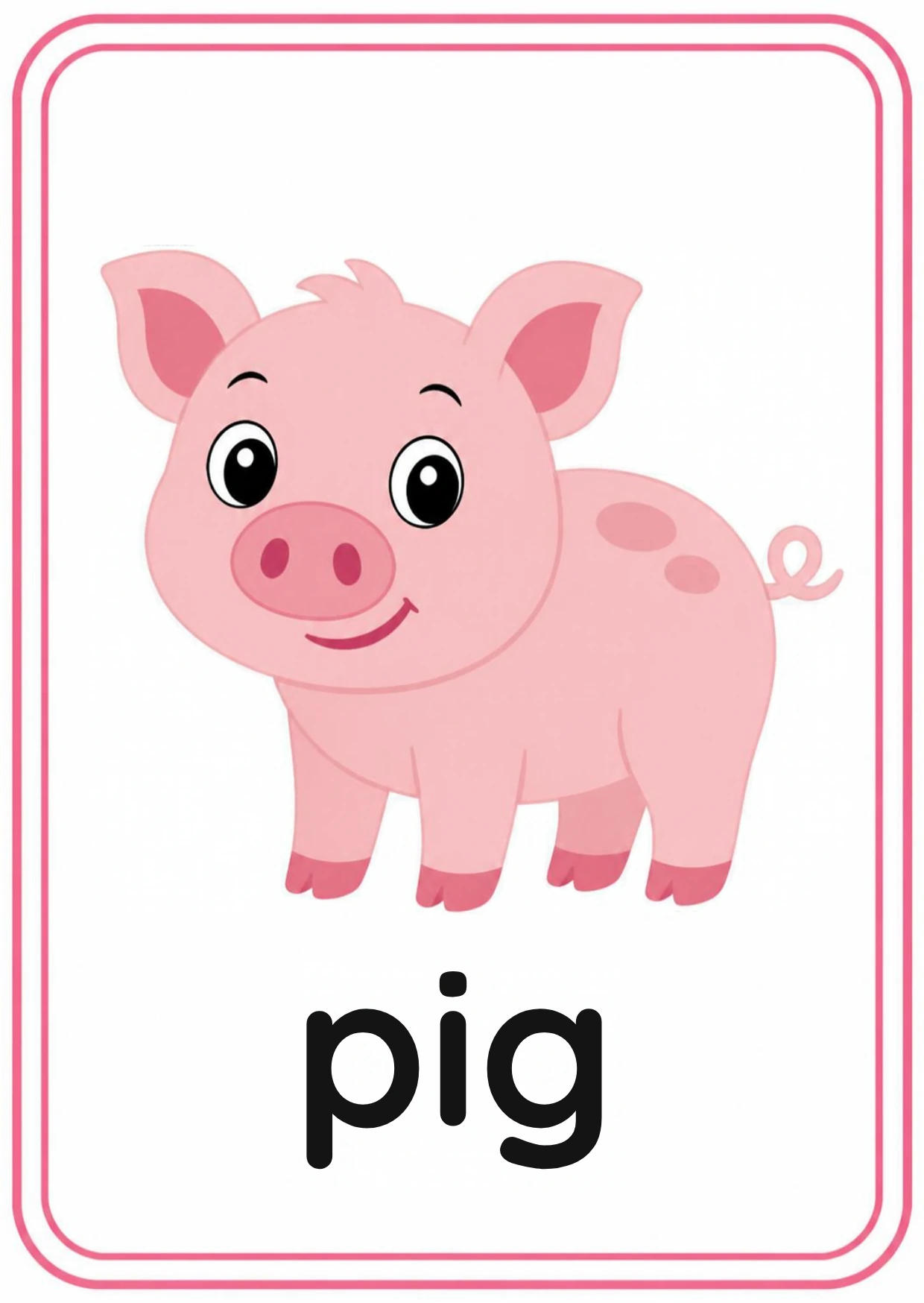
What is this?
A pig is a round, clever farm animal with a snout made for sniffing. It snuffles the ground for food, chats to its pig friends, and makes a grunt-snort that people copied as oink — the silliest honest word in the whole set.
What does it mean?
Oink is our copy of a pig’s grunt: a sniffy, snorty noise made with the nose, not the mouth. Try it and you feel the difference — the sound sneaks up from nowhere and comes out in a burst. Pigs talk like this while they work, and their work is smelling: the snout is the tool that finds dinner underground.
What does the child need to know?
Your child needs to know: the pig’s sound is written oink in English, the snout is how pigs root out their food — a super-powered nose — and pigs are among the cleverest animals on the farm. The mud they love is not mess: it keeps them cool on hot days, like a bath that never dries.
Why this matters
Oink is a nose-sound, and nose-sounds are rare in speech practice — making one is a genuinely new motor trick. The snout story also flips a common insult: pigs are clean, smart and chatty, and a child who learns that early has picked up a little fairness along with the noise.
What it teaches
Oral-nasal control (sounds made with the nose — genuinely novel for speech), scent games and attention, animal fact-checking against old stories, and the giggle reflex that makes new sounds worth repeating.
Words to learn
pigoinksnoutsnufflegruntmud
Say this to your child
“"The pig says oink! Oink, oink — straight from the nose, not the mouth! Feel that? Pigs snuffle the ground with their snouts to find food, talking the whole time. And here is a secret: pigs are clean and clever — the mud is just their way of keeping cool. Sniff, sniff, OINK!"”
Step by step
- Show the card and ask what the pink animal says. Then demonstrate the nose-sound: a sniff-sniff and a snort — oink!
- Say the pair — the pig says oink — and let your child hunt for where the sound comes from: mouth or nose? (Nose. It surprises everyone.)
- Look at the picture: a smiling pink pig. Point to the snout — that big nose is the pig’s toolbox for finding food.
- Tell the honest mud story: pigs wallow to keep cool because they cannot sweat. The mud is their air-conditioning, not their mess.
- Play the snuffle game: hide a toy under a blanket and let your child snuffle for it, oinking on the approach like a pig on a mission.
Look closer at the picture
Look at the picture together: what color is the pig? Where is it smiling? What word sits with the pig? Can you find the big nose — the snout — in the picture?
Ask your child
"What does the pig say?" "Which part of the pig finds its food?" "Where does the oink come from — your mouth or your nose?" "Why do pigs like mud?"
What your child can say or do
Your child may snort-laugh through dinner, sniff out hidden objects with theatrical snuffling, or defend pigs hotly when a storybook calls them dirty — clean, clever and cool, thank you very much.
Out in the real world
Pigs appear at farms, in storybooks and as piggy banks on the dresser. The snout fact shows up anywhere food is found by smell — truffle pigs, airport detector dogs doing the same job — and your child now knows the whole snout trade.
Try it together
Snuffle treasure hunt: hide three small toys around one room, then let your child pig-walk to find them — sniffing the air, oinking on approach, snorting on discovery. Swap roles and be the pig yourself; getting out-snuffled by a three-year-old is the best part of the game.
Understanding check
Ask: "What does the pig say? Where does the sound come from? What does the snout find?" The nose-made oink, the answer and one proud snort — that is the lesson landed.
Parent tips
If the oink will not come at first, have your child hum with their nose pinched, then release — the nose-sound arrives in one surprise. Keep the mud facts ready for storybook moments: correcting a pig slander is a language lesson as much as an animal one.
This lesson pairs with the Pig flashcard in the library — print it, show it, keep it on the fridge. Back to Animals & Their Sounds.