
Lion — a step-by-step lesson for grown-up and child
This lesson opens the gate to the wild side. The roar is the biggest sound your child will copy all year — and the card’s friendly lion with the shaggy mane is the perfect king for it, roaring bravely from the safety of the rug.
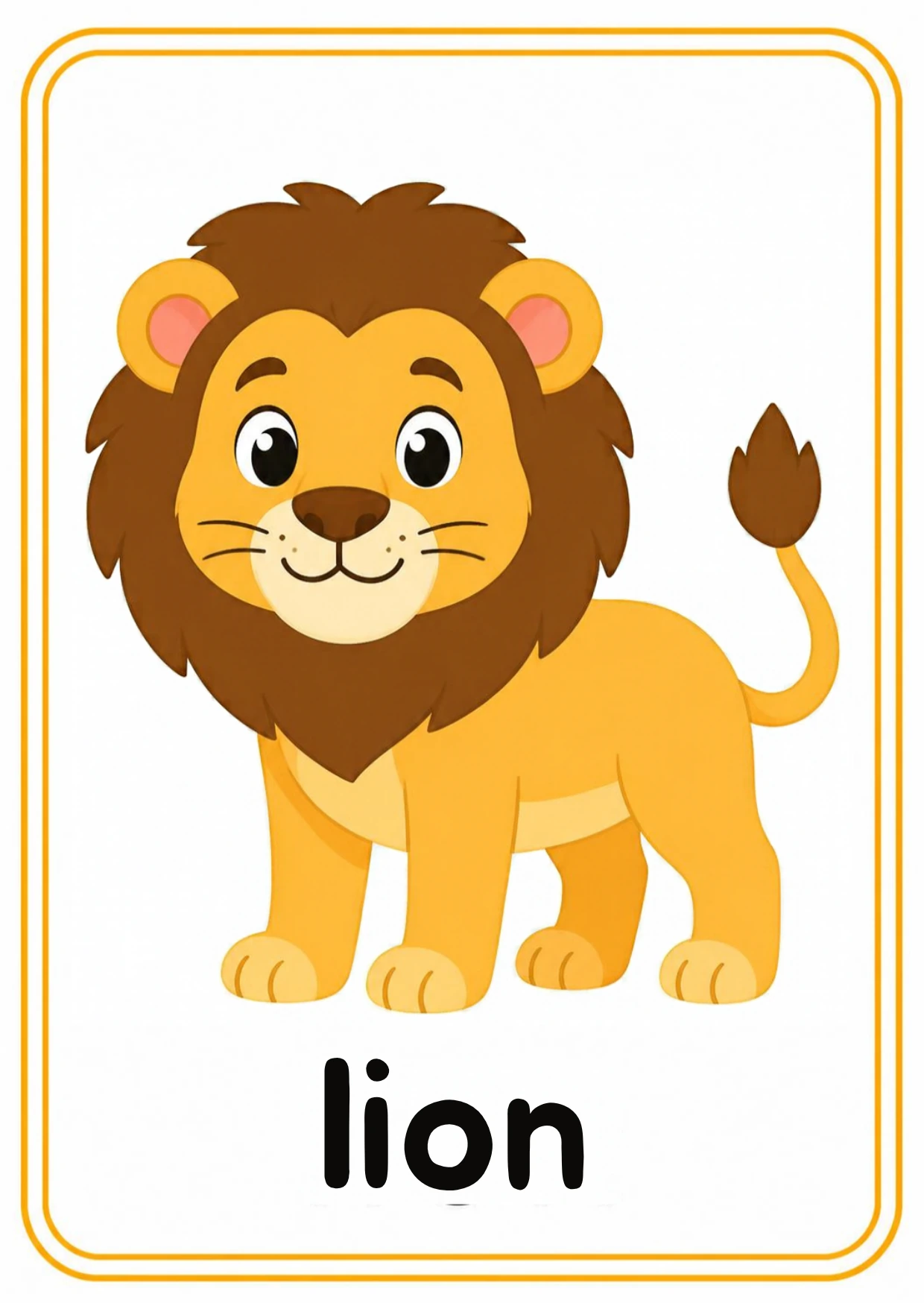
What is this?
A lion is a huge wild cat with a shaggy mane around its face — the king of its grassland. Its voice is the biggest call in the set: a roar that thunders across the plains, copied by people as ROOOAR.
What does it mean?
Roar is our copy of the lion’s thunder. A real roar is so loud it rolls across whole valleys — the lion’s way of announcing here I am to every ear in reach. Your child’s roar carries across the living room, which is exactly the right size for a three-year-old lion.
What does the child need to know?
Your child needs to know: the lion’s sound is written roar in English, lions are wild animals — admired from far away, never kept as pets — the shaggy collar of hair is called a mane, and a roar means the same thing every time: here I am.
Why this matters
The roar gives big feelings a safe outlet, and the whisper-roar that follows teaches the other half: volume control. Loud and soft in one game is emotional regulation in costume — the roar lets the feeling out, the whisper puts it away, on purpose, with a grin.
What it teaches
Breath power and sustained voicing, volume control (full roar to cub whisper), dramatic play with roles, wild-animal awareness — lions live in savannas, not houses — and the confidence of the loudest sound in the collection.
Words to learn
lionroarmanewildloudwhisper
Say this to your child
“"The lion says ROOOAR! Start small, grow big, let it thunder! A roar is the lion’s way of saying here I am — hear me! And the shaggy hair around his face is his mane, the king’s crown. Now show me your cub roar — so small only I can hear it. Perfect. Back to full roar!"”
Step by step
- Show the card and let your child meet the king: who is this, with the big shaggy hair? Then ask the question the whole card exists for: what does he say?
- Roar together — paws up, big breath, ROOOAR — starting soft and ending loud, the way a real roar builds.
- Look at the picture: the lion in the picture, mane all shaggy around his face. Explain the mane — only boy lions wear one, like a built-in crown.
- Play the volume dial: full roar, half roar, tiny cub roar, whisper roar. Every level is a different answer to the same here-I-am.
- Set the wild fact honestly: lions live far away on grassy plains, and we roar about them from the rug. Card lions roar; real lions stay wild.
Look closer at the picture
Look at the picture together: what color is the lion? Where does the shaggy mane grow — around the face? What word sits with the lion? Does he look friendly or fierce?
Ask your child
"What does the lion say?" "What is the shaggy hair called?" "How does a cub roar — big or small?" "Where do real lions live?"
What your child can say or do
Your child may greet every morning with a full royal roar, whisper-roar during quiet time without being asked, or explain to a visitor that only daddies have manes — volume control, wild facts and family mapping in one.
Out in the real world
Lions live at zoos and in storybooks, on flags and football badges. The wild fact travels with every sighting: we watch, we admire, we roar about it at home — and the roar means the same thing on the rug as it does on the plains.
Try it together
The volume dial: draw a big dial from 1 to 5 on paper. Your child roars at whatever number you point to — 1 is a sleeping-cub whisper, 5 is king-of-the-grassland. Add the reverse climb for challenge. It is the clearest volume-control game there is, and lions make it worth playing.
Understanding check
Ask: "What does the lion say? What is his crown of hair called? Show me a whisper roar and a full roar." The mane, the range and the royal breath — that is the lesson landed.
Parent tips
End every roar session on the whisper — leaving the dial at two makes bedtime possible and quietly teaches that big voices have a small setting. If roars migrate to restaurants, the dial game compresses into one raised eyebrow: level one, cub.
Staying safe
Lions are wild animals: they live in zoos and on plains, watched from outside the enclosure, never approached or called to. Our roars stay friendly and our ears stay happy — a roar at full volume straight into someone’s face is a level five nobody asked for.
This lesson pairs with the Lion flashcard in the library — print it, show it, keep it on the fridge. Back to Animals & Their Sounds.