
Brown — a step-by-step lesson for grown-up and child
Brown is the homeliest color in the set and the one that comes with cuddles attached: teddies, dogs, chocolate, bread crusts, the garden shed. The lesson starts at the splash, moves to the smiling teddy on the picture card, then sends your child off to introduce their own brownest friend formally.
What is this?
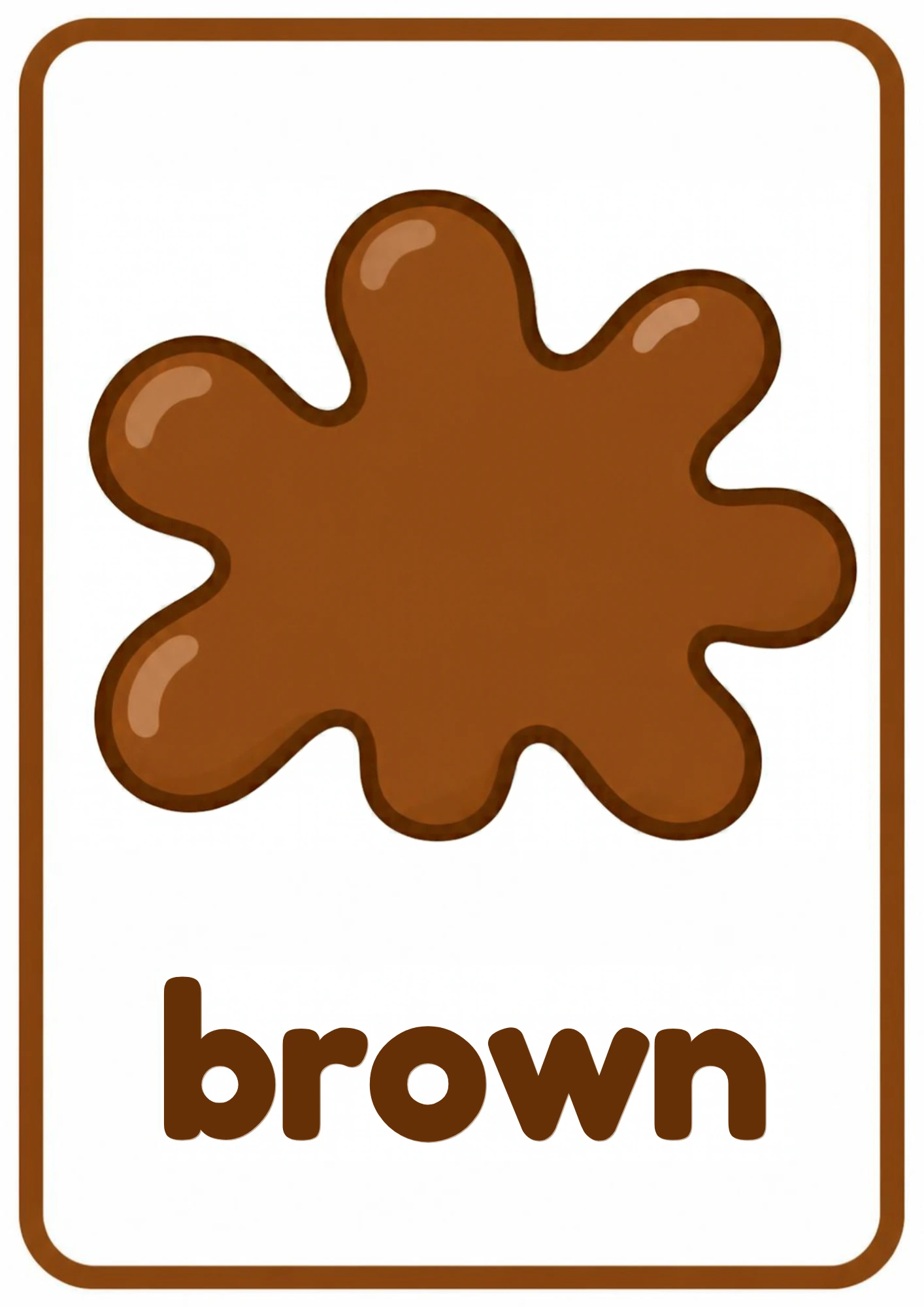
Brown is the name for the earthy color of tree trunks, soil, teddy bears, dogs and chocolate. The splash card shows brown by itself; the picture card shows a smiling brown teddy bear. And when many paints meet in one pot, brown is what they become — a fact worth announcing the day the paint all swirls together.
What does it mean?
Brown is comfort’s color: the toys children sleep with, the animals they trust, the snacks they beg for. Learning the word attaches language to already-loved things, which is the easiest kind of vocabulary there is — the feeling arrives first, and the word just moves in.
What does the child need to know?
Your child needs the word at the splash, one bear-shaped twin, and a completed introduction to their own brownest toy or pet. Save the mixing fact too: many colors stirred together make brown, so the day all the paints merge is chemistry, not a disaster — a reframe that has rescued many craft afternoons.
Why this matters
Emotionally warm words are learned faster and kept longer: brown rides on love of teddies and chocolate, so its repetitions are welcome ones. A child who names their own bear “brown bear” is doing exactly the right thing — beloved objects are the best vocabulary anchors a house contains.
What it teaches
Emotionally anchored vocabulary, tactile exploration (fur, wood, bark, soil), care-taking talk when the teddy gets introduced, and mixing knowledge that turns paint accidents into science.
Words to learn
brownteddybearhugsoftfind
Say this to your child
““Brown! The cuddle color. Look at the splash — all brown. And here is a teddy bear, smiling and brown and soft. Have you got a brown friend at home? Go and get them — we will introduce them to the card, brown bear to brown bear!””
Step by step
- Show the splash card and say brown — then ask your child who in the house is brown, and enjoy the answers before showing any more cards.
- Turn to the picture card: a smiling brown teddy bear. Say the word at the bear, then give the card a hug — brown is a hugging color.
- Formal introduction: fetch your child’s own brown teddy, dog or wooden toy, stand it beside the card and introduce them by name and color.
- Brown snack hunt: bread crusts, a chocolate square, a biscuit — name each one brown before it is eaten.
- Close with the mixing fact: when many paint colors swirl together, brown is what they make — chemistry wearing a cuddly coat.
Look closer at the picture
Look at both cards: the splash card is one big brown splash with the word brown on it, and the picture card shows a smiling brown teddy bear with the word too. Ask your child what the bear’s face is doing, and where its brown parts stop.
Ask your child
“Is your teddy the same brown as the card?” “What brown things can we eat?” “What lives in the brown soil?” “What happens when all the paints mix together?”
What your child can say or do
Your child might introduce their teddy with a handshake, demand chocolate “because it is brown, that is its color”, or hug the card — the vocabulary has landed when the logic arrives, and this logic is adorable and correct.
Out in the real world
Brown is steady company: the dog across the street, tree trunks at the park, the garden soil, the crusts at lunch. Because brown things are usually touchable, this word collects more hands-on repetition than most — fur, bark and crusts are all fair samples.
Try it together
Bear’s picnic: lay a cloth, seat the brownest toys around it, and serve brown snacks — bread, biscuits, chocolate. Name every brown item as it is served. The color word becomes the picnic’s language, and tidy-up eats the evidence.
Understanding check
Ask: “Show me brown. Who is your brownest friend? What do many mixed paints make?” Splash answered, friend introduced and “brown” delivered — that is the color landed.
Parent tips
If your child grieves that their teddy is “only brown”, flip it: brown is the color of teddies, dogs and chocolate — objectively the best company of any color in the set. The bear’s status will recover immediately.
This lesson pairs with the Brown flashcard in the library — print it, show it, keep it on the fridge. Back to Colors & Color Mixing (Preschool).