
Pink — a step-by-step lesson for grown-up and child
Pink usually arrives early in a child’s life — on clothes, cakes, pigs in picture books — and this lesson gives the familiar color its proper name. The splash card holds the pure color, the picture card shows a five-petal pink flower, and the house supplies the rest for a game of pink spy.
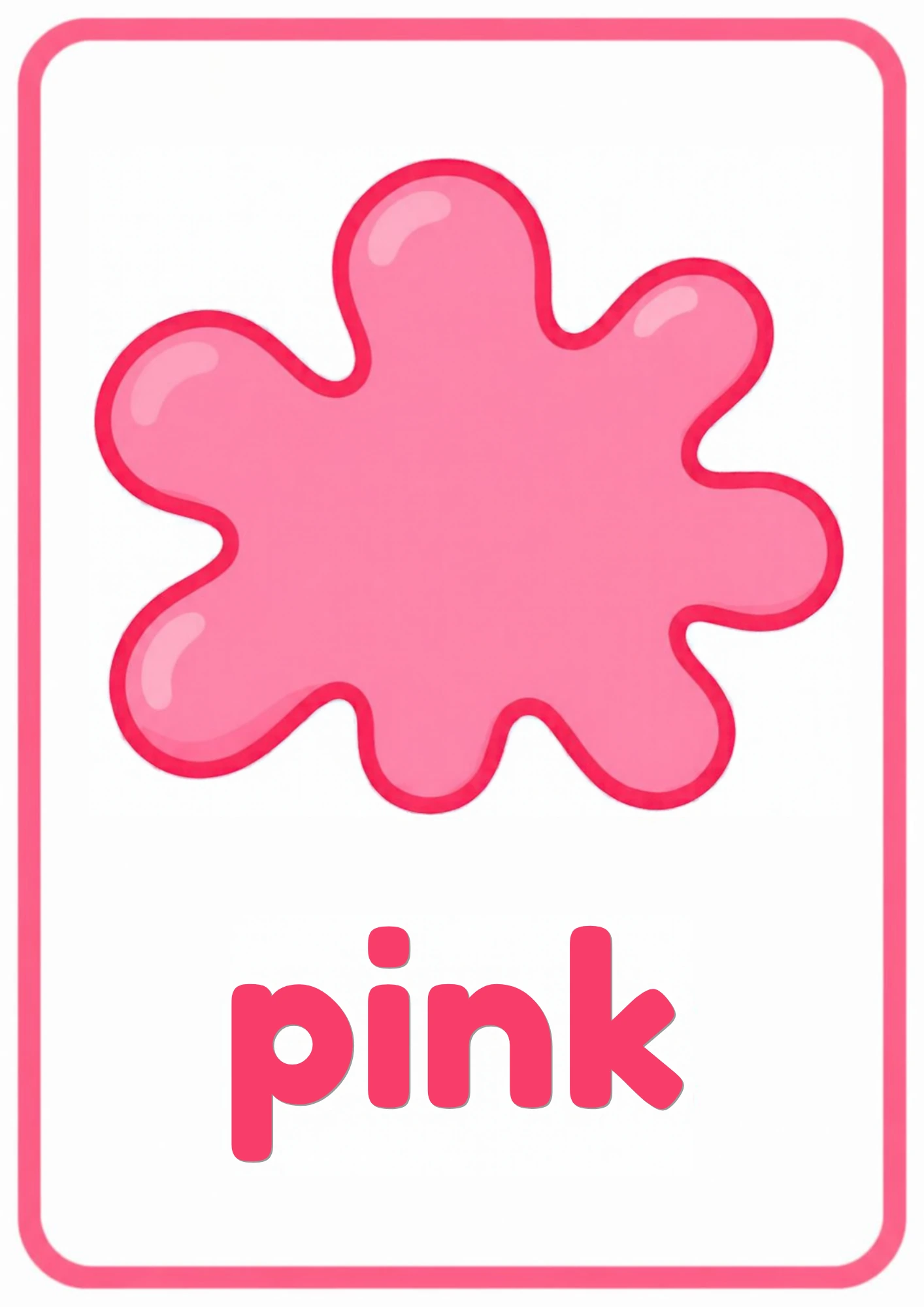
What is this?
Pink is the name for red’s pale cousin: piglets, bubblegum, ballet shoes, strawberry milk and this card’s flower. The splash card shows pink by itself; the picture card shows a five-petal pink flower wearing it. Pink is red with white mixed in — the first color-mixing fact many children ever learn.
What does it mean?
Pink teaches a quiet mixing idea: colors can be made lighter and softer, and the softened version earns its own name. A child who grasps that red-plus-white makes pink has started understanding that colors are ingredients — a thought that will run through every paint set they ever own.
What does the child need to know?
Your child needs the word at the splash, one flowery twin, and a round of pink spy with a sock, a toy and a book cover standing in as the quarry. If pink is scarce at your house, clothes drawers and book covers are the richest hunting grounds — and red paint plus a spoonful of white is the mixing experiment to schedule.
Why this matters
I-spy games ask a child to hold one property in mind — color, not shape, not size — while scanning a roomful of competing information. That selective attention is a foundation skill for listening, reading and finding lost shoes, and pink spy is its friendliest practice run.
What it teaches
Selective attention during scanning, color-mixing concepts, vocabulary softness (light, pale, soft as pink-words), turn-taking when the spy roles swap, and description skills as your child explains their finds.
Words to learn
pinkflowersoftlightspyfind
Say this to your child
““Pink! Red’s softer cousin — light and gentle, like bubblegum. Look at the splash, and look at the flower: five soft pink petals. Pink is hiding in this room right now — three somebodies. I spy something pink... can your eyes find it?””
Step by step
- Show the splash card and say pink — then next to it, if you have them, show something red and let your child see how they are cousins.
- Turn to the picture card: a five-petal pink flower. Count the petals, say the word, and blow the flower a kiss — pink invites softness.
- Set out three pink things in the room before the game: a sock, a toy, a book cover — anything pink will serve.
- Play the pink spy round: call out “I spy with my little eye... something pink!” and let your child hunt down all three, then swap seats and take the finder’s chair yourself.
- End with the mixing recipe: a big blob of red, a small dot of white, stirred pale — pink is red that caught a cloud. Book the experiment for craft time this week.
Look closer at the picture
Hold the two cards up together: the splash card is one big pink splash with the word pink on it, and the picture card shows a five-petal pink flower with its word printed beneath. Ask your child whether all five petals are the same pink, and what sits in the spaces between them.
Ask your child
“Is pink closer to red or to white?” “What pink things can you eat?” “Who in the family is wearing pink today?” “What would make red softer?”
What your child can say or do
Your child might whisper-spy their finds, arrange pink things into a soft little pile, or ask for “the pink paint” by name at craft time — a color requested by name is a color fully owned.
Out in the real world
Pink lives at child level: plasters, yoghurt pots, birthday cards, the neighbour’s roses. Naming finds keeps the word in circulation, and the mixing experiment gives it a party trick at the craft table.
Try it together
Role-swap spy: your child hides three pink things while you cover your eyes, then spies at YOU. Being the seeker is as instructive as being the hider, and the giggle at your wrong guesses is pure learning fuel.
Understanding check
Ask: “Show me pink. How many petals on the flower? What do we mix with red to make it?” The splash named, the petals counted and “white” delivered — that is the color landed.
Parent tips
Some children rescue every pink crayon from the box and defend it fiercely. Let them — favoritism is attention, and attention is the whole engine of this lesson. The other colors will get their days.
This lesson pairs with the Pink flashcard in the library — print it, show it, keep it on the fridge. Back to Colors & Color Mixing (Preschool).