
Green — a step-by-step lesson for grown-up and child
Green is the color of the outdoors doing its job: grass, leaves, bushes, the weeds in the pavement cracks. The word gets learned at the splash, planted on the big leaf of the picture card, and then taken outdoors — because green is the one color your child can literally roll around in.
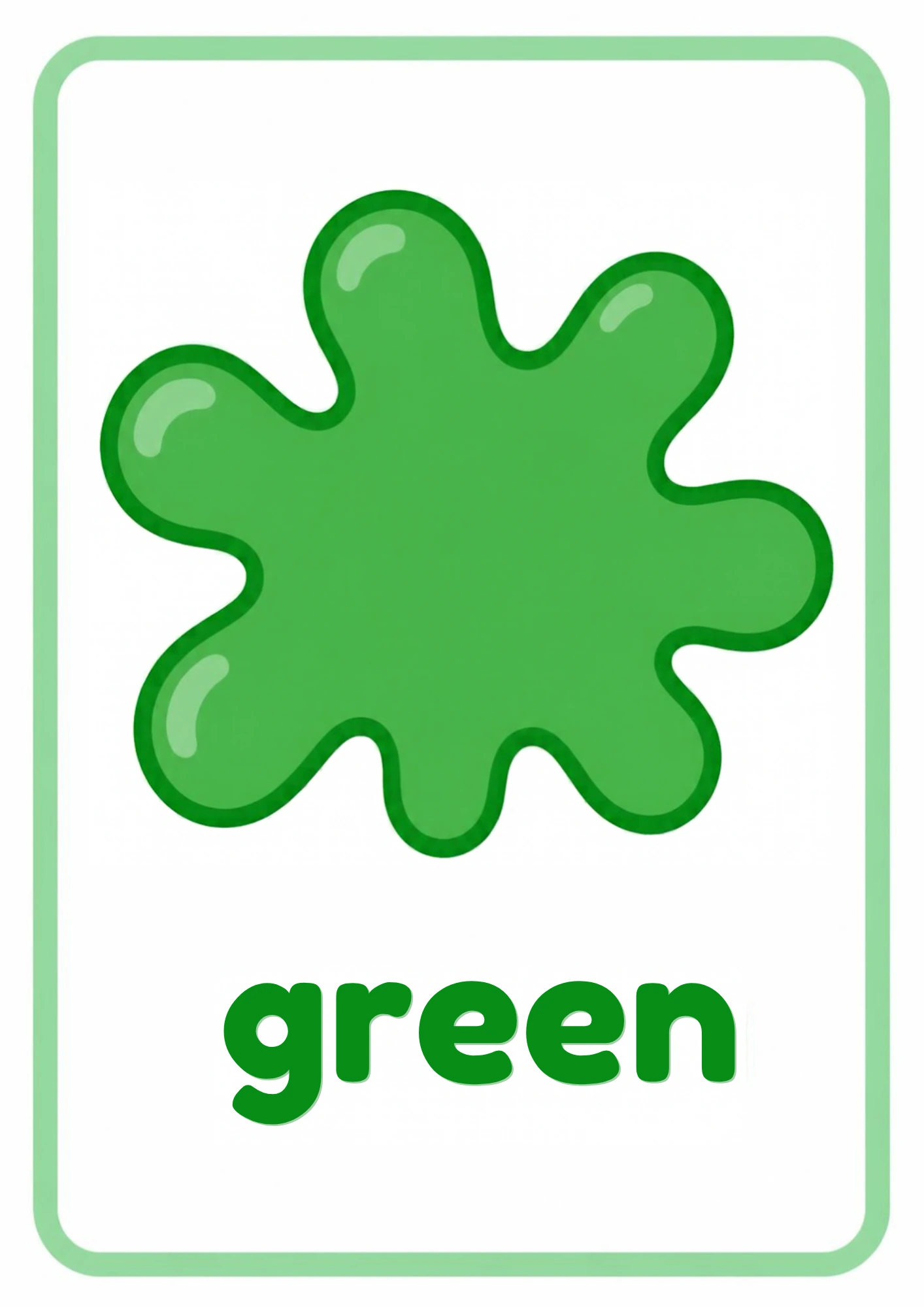
What is this?
Green is the name for the color most plants wear: grass, leaves, peas, broccoli, beans and the leaf on this card. The splash card shows green by itself; the picture card shows one big leaf wearing it. Everything that grows tends towards green, which makes this the easiest color to find in the whole world.
What does it mean?
Green quietly teaches where food and plants come from: the word keeps company with growing things. A child who links green to gardens, parks and vegetables is building a first science idea — plants are green, and green means alive and growing. That idea will feed real knowledge later, one leaf at a time.
What does the child need to know?
Your child needs the word at the splash, one real green twin held in the hand — a leaf, a sprig of grass — and a proper outdoor hunt. Dark green and light green both count as green at this age; if your child asks why the grass and the broccoli do not match, enjoy the question rather than answering it fully.
Why this matters
Green-hunting trains observation in a busy field: nature is full of greens that differ slightly, and telling leaf-green from grass-green from moss-green is fine visual discrimination — the same careful looking that later separates b from d on a page.
What it teaches
Nature observation, fine discrimination between similar shades, outdoor gross-motor play (stomping, rolling, crouching to find), and early science vocabulary: leaf, grass, grow, plant.
Words to learn
greenleafgrassgrowhuntoutside
Say this to your child
““Green! Like grass and like leaves. The whole card is green — and look, the other card has one big leaf wearing it. Everything that grows is green: grass, bushes, peas. Let us go find five green things outside — touch each one and say the word with me!””
Step by step
- Show the splash card and say green — then ask your child to guess what in the whole world is green before you show the next card.
- Reveal the picture card: one big green leaf. Lay a real leaf or a pinch of grass beside it and say the word over both.
- Indoor hunt: find three green things in the house — a towel, a toy, a broccoli floret if dinner is close.
- Outdoor hunt: five green finds, touched, named and left where they grow. Leaves, grass, bushes and weeds all count.
- Finish with a full-body green moment: march with big grass-stomping steps, or roll down a hill if one is nearby — green practice with the whole body.
Look closer at the picture
Look at the two cards: the splash card is one big green splash with the word green on it, and the picture card shows one big leaf with the word too. Ask your child what runs down the middle of the leaf, and whether the splash has one.
Ask your child
“Which is greener — the grass or the leaf card?” “Can you find a green thing taller than you?” “Does broccoli wear green too?” “What color are you wearing today — any green?”
What your child can say or do
Your child might crouch over pavement weeds like a scientist, bring you a bouquet of grass, or declare the park “all green, everywhere” — an accurate survey, enthusiastically delivered.
Out in the real world
Green dominates the outdoors: lawns, hedges, trees, the allotment, the salad at dinner. Every walk rehearses it for free — and the vegetables at dinner keep the word on the menu, where broccoli has been waiting for its moment.
Try it together
Green collect-and-sort: on the way home, gather a few fallen green leaves in a pocket, then sort them at the table by size — biggest to smallest. The color names the collection; the sorting does the quiet maths.
Understanding check
Ask: “Show me green. Where is the leaf? Find something green outside the window.” The splash named, the leaf found and one growing thing spotted — that is the color landed.
Parent tips
Brown autumn leaves confuse green-lovers. Say it plainly: leaves are green while they are growing and busy, and other colors when they rest. It is a first life-cycle lesson wearing a color question, and children accept it easily.
This lesson pairs with the Green flashcard in the library — print it, show it, keep it on the fridge. Back to Colors & Color Mixing (Preschool).