
Yellow — a step-by-step lesson for grown-up and child
Yellow is the color children meet with their whole face: it squints, it beams, it makes them announce things. This lesson teaches the word at the splash card, lands it on the smiling sun of the picture card, and then takes it outdoors, where dandelions and buttercups hand out free yellow finds at toddler height.
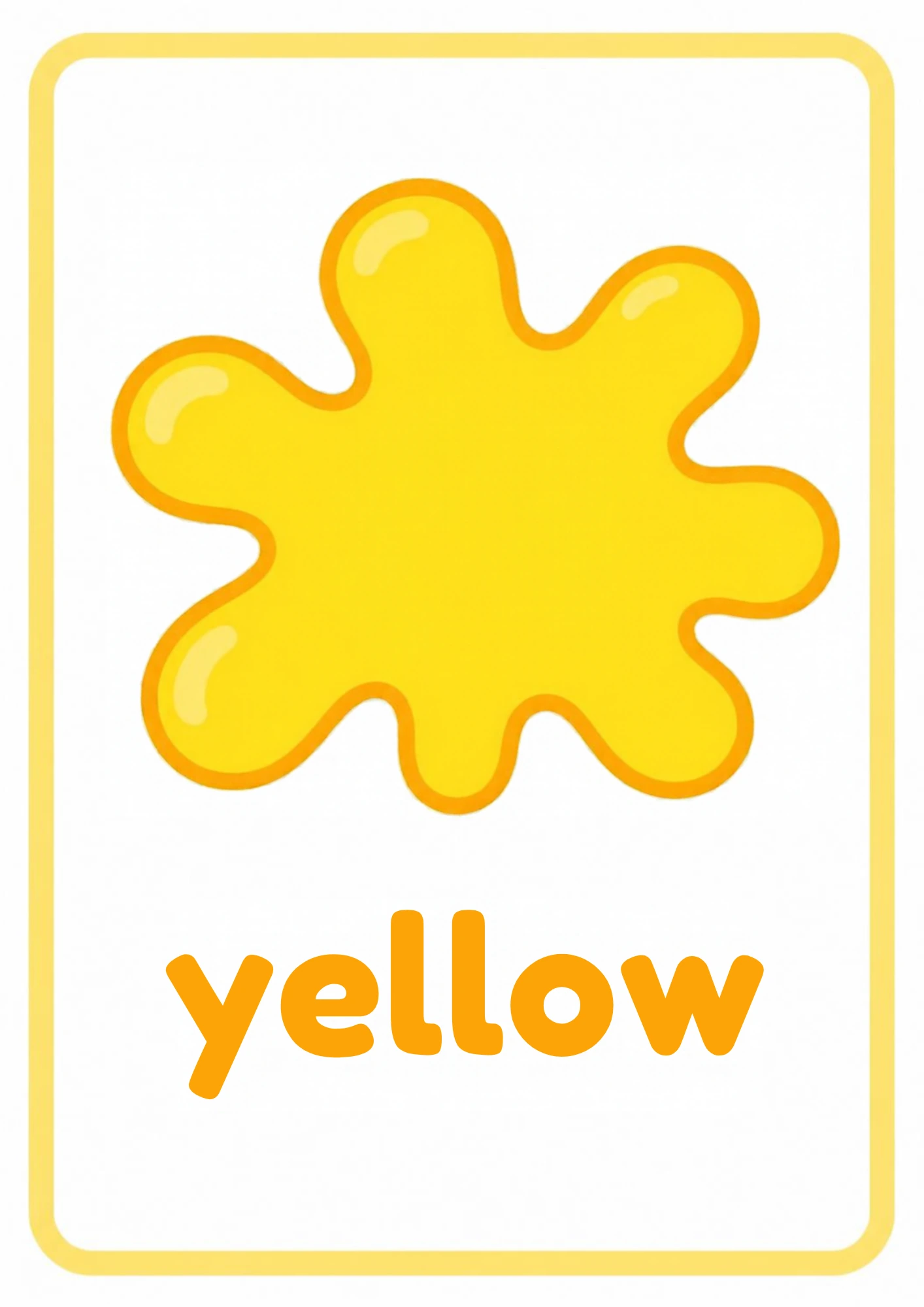
What is this?
Yellow is the name for the brightest common color: the sun, bananas, ducklings, egg yolks, school buses and this card’s smiling sun. The splash card shows yellow alone — the loudest card in the set — and the picture card shows it as the biggest yellow thing your child will ever see.
What does it mean?
Yellow arrives with weather attached: sunny days make yellow spots, grey days hide them. A child who learns yellow while watching for the sun is also learning to read the day — color words at this age are quietly weather words, mood words, morning words. The vocabulary travels with the feeling.
What does the child need to know?
Your child needs the word said boldly at the splash, one glowing twin found nearby — a banana at breakfast is perfect — and one outdoor yellow hunt, because yellow is a color that waits outdoors in plain sight: flowers, autumn leaves, the paint on playground railings. Bright finds for bright eyes.
Why this matters
Yellow is the highest-contrast color against most backgrounds, which makes it the easiest to spot from far away and the best one for building distance-vocabulary. Early spotters of far yellow things are doing the visual groundwork that reading across a page will ask for later.
What it teaches
Visual discrimination at distance, brightness awareness, word-announcement confidence (yellow gets said loudly, which is speaking practice), and the beginnings of weather-talk that grows into real conversation about the day.
Words to learn
yellowsunbrightshinefindwarm
Say this to your child
““Yellow! The brightest card we have — look how it glows! And here comes the sun, big and smiling and yellow. Can you make a sun with your arms? There it is! Yellow is in bananas and ducks and flowers. Let us find some outside — spotters ready!””
Step by step
- Hold the splash card up high and say yellow loudly — a bright color deserves a bright voice, and the drama helps the word land.
- Move to the picture card: a big smiling yellow sun. Make a sun with your arms as you say the word again.
- Breakfast twin: if there is a banana, hold it next to the sun card and name them both yellow — one yellow you eat, one you cannot.
- Walk-hunt: count dandelions, buttercups, yellow doors and passing ducks. Yellow at child height is everywhere once the hunt starts.
- Close with the arms-sun again and let your child say the word as the “sun” rises above their head.
Look closer at the picture
Study both cards: the splash card is one big yellow splash with the word yellow on it, and the picture card shows a big smiling yellow sun with the word too. Ask your child whether the sun looks happy, and whether the splash has a face at all.
Ask your child
“Which card is brighter — yellow or blue?” “Can you find something yellow you could eat?” “Is the sun out today — what color does that make the day?” “What else might wear yellow?”
What your child can say or do
Your child might beam a huge smile at the sun card, stretch both arms into a sun-shape at random moments, or shout “yellow!” at every dandelion on the pavement — a color said with that much joy has already been learned.
Out in the real world
Yellow shows up at exactly child height: dandelions, fallen leaves, the yellow line at the crossing, rubber ducks at bath. Naming them turns ordinary walks into lessons nobody scheduled — the best kind.
Try it together
Sunrise, sunset: your child crouches small while you say “night night”, then rises slowly with arms spreading as you say “yellow morning!” — repeat with growing speed. The game is pure drama, and the color word sits right at the top of every sunrise.
Understanding check
Ask: “Show me yellow. Where is the sun on the cards? Find something yellow near you.” The splash named, the sun found and one fresh yellow twin pointed out — that is the color landed.
Parent tips
If your child calls every bright thing yellow, enjoy the phase — bright equals yellow is a correct first draft. Offer the green card next to it and ask “which one is the sun’s color?” The question sorts it out without a single correction.
This lesson pairs with the Yellow flashcard in the library — print it, show it, keep it on the fridge. Back to Colors & Color Mixing (Preschool).