
Purple — a step-by-step lesson for grown-up and child
Purple is the set’s treasure: it does not loiter on every street like red or green, so when it turns up, it turns up special. The word arrives at the splash, settles on the five-petal flower of the picture card, and then turns your home into a treasure island where one genuine find is a triumph.
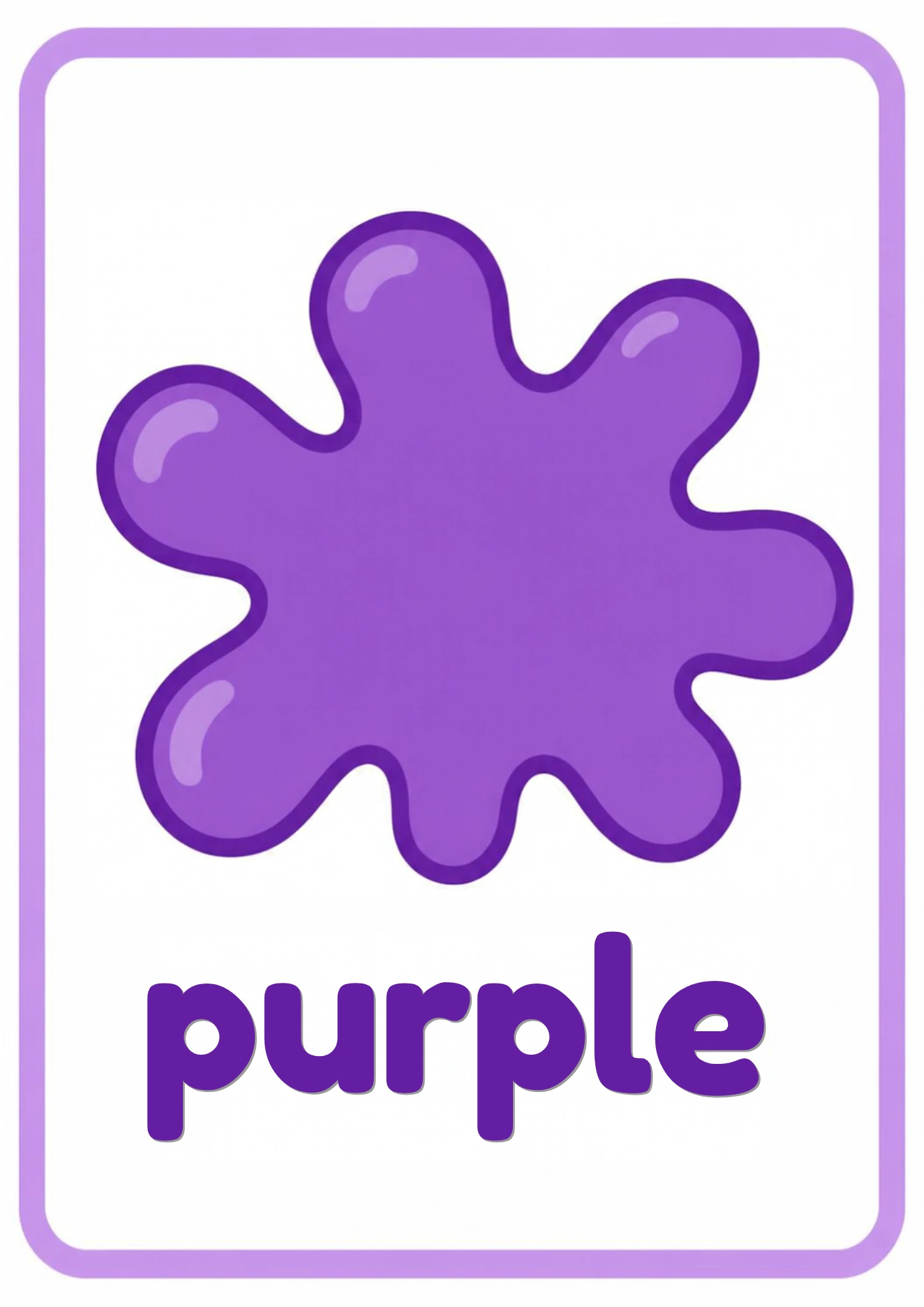
What is this?
Purple is the name for the deep color between red and blue: grapes, plums, blackberries, lavender and the flower on this card. The splash card shows the color alone; the picture card shows a flower with five purple petals and the word too. Rarity is the lesson’s engine — scarce things get hunted harder.
What does it mean?
Scarcity changes how children learn a word: purple cannot be drilled by pointing at the sofa, so the word arrives through careful searching and genuine discovery. A child who has worked to find one purple thing owns that word differently — found treasure is remembered treasure.
What does the child need to know?
Your child needs the word at the splash, one flower-shaped twin, and an honest treasure hunt — with pictures and books admitted as hunting grounds, because real purple is genuinely scarce. One true find in a day is a complete success; say so loudly. Also save this card: purple is the mixing challenge later — red and blue.
Why this matters
Rare-category learning is a different skill from common-category learning: it requires patience, sustained search and the ability to hold a target in mind while scanning. Those are attention skills wearing a color costume, and they transfer everywhere.
What it teaches
Sustained visual search, holding a mental target, book-and-picture scanning, patience with delayed finds, and the delight of rare discovery — which is motivation training as much as color training.
Words to learn
purpleflowerpetalrarefindtreasure
Say this to your child
““Purple! A fancy word for a fancy color. Pur-ple — can you say it? Look at the splash, and look at the flower with its five petals. Purple is rare — it does not come out for just anyone. Let us hunt: any purple thing today is treasure!””
Step by step
- Show the splash card and say purple slowly — it is a fancy word, and your child may need a couple of tries at pur-ple.
- Move to the picture card: a flower with five purple petals. Count the petals together, then say the color once more.
- Indoor treasure hunt: search the house for anything purple — a toy, a sock, a book cover. Keep expectations honest; purple hides.
- Open a favorite picture book and hunt purple there instead — grapes, flowers, clothing. Illustrations are a fair hunting ground.
- Celebrate whatever the day produced: one true purple find is a triumph, and saying so makes the word memorable.
Look closer at the picture
Examine both cards: the splash card is one big purple splash with the word purple on it, and the picture card shows a flower with five purple petals and the word too. Ask your child to count the petals and say whether the splash has any petals at all.
Ask your child
“Can you find something purple in this room?” “What purple things do we eat?” “Which is rarer here — red things or purple things?” “What two paints might make purple?”
What your child can say or do
Your child might whisper “purple” like a secret, present one grape as a crown jewel, or declare the hunt over after five seconds of searching — honest findings all, and the rarity is genuinely the point.
Out in the real world
Purple waits in specific places: grape bunches at the shop, plum skins, lavender bushes in summer, a neighbor’s purple door. Because it is rare, each real find gets remembered — and remembered words are the ones that stay.
Try it together
Purple ledger: keep a running family count of purple finds for a week — drawings, spots, socks, flowers — written on the fridge. A slow-growing number teaches patience with rare things, and the fridge becomes the color’s scoreboard.
Understanding check
Ask: “Show me purple. How many petals does the flower have? Did we find any purple treasure today?” The splash named, the petals counted and the day’s find reported — that is the color landed.
Parent tips
If the hunt comes up empty, plant a find: a purple bottle top on the table “discovered” later counts fully. The joy is real even when the search was helped, and the word gets its repetition either way.
This lesson pairs with the Purple flashcard in the library — print it, show it, keep it on the fridge. Back to Colors & Color Mixing (Preschool).