
Mango — a step-by-step lesson for grown-up and child
The mango is the fruit class’s dessert course: golden, soft when ready, and pronounced with the mmmmm already built in. Two rituals make the fruit unforgettable — the gentle cheek-squeeze that judges ripeness, and the treasure hunt for the big flat seed — while the biography goes up: mangoes ripen on trees in hot countries, in real sunshine.
What is this?
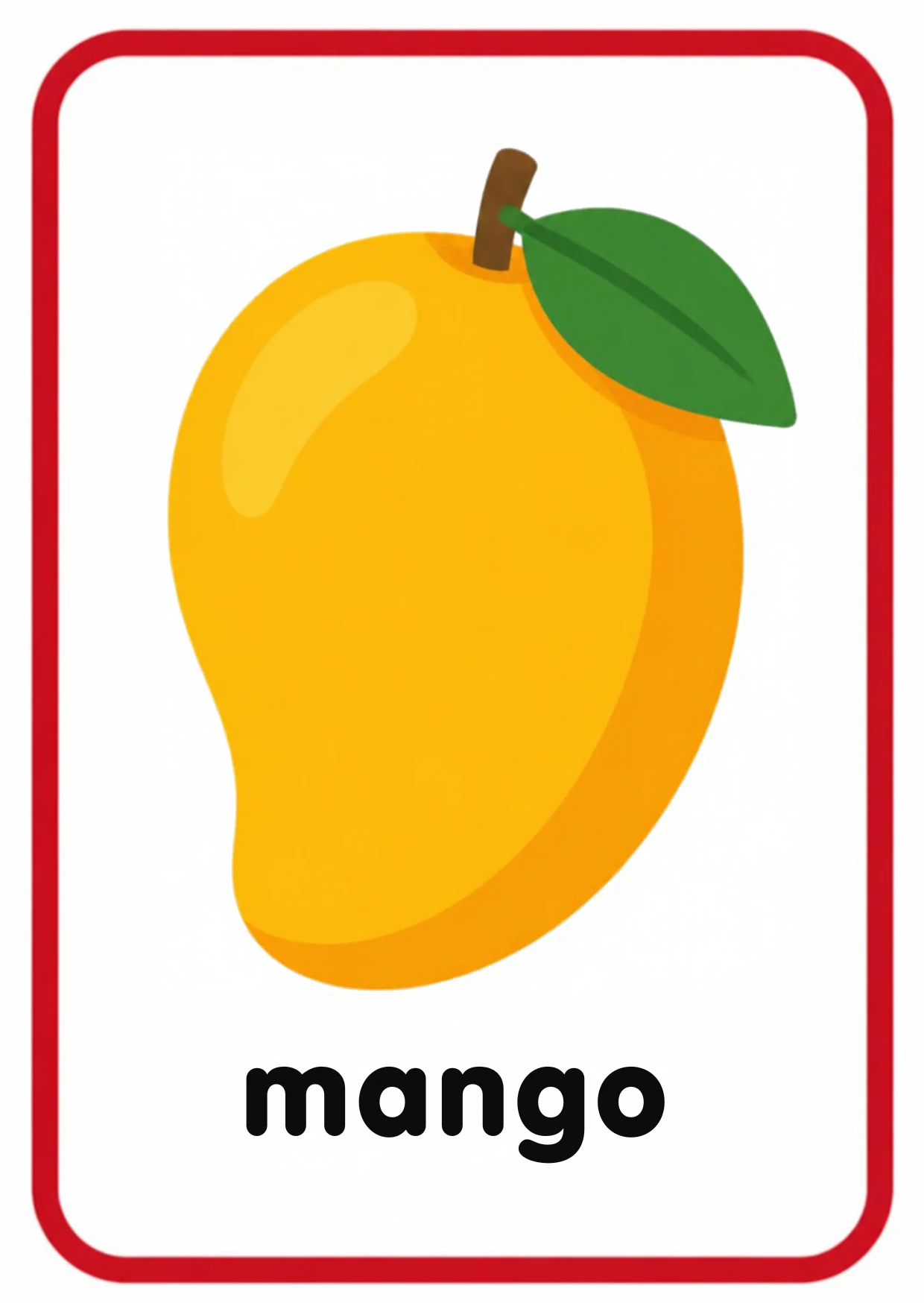
A mango is a golden-yellow fruit, blushing orange-red where the sun caught it, that grows on trees in hot countries. The card shows a yellow-orange mango with a green leaf. Inside is soft, sweet flesh — and one big, flat seed in the middle, like a treasure the fruit was guarding.
What does it mean?
Ripeness is a first physics of food: firm means wait, soft-gently means ready. A child who squeezes a mango like a cheek and reports “not yet” or “ready!” is reading fruit by feel — the same judging that later picks pears and avocados, started young on the sweetest possible subject.
What does the child need to know?
Your child needs the word said slowly and hungrily at the card, the tree story — mangoes grow up in the sunshine in hot countries — and the squeeze ritual: one gentle press, like testing a cheek. The seed hunt lands at tasting: a grown-up washes, cuts around the stone, and your child discovers the treasure in the middle.
Why this matters
Words with built-in sound play — mmmmm-mango — get rehearsed for the pleasure of the sound alone, and pleasure-rehearsed words stick. Add the ripeness judging and the seed discovery, and one fruit has supplied sound play, sensory science and a treasure story. Few cards earn their keep this thoroughly.
What it teaches
Sensory judging (firm versus soft), gentle-touch control, tropical tree knowledge, sound-play pronunciation, and the narrative pleasure of a fruit with a hidden treasure that explains why the cutting is a grown-up job.
Words to learn
mangogoldensoftsweetseedtropical
Say this to your child
““Mmmmm-mango! Say it slowly — it is the sweetest word in the fruit bowl. Mangoes grow on trees in the hot sunshine. Is ours ready? Squeeze it gently, like a cheek... soft! Ready! Now a grown-up will cut it, and we will find the treasure — one big flat seed, hidden in the middle!””
Step by step
- Show the card and say mango the slow way — mmmmm-mango — letting the hunger show in your voice. Repeat until your child joins the slow club.
- Tell the growing story: mangoes grow on trees in hot countries, ripening in real sunshine until golden.
- The squeeze test: your child presses one finger gently against a real mango, like testing a cheek — firm means wait, softly-giving means ready. Report the verdict.
- The tasting is staged: a grown-up washes the fruit and cuts around the middle, and your child hunts the treasure — one big, flat seed, discovered and admired.
- Close with the golden round-up: what else at snack time is golden? The pineapple card will agree.
Look closer at the picture
Look at the card together: it shows a yellow-orange mango with a green leaf and the word mango underneath. Ask your child which colors they can see on the skin, where the leaf sits, and what shape the fruit makes.
Ask your child
“How do we say the sweetest word — fast or slow?” “Where do mangoes grow?” “How do we test if one is ready?” “What hides in the middle?”
What your child can say or do
Your child might pronounce mmmmm-mango at every meal for a week, squeeze-test everything soft in the bowl, or present the discovered seed like a trophy — the treasure story does heavy lifting, and children retell it with the pride of real explorers.
Out in the real world
Mangos appear seasonally: whole in the shop, cubed in tubs, dried in packets. Every meeting rehearses the slow word and the squeeze test — and any seed found at home is a treasure twice, the second time for free.
Try it together
The ripeness panel: two mangos, one gentle squeeze each — your child presses like testing a cheek and delivers the verdict: not yet, or ready! The chosen one gets cut around the stone by a grown-up, and the big flat seed becomes a trophy to hold and admire before the golden cubes disappear.
Understanding check
Ask: “Say the sweetest word slowly. Where do mangoes grow? What hides in the middle?” The mmmm, the trees and the big flat seed — that is the lesson landed.
Parent tips
If no fresh mango is available, the dried version carries the lesson: same word, same sweetness, tougher chew. The squeeze test can wait for the next fresh one — vocabulary does not keep a calendar.
Staying safe
The cutting is grown-up work from wash to plate: mangoes have a big, hard, slippery stone in the middle, and the knife work around it takes practice even for adults. Little eaters get soft cubes, washed hands, and the seed handed over after the danger has left the room.
This lesson pairs with the Mango flashcard in the library — print it, show it, keep it on the fridge. Back to Fruits & Vegetables Flashcards.