
Empty glass — a step-by-step lesson for grown-up and child
This lesson takes your child’s oldest announcement — all gone! — and gives it its grown-up name. Empty is the bottom of the glass and the end of the story, and filling it again is the part children love most.
What is this?
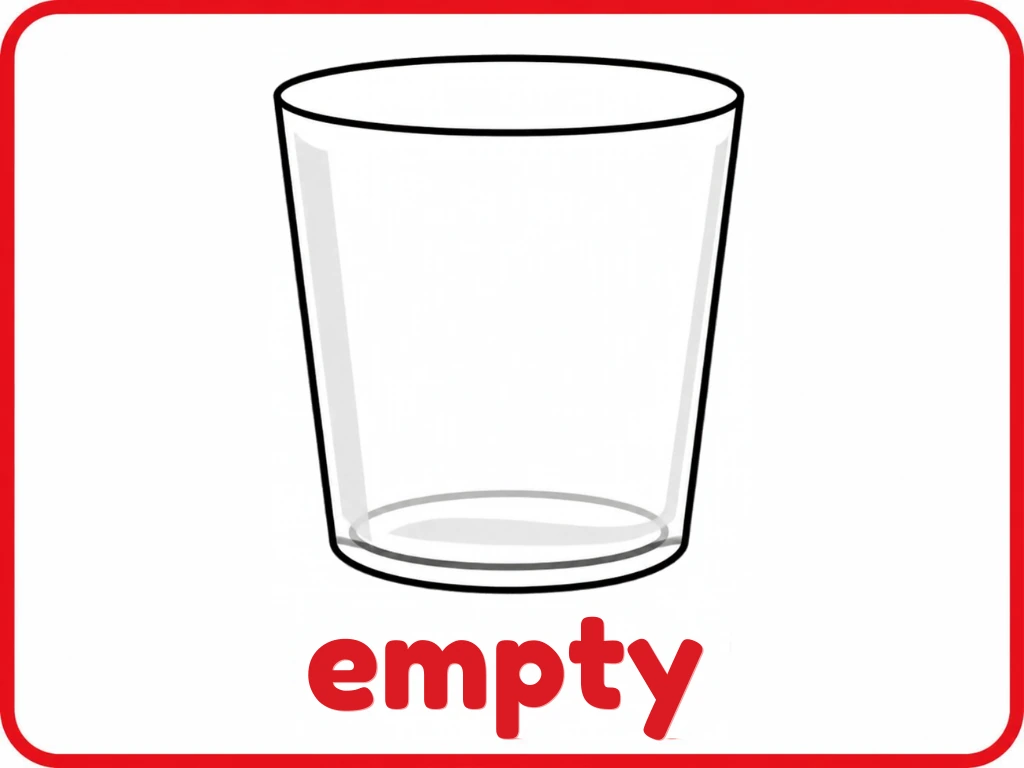
Empty means nothing left inside — every drop gone. The glass on the card has given everything away. Empty is not sad and not broken: it is a state, the same glass at the end of its drink, ready to be filled again.
What does it mean?
Empty is the finishing line of every drink, and your child has been announcing it forever — as all done, as all gone, as a tipped-up cup held to your face. This lesson gives the old discovery its proper name, then shows the best part: empty is not the end, it is the turn. Fill it again, and the pair starts over.
What does the child need to know?
Your child needs to know: empty means nothing is left, the opposite is full, and empty things are ready to be filled — cups, boxes, drawers, the bath. The refill is the payoff: your child announces empty, then causes the full.
Why this matters
Empty is one of the first quantity words a child truly owns because they have felt it — the finished cup, the box with nothing inside. Naming what they already know builds the habit of noticing quantities everywhere, which is number sense in its work clothes.
What it teaches
Quantity vocabulary (empty, all gone, nothing left), cause and effect as refilling reverses the state, memory and prediction — will it be empty if I drink it all? — plus the language pride of owning a grown-up word for an old discovery.
Words to learn
emptyfullgonerefilldropagain
Say this to your child
“"This glass is empty — every last drop gone, nothing left at all! Empty means nothing is inside anymore. You already knew this word: it is all gone, with its grown-up name. Now — shall we fill it again? Filling, filling… FULL! Empty always gets another turn."”
Step by step
- Show the card and mime tipping it gently: nothing falls out — it is empty, all gone.
- Read the story backwards from breakfast: the juice started full, and sip by sip it arrived here. Empty is where drinks end up.
- Play the announcement game at the next meal: your child calls empty! the moment the cup is finished, and you fill it again with ceremony.
- Hunt the house for empty things: an empty box, an empty laundry basket, your own empty hands held up palms-out.
- Let your child do the refilling at the tap and announce the return trip — filling, filling, full! The loop, run twice, is the lesson learned.
Look closer at the picture
Look at the picture together: is there any juice left in the glass? How can you tell it is empty — what would a full glass show instead? What words sit with the glass? If we tipped it, would anything pour out?
Ask your child
"Is the glass full or empty?" "How did the juice get finished?" "What can we do to make it full again?" "What else in this house is empty right now?"
What your child can say or do
Your child may hold up the finished cup and announce "empty!" before you can ask, hunt for empty boxes on demand, or report at the bath "the water is going down — getting emptier!" — the word reaching for new situations all by itself.
Out in the real world
Empty is a household weather report: the empty biscuit tin (a small tragedy), the empty parking space (a small triumph), the empty phone battery. Say the word as you meet it — empty is one of the rare comparing words the whole adult world uses hourly.
Try it together
Fill-it-again: give your child an empty cup, an empty jug and a jug of water at the sink. Their job: make the empty cup full, then empty it back, then narrate both trips. Repeat with an empty bowl, an empty box, an empty bucket — the word doing repetitions across different containers.
Understanding check
Ask: "Show me empty. What does empty mean? How do we make it full again?" The upside-down cup, the definition and the march to the tap — that is the word landed.
Parent tips
Accept every version of the word — all done, all gone, finished — then offer the upgrade gently: "yes, it is empty!" The old words are the bridge, not the enemy. Keep the refill within your child’s reach; the announcement matters more when they can also cause the answer.
This lesson pairs with the Empty glass flashcard in the library — print it, show it, keep it on the fridge. Back to Opposites & Comparing (Preschool).