
Cactus — a step-by-step lesson for grown-up and child
This lesson takes the plant idea somewhere dry: if the rain almost never comes, how does anything stay alive? Your child meets the cactus as a survival engineer — a bottle-stem, needle-leaves, wax jacket — and squeezes a sponge to feel exactly why it works.
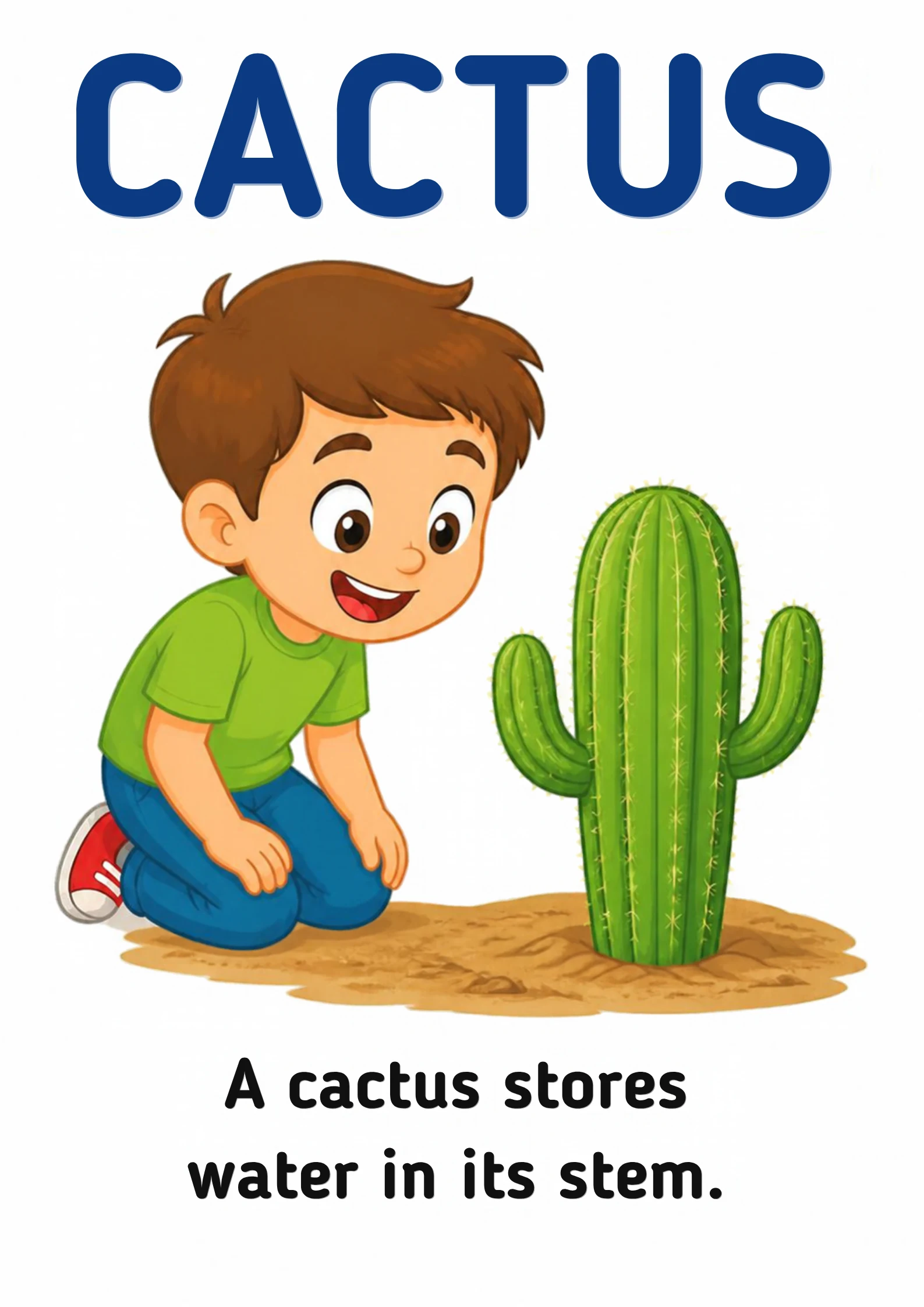
What is this?
A cactus is a plant built for the desert: its thick green stem swells up like a bottle and stores water for the dry weeks, its waxy skin seals moisture in, and its spines are actually leaves, shrunk to needles so they waste almost no water.
What does it mean?
Every plant needs water — the cactus just solved the problem differently. Where a garden plant drinks daily, the cactus drinks rarely and saves hard: wide stem to store, wax to seal, needles instead of thirsty flat leaves. Different home, different body, same needs.
What does the child need to know?
A full cactus can live on its stored water for months. Big desert cacti can weigh as much as a car or more — and most of that weight is water they saved. The spines double as armour: too sharp for thirsty animals to take a bite of the bottle.
Why this matters
The cactus stretches the plant-needs lesson into a new climate and plants the adaptation idea: living things fit their homes. It also answers the desert question — how? — with a body plan your child can model with two sponges in thirty seconds.
What it teaches
Cause-and-effect in a new habitat, adaptation thinking (bodies match homes), simple modelling with sponges, and careful-observation habits: where ARE the leaves on this plant, and why?
Words to learn
cactusdesertwaterstemspinesstore
Say this to your child
“"In the desert the rain forgets to come, so the cactus saves every drop it gets. Its fat stem swells up like a water bottle, its skin is sealed so the water cannot sneak out, and its leaves turned into needles — tiny, so they hardly drink at all. When rain finally falls, the bottle fills again."”
Step by step
- Show the card: what is the child looking at, and what is the cactus growing in — grass or sand? Name the desert home.
- Ask the big question: it almost never rains there. How does anything drink? Collect guesses, then open the secret: the stem is a bottle.
- Find the leaves — trick question! They became the spines: needles so tiny they hardly lose any water, and too sharp for anyone to nibble.
- Run the sponge test: soak one sponge, leave one dry, squeeze both. Full sponge, full cactus — that is what a swollen stem means.
- Finish with the wax: cactus skin is sealed like a buttered jacket, holding the water in. Bottle, needles, wax jacket — three tricks, one survivor.
Look closer at the picture
Ask your child: what is the child looking at? Is the cactus tall or short? Can you find the spines? What is the cactus growing out of — grass, or dry sand?
Ask your child
"What does a cactus keep inside its fat stem?" "Why are the leaves needles instead of flat?" "How long can a cactus live on one big drink?" "Why does nothing try to eat the cactus?"
What your child can say or do
"The cactus is a water bottle plant!" "Its leaves turned into needles — that is so clever!" Your child may squeeze sponges at bath time explaining the desert, or point out cactus stems as bottles in every book, garden centre and cartoon.
Out in the real world
Desert thinking travels: camels store, seals thicken, your winter coat holds warm air — bodies solve their home’s biggest problem. House cacti bring it home literally: your child knows why the windowsill cactus gets one small drink and then is left alone for weeks.
Try it together
Sponge desert: soak two sponges, leave two dry, and line all four on a tray. Squeeze each in turn — which drip, which dust? Then build a cactus from a stuffed sock standing in a sand tray: fat bottle-stem, wax-paper jacket, and cocktail-stick spines only with a grown-up.
Understanding check
Ask: "What does a cactus store in its stem? What did its leaves become? Why the waxy skin?" Water, spines, to hold moisture in = landed.
Parent tips
The two-sponge squeeze is the whole lesson in the palm of a hand — do it twice. If a garden centre is nearby, walk the cactus shelf and let your child find the fattest bottle; watering rules can wait, the body plan is today’s win.
Staying safe
Cactus spines are real needles — house cacti stay up high where small hands cannot reach, and touching one is a grown-up job with tweezers on standby. The craft version follows the same rule: spines point up, fingers stay on the tray edge.
This lesson pairs with the Cactus flashcard in the library — print it, show it, keep it on the fridge. Back to Science, Nature & Discovery (Class 31).