
Eyes — a step-by-step lesson for grown-up and child
This lesson treats sight as the superpower it is: your child learns what eyes actually catch, plays the blink game, then switches senses off and on — and discovers that closing the eyes turns the volume up on everything else.
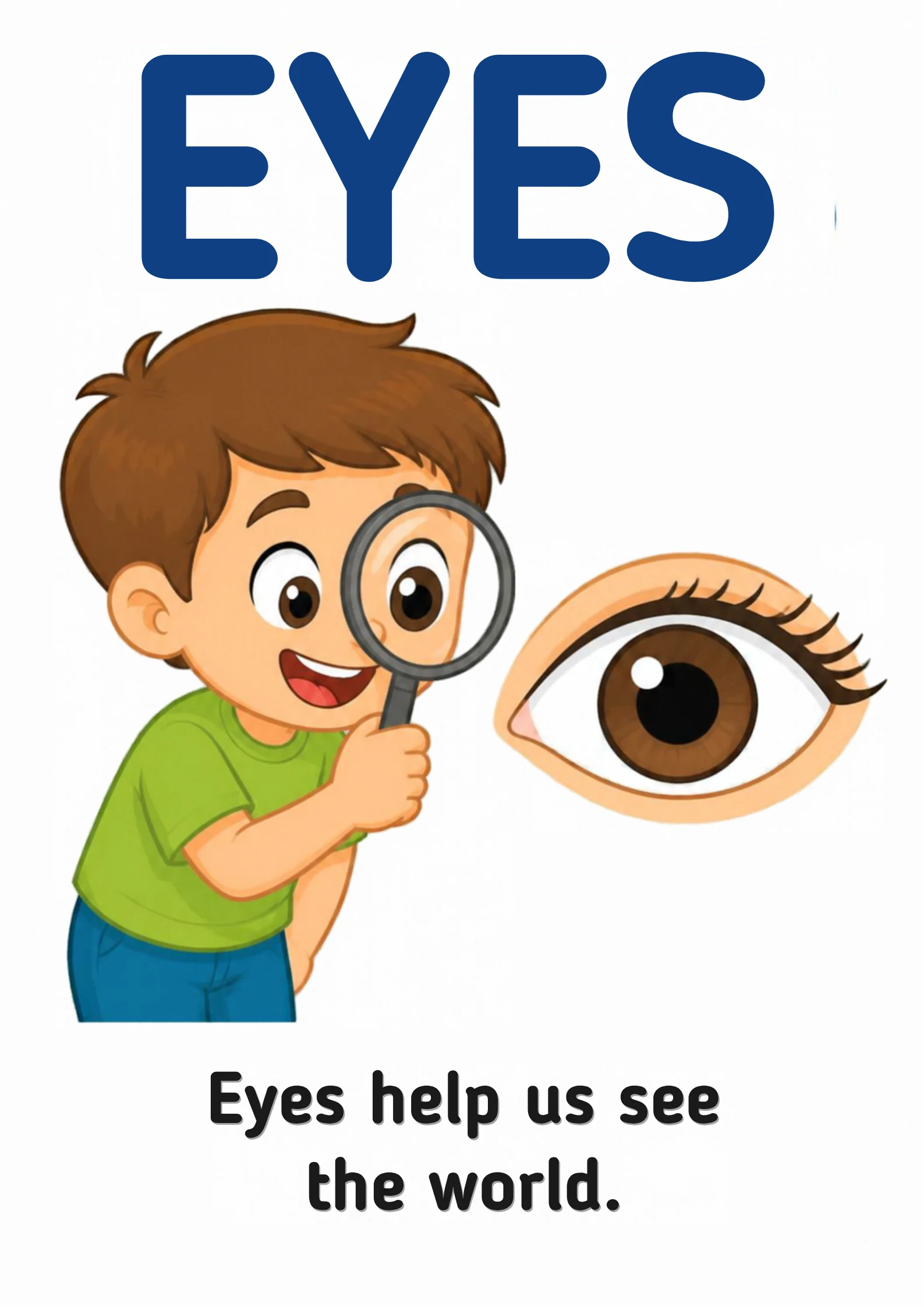
What is this?
Eyes are light catchers: light bounces off everything around you, and the front of your eye gathers it in like a little window, turning the bouncing light into a picture your brain can read. Eyelids blink to wash and protect, and the pair team up on every image.
What does it mean?
Sight is your child’s busiest sense, and it runs on teamwork: two eyes, each catching a slightly different picture, and the brain merging them into one. Blinking is maintenance — thousands of tiny window-wipes a day, mostly without you noticing.
What does the child need to know?
You blink about fifteen times a minute — that adds up to thousands of washes a day. Tears are the eye-cleaning crew, called out for dust or big feelings. Eyes need sleep, hate pokes, and if the world goes blurry, a grown-up and an eye doctor should hear about it.
Why this matters
Knowing how eyes work makes the other senses louder: shut the eyes and hearing, touch and smell step forward. It also plants eye-care habits — no rubbing with dirty hands, reporting blurry vision — through science, not just rules.
What it teaches
Sensory awareness (sight versus hearing), self-care routines, the teamwork idea (two eyes, one picture), and gentle experiment discipline: trying not to blink, timing, and noticing what changes when one sense closes.
Words to learn
eyesseeblinklighteyelidstears
Say this to your child
“"Your eyes are little light catchers. Light bounces off everything and jumps into your eyes, and your brain turns it into pictures — that is seeing. Every blink is a tiny wipe to keep the window clean, and both eyes work together like two cameras making one film."”
Step by step
- Show the card: what tool is the child holding up, and what is it pointed at? Name it — a magnifying glass, and an enormous eye.
- Explain the catching: light bounces off everything — your toy, the table, your face — and your eyes catch the bounce and turn it into pictures.
- Play blink-count: try not to blink for as long as you can (it is hard!), then blink fast ten times. That wetting is each blink’s job.
- Switch senses: close the eyes for ten seconds and listen. What got louder? The ears take over when the eyes clock off.
- End with care: eyes sleep, eyes wash themselves with tears, and pokes or blur mean a grown-up needs to know.
Look closer at the picture
Ask your child: what is the child holding up? What is the magnifying glass pointed at? How big does the eye look — bigger than a fist? Is the eye looking back at you?
Ask your child
"What do your eyes catch to make pictures?" "Why do we blink?" "What got louder when you closed your eyes?" "What should we do if things look blurry?"
What your child can say or do
"I blinked two hundred times today!" (close — thousands). "My ears got louder when my eyes went to sleep!" Your child may play eyes-closed detective around the house, or report every blink as a "window wash" for a week.
Out in the real world
Eyes work everywhere light works: reading pictures, catching a ball, spotting a ladybird on a leaf. Dim rooms show the limits — eyes need light to catch — and sunglasses on a bright beach, washed hands away from eyes, and good sleep are the care package in action.
Try it together
Ears-only safari: your child closes their eyes while you move around the room making small sounds — keys, a page, a whisper — and they point to where each sound came from. Then swap roles. Closing the eyes is how the other senses get their turn to shine.
Understanding check
Ask: "What do eyes catch to make pictures? What does a blink do? Which sense gets louder with eyes closed?" Light, washing, hearing = landed.
Parent tips
Keep the eyes-closed games short and willing — three to ten seconds feels like a long time at four. If your child squints at books or sits very close to screens, mention it to a grown-up eye doctor; catching it early is the whole game.
This lesson pairs with the Eyes flashcard in the library — print it, show it, keep it on the fridge. Back to Science, Nature & Discovery (Class 31).