
Heart — a step-by-step lesson for grown-up and child
This lesson makes the busiest organ in the body audible: ten jumps, a palm on the chest, and your child can feel their own engine speed up — then learn what the thump-thump is actually delivering, and to whom.
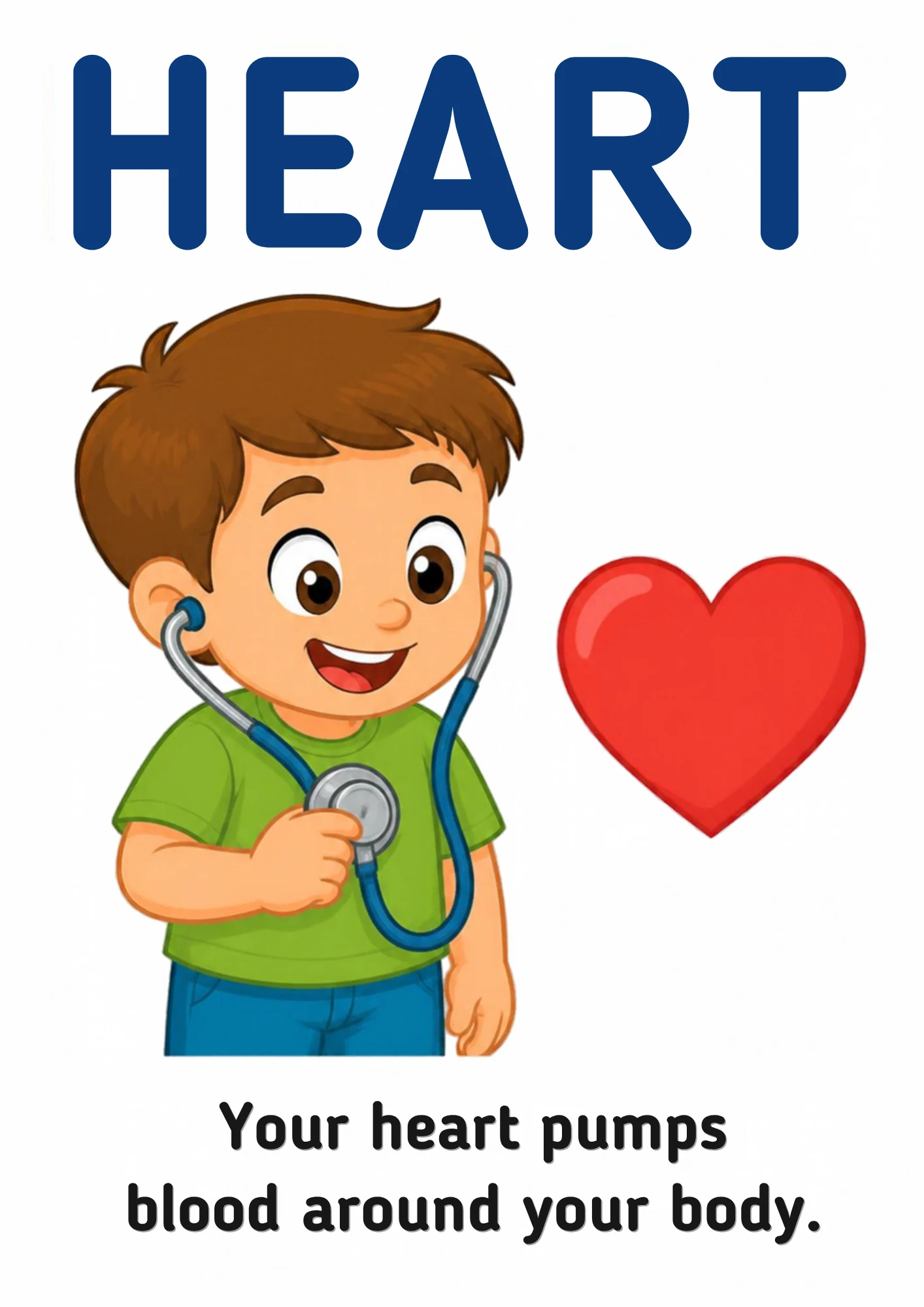
What is this?
The heart is a muscle that squeezes again and again, pushing blood all around the body. Blood is the delivery crew: it carries oxygen and food to working muscles and picks up what they are done with, and the heartbeat is the sound of that pump at work.
What does it mean?
Move fast and your muscles shout for more oxygen, so the heart pumps faster to keep up — that is why running makes your chest drum. Rest, and the beat settles down. The heart is answering demand, all day, every day, no weekends.
What does the child need to know?
Your heart is about as big as your fist and beats roughly a hundred thousand times a day. Exercise trains it — a well-run heart is strong at pushing. A toy stethoscope, or a grown-up’s ear pressed to the chest, hears the pump directly.
Why this matters
Feeling the heartbeat links exercise to the body’s answer, which is the first cause-and-effect your child can hear with their own hand. It also builds the lifelong idea that moving your body is how you train it — hearts love to be asked to work.
What it teaches
Body awareness, cause-and-effect reasoning (run, then faster beat), measuring by feel (fast, faster, resting), and turn-taking games that end in stillness — the rest-and-listen part is half the lesson.
Words to learn
heartbloodpumpbeatfastrest
Say this to your child
“"Your heart is a pump hidden in your chest. Every squeeze pushes blood out on a delivery run — carrying air and food to your toes, your fingers, your brain. When you jump, your muscles ask for more, so the pump speeds up. That drumming you feel? Your engine, working hard."”
Step by step
- Show the card: what is the child listening to, and what are they holding to their ears? Name the tool — a stethoscope.
- Feel it first: hand flat on the chest, find the thump-thump. That is the heart, pumping right now.
- Run the experiment: jump ten times, hand on chest, feel again — faster! Rest until the beat calms, jump again, compare the two.
- Explain the deliveries: blood is the van that hauls air and food out to your toes, your fingers, your brain — and the heart is the engine driving it round.
- Close with the fist: a heart is about fist-sized, and it squeezes day and night — every thump is one delivery run.
Look closer at the picture
Ask your child: what is the child listening to? What are they holding against their ears? What color is the heart? Can you point to where your own heart is hiding?
Ask your child
"What does the heart push around your body?" "What happens to your heartbeat when you run?" "What makes the beat slow down again?" "How big is your heart?"
What your child can say or do
"My heart goes fast-fast-fast when I jump!" "It slowed down — my engine is resting." Your child may demand jump-and-listen rounds every evening, press a toy stethoscope to everyone’s chest, or announce "my heart is delivering!" on the stairs.
Out in the real world
Hearts speed up for stairs, dancing, giggling fits and big feelings — your child now has a name for that drumming chest. Calm-down moments get scientific too: slow breaths, a quiet cuddle, and feeling the beat settle are the rest half of the experiment.
Try it together
Heartbeat drums: pat your own chest to your heart’s rhythm while your child copies, then jump ten times together and drum fast. End with a slow-lion-breath round until both drums rest. Loud, fast, slow, quiet — the whole lesson played on your own chest.
Understanding check
Ask: "What does the heart pump? Why does it beat faster when you run? What is blood carrying?" Blood, more oxygen asked for, air and food = landed.
Parent tips
A real stethoscope or a cheap toy one turns this into a favourite toy for weeks — listen to hearts, but also to tummy rumbles and breathing. If your child feels fluttery heartbeats when scared, the science helps: that is the pump getting ready, not a problem.
This lesson pairs with the Heart flashcard in the library — print it, show it, keep it on the fridge. Back to Science, Nature & Discovery (Class 31).