
What Plants Need — a step-by-step lesson for grown-up and child
This lesson sets up the classic first experiment in all of science: grow two plants the same, take something away from one, and watch. Your child learns the three plant needs — and how to test fairly by changing only one thing.
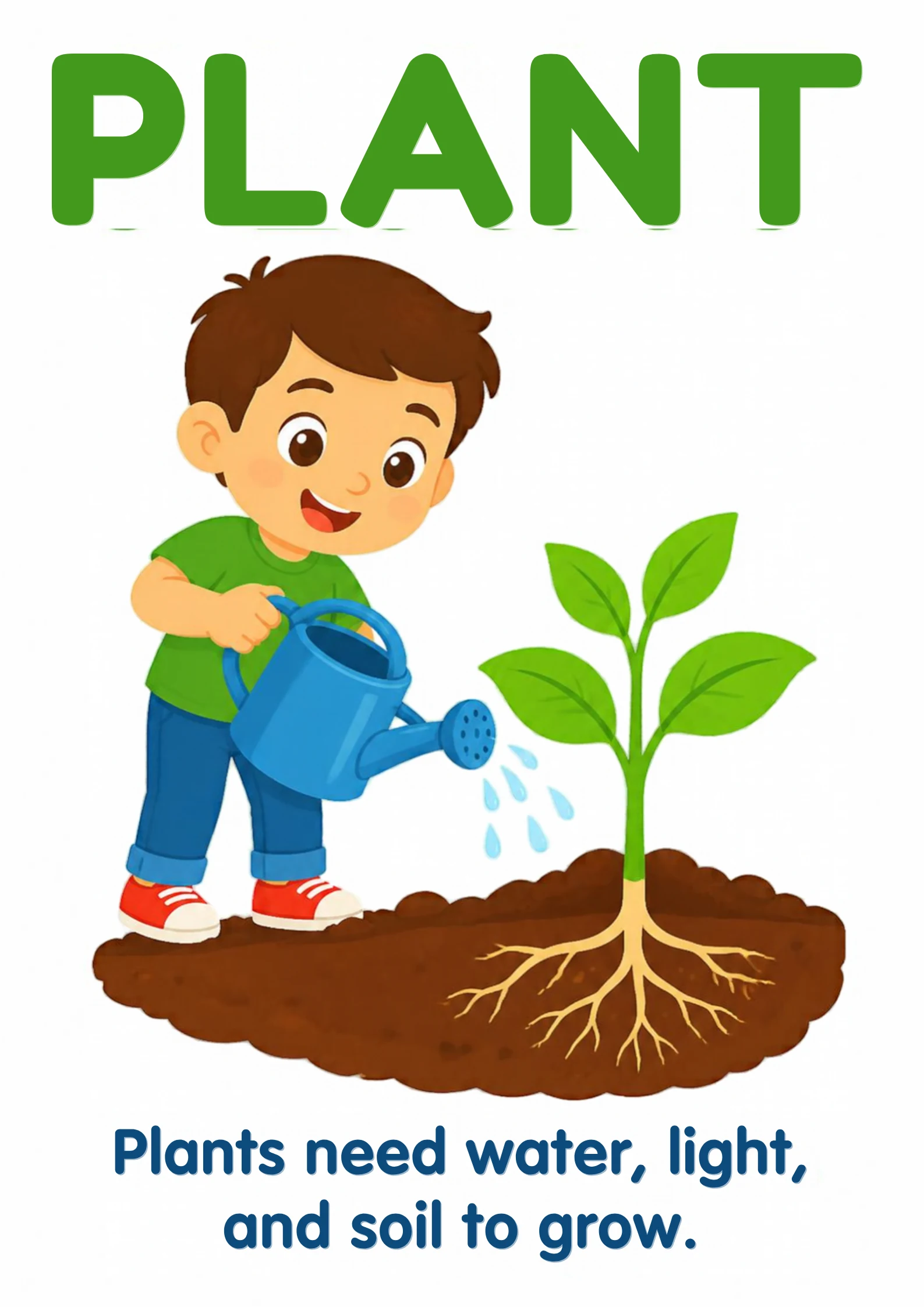
What is this?
Plants run on three things: water sipped up by the roots, light caught by the leaves to cook food, and soil to anchor in and feed from. Miss one out and the plant tells you — drooping, pale or stalling.
What does it mean?
The leaves are the kitchen, the roots are the straws, the soil is the pantry and the anchor. A plant cannot walk to its dinner — it builds its food from light, water and air right where it stands, which is why taking any ingredient away shows fast.
What does the child need to know?
A plant left in darkness turns pale and leggy, stretching after light it cannot find. Roots drink even when the leaves look dry, and overwatering drowns them — plants can have too much of a good thing. Different plants like different amounts.
Why this matters
This is where fair testing begins: two jars, watered the same, one in the light and one in the dark — change one thing, watch, conclude. Your child meets the controlled experiment in bean form, and it will carry through every science lesson after.
What it teaches
Fair-test thinking (change one thing), daily observation and comparison, responsibility through watering routines, and vocabulary for plant parts that recurs through seed, tree and garden lessons.
Words to learn
plantwaterlightsoilrootsleaves
Say this to your child
“"A plant is stuck in one spot, so it carries everything it needs around with it: roots that sip water from the soil, and leaves that catch sunlight and cook it into plant food. Take away one ingredient and the whole machine slows down — that is what our dark-cupboard bean is showing us."”
Step by step
- Show the card: what is the child giving the seedling? Can you find the roots down in the soil? Name the three needs — water, light, soil.
- Ask the detective question: what would a plant do with no water? With no light? With no soil? Collect predictions before testing.
- Plant the test: two bean jars on the windowsill, watered the same — then one jar goes into a dark cupboard. Only ONE thing changed.
- Check daily: both jars get water, but only one gets light. Which bean is green and sturdy, which is pale and stretchy?
- Let your child deliver the verdict: plants need light. Then run it again with water withheld if they are hooked — scientists love a repeat.
Look closer at the picture
Ask your child: what is the child giving the seedling? Is the seedling big like a tree or small? Can you find where the roots go? What is the seedling growing in?
Ask your child
"What are the three things a plant needs?" "Which part of the plant drinks?" "What do leaves catch to cook plant food?" "What did our dark-cupboard bean tell us?"
What your child can say or do
"The cupboard bean went pale because it was hungry for light!" "Leaves are the kitchen and roots are the straws." Your child may appoint themselves head waterer, check the two jars before breakfast, or explain at a garden centre why the shaded shelf plants look stretchy.
Out in the real world
Plant needs are visible in every home and street: the drooping pot everyone forgot, the leaning office plant chasing the window, the brown patch where the trampoline shaded the grass. Once your child knows the three needs, wilting becomes a clue, not a mystery.
Try it together
Three-needs sorting game: draw or place three picture cards — water, light, soil — and take turns naming a plant (cactus! water lily! oak tree!) while your child points to what that plant loves most. Then water a real plant together, slowly, at the roots.
Understanding check
Ask: "What three things does a plant need? Which part drinks? What did we change in our bean test?" Water-light-soil, roots, the light = landed.
Parent tips
Bean jars beat seeds-in-pots for small scientists because the roots are visible through the glass. Label each jar with a face — happy bean, cupboard bean — and let your child draw the daily verdict; the drawing IS the observation record.
This lesson pairs with the What Plants Need flashcard in the library — print it, show it, keep it on the fridge. Back to Science, Nature & Discovery (Class 31).