
Teeth — a step-by-step lesson for grown-up and child
This lesson turns the dinner table into a tool bench: your child discovers which teeth slice, which tear and which grind — and why tools that work all day deserve a proper wash, twice a day, back teeth included.
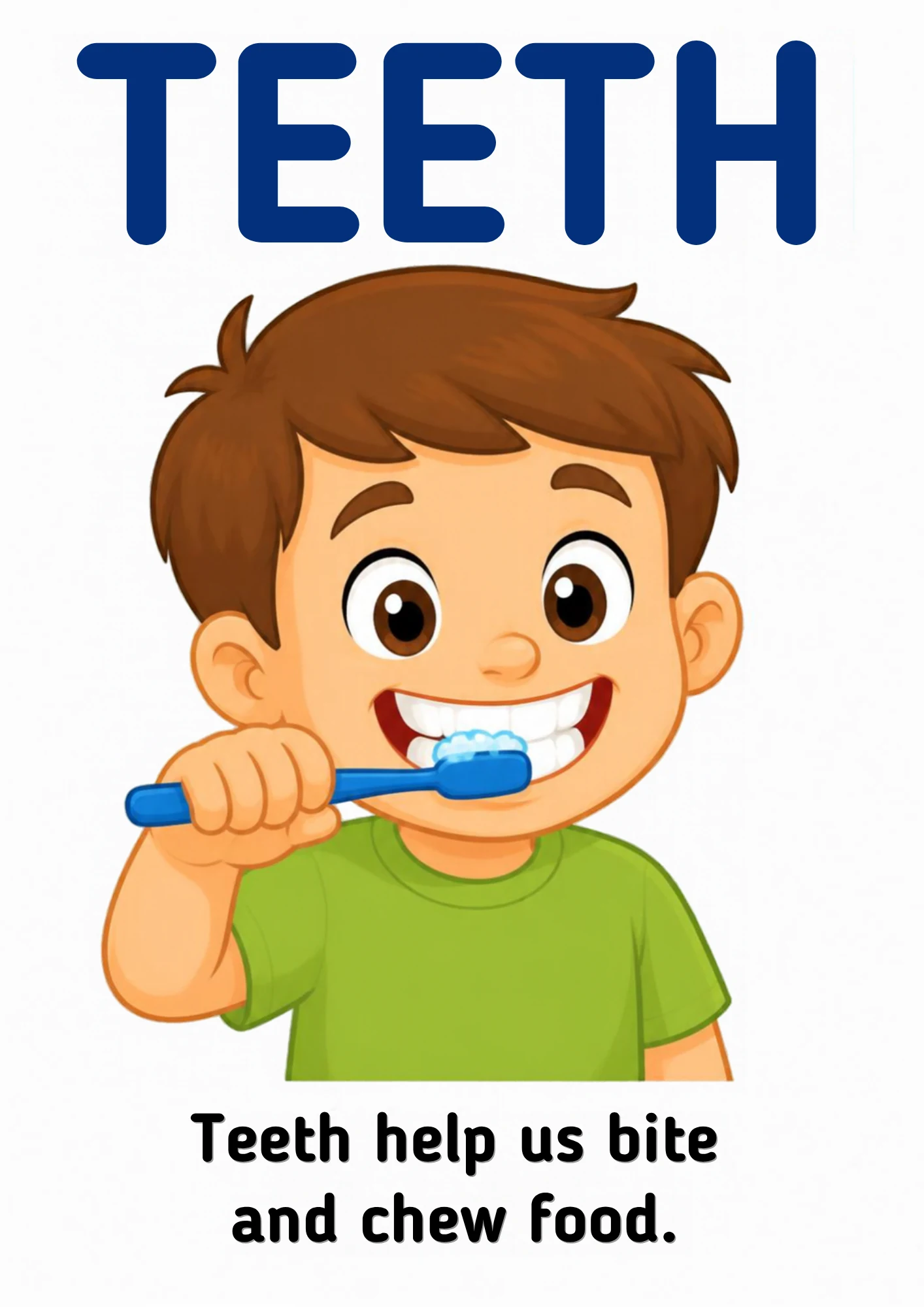
What is this?
Teeth are food tools in three shapes: flat front teeth slice off bites, pointy side teeth tear tougher food, and wide back teeth grind everything to a mash your tummy can handle. Brushing and spit keep the tools clean between jobs.
What does it mean?
Different shapes do different jobs — the same idea that sorts scissors from saws from spoons. Your child can feel it at every meal: the apple-slice crunch at the front, the big grinding work at the back where nobody can see.
What does the child need to know?
You grow just two sets of teeth in one life: the baby set now, and a hidden grown-up set waiting in the jaw like seeds under soil. Wobbly teeth are normal — the baby tooth is making room. The back grinders matter most and hide from brushes, so they need the longest scrub.
Why this matters
Tooth science makes brushing meaningful instead of a rule from the sky: the tools need cleaning because food sticks to them. Knowing the three jobs also turns eating into an experiment — which teeth am I using right now? — that plays out at every single meal.
What it teaches
Sorting by shape and job, body-part vocabulary, the two-sets idea (a first version of life stages), and habit-building: brushing becomes tool maintenance, with the hidden back teeth as the priority target.
Words to learn
teethbitechewbrushfrontgrind
Say this to your child
“"Your mouth is a toolbox. The flat ones at the front slice like little knives, the pointy ones at the sides tear, and the wide ones at the back grind everything small. Tools that work all day need a wash — that is why we brush, especially the shy grinders hiding at the back."”
Step by step
- Show the card: what is the child doing, and how big are those teeth? Is the brushing child smiling? Name the job — tool washing.
- Set the mirror mission: bite like a rabbit with the front teeth — feel them slicing? Then chew like a lion at the back — feel the grinding?
- Sort dinner out loud: bread sliced by the front, chicken torn by the pointy ones, rice ground by the big back teeth.
- Count in the mirror: how many teeth can you see? Then hunt the sneaky back ones — the grinders hide from brushes, so they get the longest scrub.
- Tell the secret: a second set of grown-up teeth waits in the jaw below, and these baby teeth are the first team — keep them clean so they hand over well.
Look closer at the picture
Ask your child: what is the child doing? Are the teeth being brushed big or small? Is the child smiling while brushing? Where are your own back teeth hiding right now?
Ask your child
"Which teeth slice off a bite of apple?" "What do the wide back teeth do?" "Why do teeth need brushing?" "What is waiting under your baby teeth?"
What your child can say or do
"I am grinding like a horse!" "The back teeth are hiding from the brush — I got them!" Your child may bite apples only with the front teeth for a while, narrate every meal by tooth job, or announce that the tooth brush is a "tool wash".
Out in the real world
Every meal is a tooth lesson: sandwiches sliced, pizza torn, apples crunched at the front. Dentist visits upgrade the science — the mirror, the counted teeth, the polishing — and a lost first tooth becomes the proudest show-and-tell of the year.
Try it together
Tool tester dinner: serve three foods — something to slice (apple), something to tear (bread roll), something to grind (rice) — and let your child announce which teeth take each job. Brush a big paper tooth afterwards with a dry brush to finish the maintenance story.
Understanding check
Ask: "What do front teeth do? What do back teeth do? Why do we brush?" Slice, grind, wash the tools = landed.
Parent tips
Two-minute brushing works best with a song or a mirror — the back teeth are the slow zone, so park there. If a tooth goes wobbly, celebrate early: a child who knows the two-sets story treats the wiggle as news, not a worry.
This lesson pairs with the Teeth flashcard in the library — print it, show it, keep it on the fridge. Back to Science, Nature & Discovery (Class 31).