
Rain Helps Plants — a step-by-step lesson for grown-up and child
This lesson flips the rainy-day grump: while everyone runs inside, the whole garden sits down to drink. Your child learns that rain is a watering can for every plant outside — and takes an after-rain tour to see exactly who has been drinking.
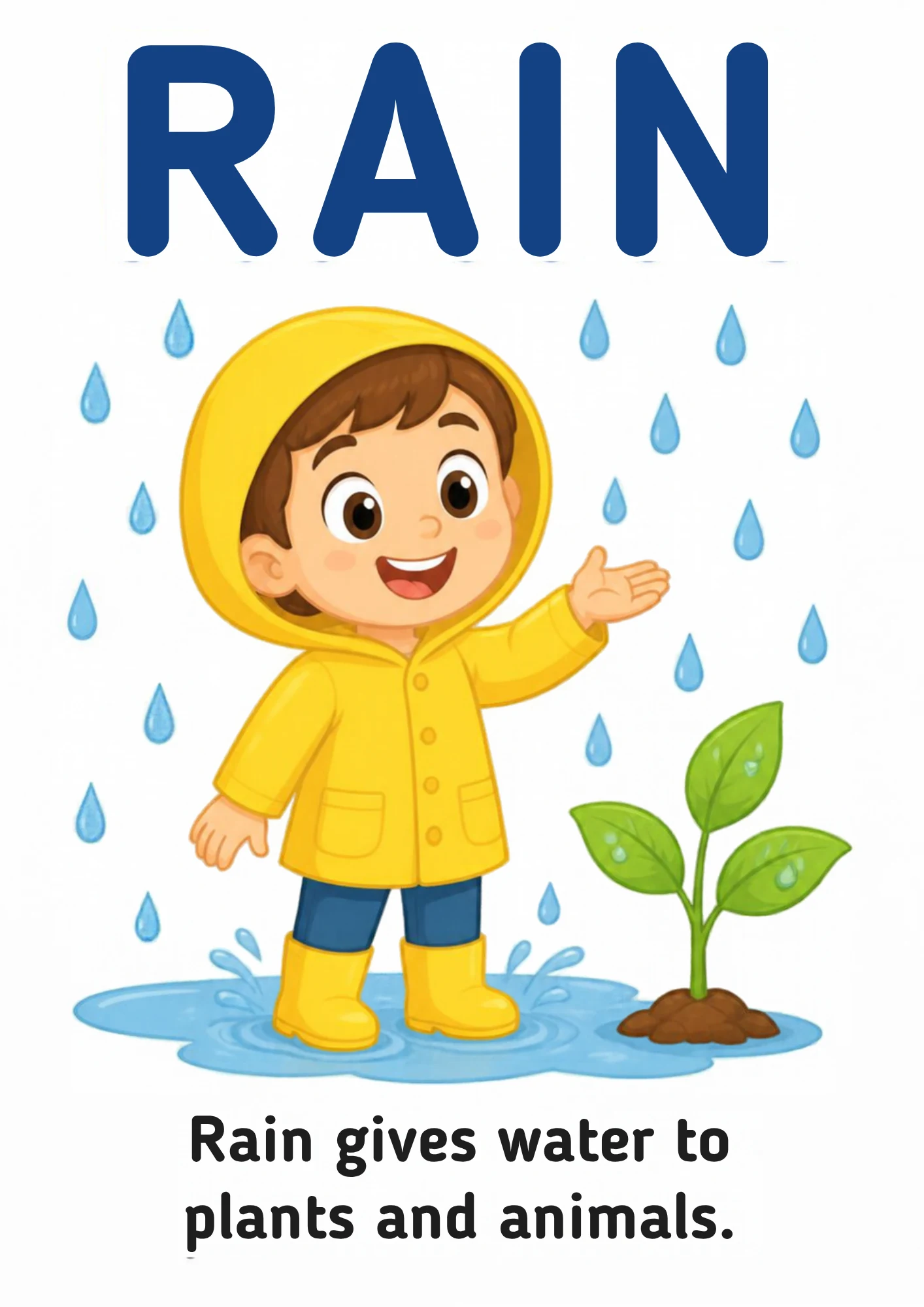
What is this?
Plants are always drinking — their roots sip water from the soil non-stop — and rain refills the soil faster than any hose. Drops land on leaves, trickle down stems, and sink into the dark earth where the roots are waiting to slurp it all up.
What does it mean?
Rain is weather on the plant’s side: a whole night of rain does more for the garden than an afternoon of watering, because it soaks deep where roots actually reach. The garden is not getting wet — it is getting fed, and the soil is the cup it drinks from.
What does the child need to know?
Roots do the drinking, not the leaves — raindrops on a leaf are just passing through on their way down. After rain the soil turns dark and damp, leaves wear beads of water, and worms come up for the wet. A dry week makes plants droop; rain perks them back up.
Why this matters
This card connects weather to growth: rain is not a nuisance, it is lunch for every plant outside. It gives your child a reason to be glad about wet days, links the plant-needs lesson to the sky, and makes the watering chore feel like helping the rain.
What it teaches
Linking weather to plant growth (cause and effect across a whole garden), after-rain observation of soil, leaves and worms, empathy with living things (the garden was thirsty), and patience — the tour works best a day after the rain.
Words to learn
rainplantsrootsdrinksoilgarden
Say this to your child
“"When it rains, the whole garden sits down to eat — or really, to drink. The drops run off the leaves, down the stems, into the soil, and the roots slurp it up like straws. A whole night of rain is the best meal the garden ever gets. That is why rainy days are actually garden days."”
Step by step
- Show the card: what is the seedling getting, and what is the child wearing? Name it — the garden’s watering day.
- Ask the flip question: what happens to the plants outside when it rains all day? The garden is not hiding from rain — it is drinking it.
- Explain the straws: roots sip constantly from the soil, and rain refills the soil cup deep down where straws reach. Drops on leaves just trickle home.
- Take the after-rain tour: find leaves wearing raindrop beads, press a finger into dark damp soil, and count the worms that came up for the wet.
- Connect to home: your watering can does for pots what the sky does for gardens — and after a rainy week, the pots get a day off.
Look closer at the picture
Ask your child: what is falling on the seedling? What is the child wearing in the picture? Is the seedling big or small? What do you think the seedling will grow into after its drink?
Ask your child
"Which part of a plant drinks the rain?" "Where do the raindrops on a leaf go next?" "What does the soil look like after rain?" "Why are rainy days good for the garden?"
What your child can say or do
"Rainy days are garden drinking days!" "The worms came up because they like the wet!" Your child may refuse to grumble on wet days now, check the soil with one finger after rain, or explain to a worried plant-waterer that the sky has the shift covered.
Out in the real world
Rain’s work shows all around: drooping tomatoes perk up overnight, the lawn greens by the weekend, rain-fed gardens outgrow watered pots. After the next dry spell your child can run the reverse check — which plants missed the sky’s watering can?
Try it together
Watering-can relay: paper plants around the room, one cup of "rain" per runner — sprinkle each plant gently at the base, not the leaves, because roots do the drinking. Then a slow-motion after-rain tour of your own: leaves, soil, and one lucky worm hunt outside.
Understanding check
Ask: "Who drinks the rain — leaves or roots? Where does the water collect? What is a rainy day for the garden?" Roots, the soil, a big drink = landed.
Parent tips
Do the finger-test of damp soil together after every rain — one gentle poke, two centimetres down — and your child will soon read the garden’s thirst by touch. Welly weather is tour weather: the wetter the walk, the more the garden shows.
This lesson pairs with the Rain Helps Plants flashcard in the library — print it, show it, keep it on the fridge. Back to Science, Nature & Discovery (Class 31).