
Shadow — a step-by-step lesson for grown-up and child
This lesson turns a puddle of dark on the pavement into light physics: your child’s body stops the sunshine, and the shape of the stopping follows them all day — long at breakfast, short at noon, gone after dark, and reborn behind a torch for puppet shows.
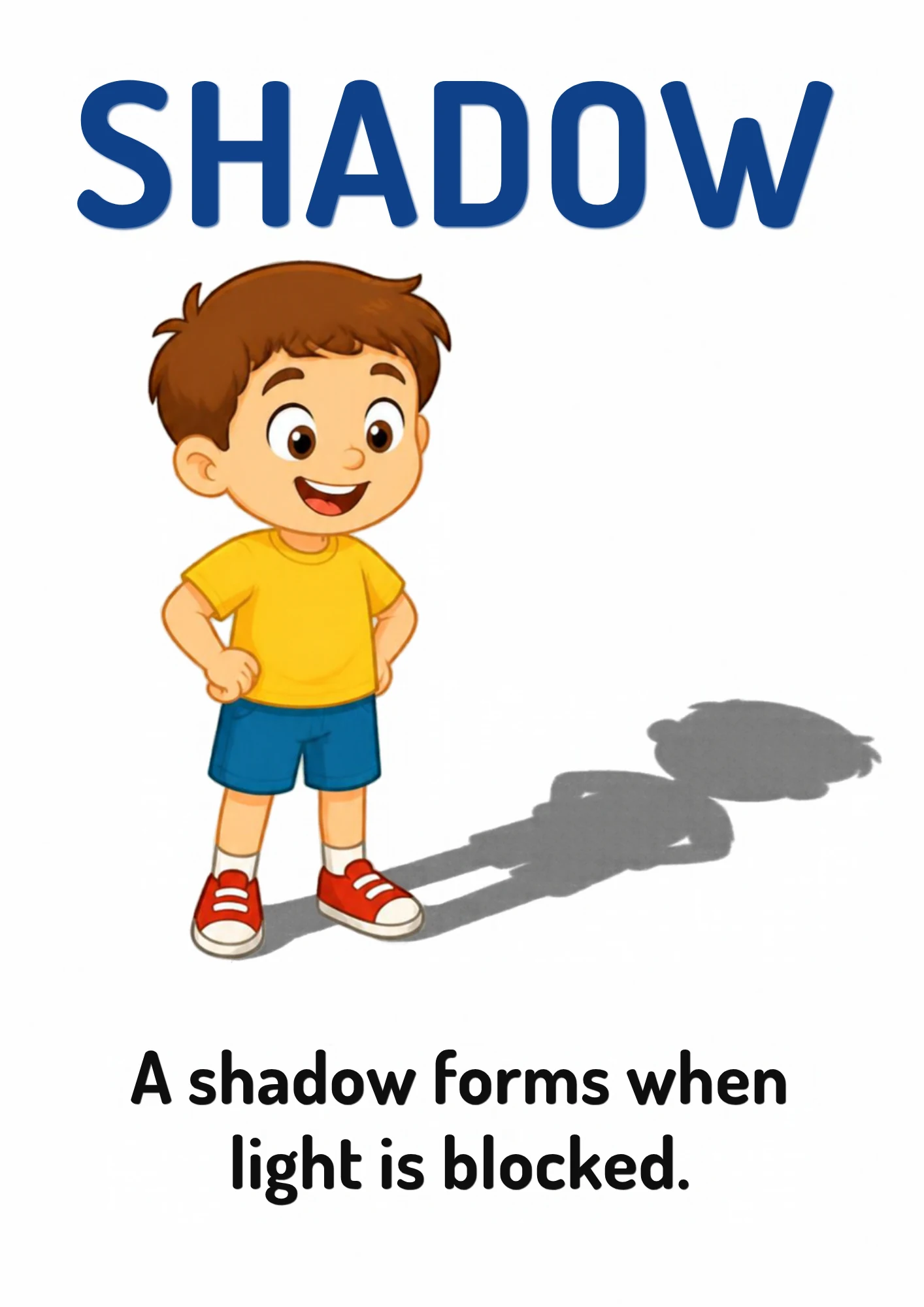
What is this?
A shadow is the dark shape made where something blocks light: your body stops the sunshine on its way to the ground, and the dark patch that results is shaped exactly like the stopping — you. Move, and the shadow moves; more light or less light, and it stretches or shrinks.
What does it mean?
Light travels in straight lines, and it cannot go through you — so behind you there is a light-shaped hole in the daylight. Shadows are always on the side away from the light: sun in front, shadow behind. No light, no shadow — a cloudy night makes none at all.
What does the child need to know?
Your shadow runs longest when the sun hangs low in the sky — breakfast time, supper time — and shrinks to almost nothing at midday, when it crouches right under your feet. Shadow puppets work because the torch beam is a straight line: block it with a hand, and the wall shows the hand’s shape, huge.
Why this matters
Shadows are physics your child can make with their own body, chase on any sunny day, and command behind a torch. The changing length teaches that the sun moves across the sky — or really, that we turn — and shadow play turns blocking light into theatre.
What it teaches
Observation over a whole day (long, short, gone), positional reasoning (shadow always points away from the light), creative hand-eye play in puppet form, and the seed of the day-and-night lesson: light, blocked and moving.
Words to learn
shadowlightsuntorchblockshape
Say this to your child
“"Your shadow is the dark shape where your body stops the light. The sunshine cannot go through you, so it lands behind you as a you-shaped patch. In the morning it stretches long, at noon it hides short under your feet, and at night — no sun, no shadow. But a torch will build you a new one any time you want."”
Step by step
- Show the card: where is the child standing, and can you find the shadow? Is it long or short? Name it — the shape of the light being stopped.
- Explain the making: light travels in straight lines and cannot pass through your body, so behind you lands a dark patch shaped exactly like the blocker — you.
- Chase it outside: morning shadow stretches long, noon shadow tucks short underfoot. Draw a chalk line and measure your shadow at both ends of the day.
- Ask the direction rule: where does the sun stand? Your shadow points the other way — always away from the light.
- Stage the puppet show: darkish room, torch on the wall, hands making birds and dogs. Block the beam, and the wall plays back your shape — bigger than you are.
Look closer at the picture
Ask your child: where is the child standing? Can you find the child’s shadow? Is the shadow long or short? Which way is the shadow pointing — toward the sun, or away from it?
Ask your child
"What makes a shadow?" "When is your shadow longest — morning or noon?" "Which way does a shadow point?" "What do you need for a shadow puppet show after dark?"
What your child can say or do
"My shadow is me, blocking the light!" "At noon it hides under my feet!" Your child may jump to see if the shadow jumps (it does), measure shadows in chalk all summer, or put on a nightly hand-puppet show that begins the moment the torch comes out.
Out in the real world
Shadows mark the day without a clock: the long breakfast shadow, the vanishing noon one, the stretched evening giant. Watch out for the reversible surprise — a cloudy day has no shadow, but any lamp, phone torch or streetlight will build one on demand, indoors or out.
Try it together
Shadow theatre: a bedsheet screen, a bright torch behind it, and hand puppets — bird (thumbs hooked, fingers flapping), dog (thumb ears), rabbit (two-finger ears). Let your child direct the show, then swap: their hands become the actors. Move the torch closer — the animals grow. Why?
Understanding check
Ask: "What makes a shadow? Which way does it point? When is it longest?" Blocked light, away from the light, low-sun morning and evening = landed.
Parent tips
The chalk-line shadow clock is the two-day project that keeps giving: trace the same spot’s shadow at morning, noon and evening, then repeat next season. Torch puppets need one dim room and one bright beam — and a patient audience of toys. Shadows point away from the light: test it with two lamps and a toy.
This lesson pairs with the Shadow flashcard in the library — print it, show it, keep it on the fridge. Back to Science, Nature & Discovery (Class 31).