
Rainy Day — a step-by-step lesson for grown-up and child
This lesson owns the rainy day end to end: what the sky is doing, the get-ready sequence that keeps everyone dry, the postal worker’s trick for protecting precious things, and the puddle etiquette that makes splashing a joy.
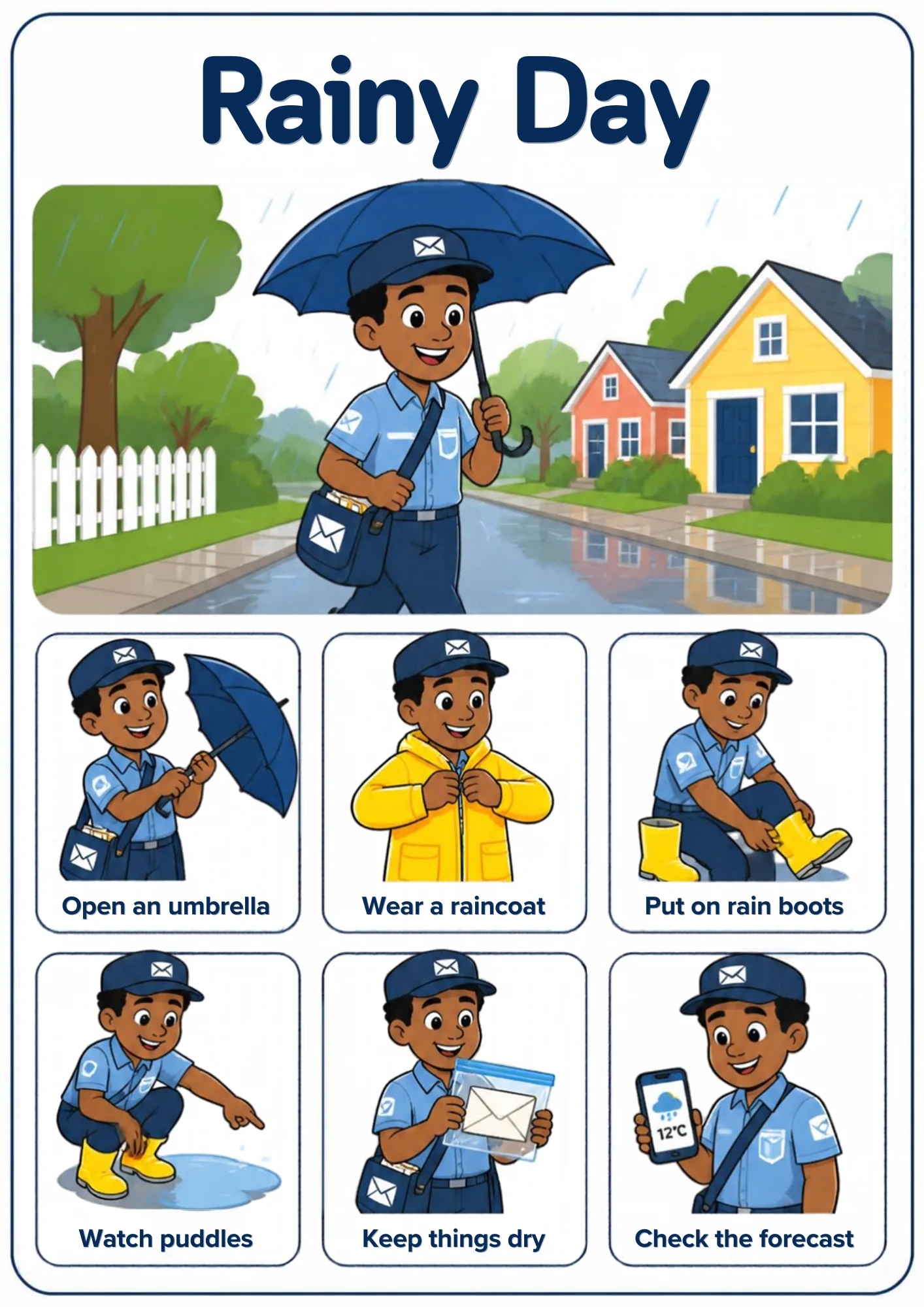
What is this?
A rainy day is when the clouds drop their water steadily over the neighbourhood: grey skies, dripping trees, growing puddles, shiny roads and the whole world smelling of wet stone and green things.
What does it mean?
Rainy days are preparation days — the families who get ready in the right order stay dry and cheerful, and the rain becomes a background drum instead of a day-ruiner. Rain also has jobs: it waters everything, washes the streets and refills the puddle supply.
What does the child need to know?
Your child needs three rainy-day ideas: rainy days ask for the gear sequence — raincoat, boots, umbrella; precious things stay dry in bags and plastic sleeves; and puddles are for polite splashing — small ones yes, road-side ones never.
Why this matters
The rainy day is a sequencing gym: coat before boots or boots before coat? Zip before hood or hood before zip? Every wet morning rehearses ordering, and the payoff is immediate — the child who dresses right stays warm, dry and proud all the way to the door.
What it teaches
Sequencing and self-dressing mastery, responsibility for belongings (the dry letter!), sensory vocabulary for rain sounds, judgement calls about puddles and roads, and the emotional shift from "rain ruins play" to "rain changes play".
Words to learn
rainyumbrellaraincoatbootspuddlesplashdripsoak
Say this to your child
“"It is a rainy day, so we follow the rain plan: raincoat zipped, boots on, umbrella up. Our precious things ride in a dry bag. We walk carefully near roads, and the small puddles in the garden are all ours to splash."”
Step by step
- Show the card: "A rainy day is the clouds watering the whole town — and we have our rain plan."
- Read the picture: the postal worker walks under a big navy umbrella past wet houses; the small panels show him opening the umbrella, zipping a yellow raincoat, pulling on yellow boots, pointing at a puddle, sliding a letter into a clear plastic sleeve to keep it dry, and checking a phone forecast that reads 12 degrees.
- Build the sequence together: coat first, then boots, then umbrella last — because the umbrella needs a hand for the door.
- Teach the keep-things-dry trick: precious things ride in bags or plastic sleeves, just like the letter on the card. What would YOUR child protect from the rain?
- Set the puddle rules with a smile: splash the small garden puddles, step around the kerb-side ones, and never — never — splash towards a road.
Look closer at the picture
On this card a postal worker in a navy cap and light-blue shirt carries a navy mail bag: the big picture shows him walking under a wide navy umbrella on a wet street with houses and a white picket fence; the smaller panels show him opening the folded umbrella, zipping a bright yellow raincoat, pulling on yellow rain boots, crouching to point at a puddle, sliding a letter into a clear plastic sleeve, and holding a phone showing a rain-cloud forecast at 12°C.
Ask your child
"What comes first — the coat or the umbrella?" "How do we keep precious things dry?" "Which puddles are for splashing?" "What is the rain doing for the garden today?"
What your child can say or do
Your child might say: "Coat, boots, umbrella — in that order!" "My letter goes in the dry bag," or the puddle verdict: "That one is a splasher, that one is a monster — we step around it."
Out in the real world
Watch the rain workers: postal carriers, delivery riders, road crews — all dressed for it, all still smiling. Notice what the rain feeds on the walk: thirsty flower beds, full gutters singing, the birdbath brimming. Start a rain bowl on the windowsill — outside, lid off — and measure the night’s catch.
Try it together
Rain-band: wooden spoons on pots, rice in a bottle, fingers on windows — which instrument sounds most like the rain outside? Dry-boat regatta: paper boats race along a gutter’s edge (grown-up pace, shallow water). And the classic rainy-day shelter: a blanket fort with a book and a bowl of snacks while the real rain drums on the roof.
Understanding check
Ask: "What is the rain plan? How do we keep special things dry? Which puddles may we splash?" Coat-boots-umbrella, bags-and-sleeves, garden-only — the rainy day is now an owned day.
Parent tips
Keep the gear at child height by the door — independence dies on a high hook. Let your child own one piece completely (the umbrella choice, the boot colour). And join the splash: one dignified grown-up stomp in a garden puddle buys a year of rainy-day cooperation.
Staying safe
Wet roads make cars slower to stop — hands held at crossings, walking feet on shiny pavements, never any splashing towards the road. Watch for slippery leaves and painted lines, keep umbrella tips away from eyes, and come home to dry clothes before the shivers start.
This lesson pairs with the Rainy Day flashcard in the library — print it, show it, keep it on the fridge. Back to Weather, Seasons & What We Wear (Class 34).