
Excited — a step-by-step lesson for grown-up and child
This lesson names the feeling your toddler wears most afternoons: the pre-park wiggles, the pre-birthday bounce. Excited gets a face on a card and a permission slip for the noise.
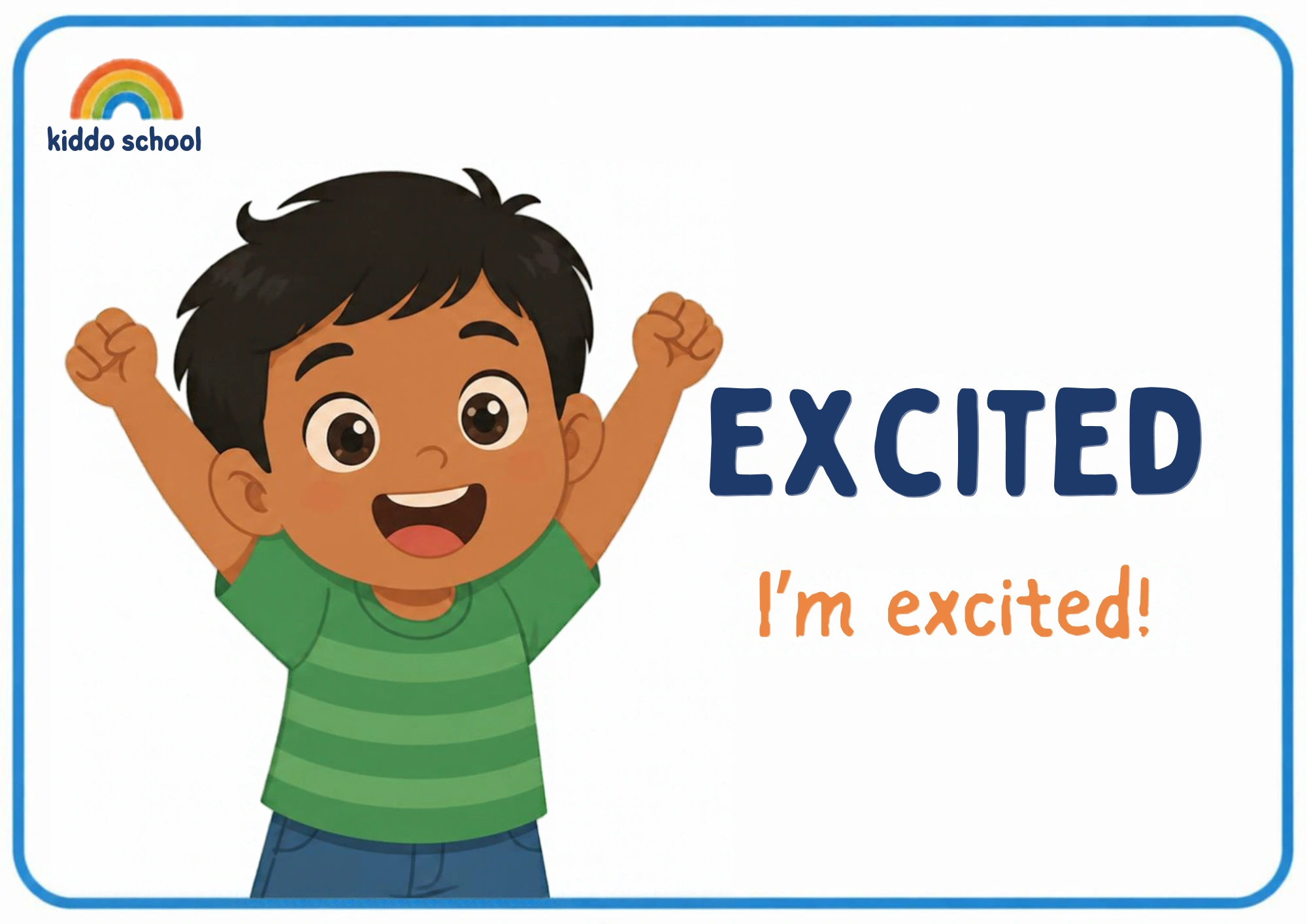
What is this?
Excited is the can’t-sit-still feeling — bouncing, squealing, talking fast, wanting the good thing to start now. The card shows it as a face; your toddler shows it as weather.
What does it mean?
Named excitement sometimes settles by itself: a body that hears you are so excited! often wobbles a little slower, because the feeling has been seen. Naming is not a cure-all — it is a hand on the shoulder.
What does the child need to know?
The feeling is allowed, loudly. The behaviour has banks to run between: bouncing yes, bouncing off the sofa no. Expect excited, a wiggle-demo, or a squeal as answers — all three pass.
Why this matters
Excitement precedes most of the best moments of toddler life, which makes this the highest-frequency feeling in the deck. The word gets daily rehearsals for free.
What it teaches
Feeling vocabulary for high energy, body-awareness, and the first hint that naming a feeling helps steer it — emotional literacy in its native habitat.
Words to learn
excitedwigglebouncewowreadybig
Say this to your child
“"Excited! Look at this face — so wiggly! Are you excited? Bounce like this — wiggle, wiggle, wiggle! Excited is a big, loud feeling and it is allowed. And when we get there… wow."”
Step by step
- Show the card and name it with energy: excited — this face cannot sit still! Let your own body wiggle the word.
- Make the face and the wiggle together: wide eyes, bouncing shoulders, hands a-flutter. Two wiggly seconds, then settle.
- Catch the real thing live: before the park, before dinner guests, before anything good — you are excited! The word arrives while the wiggles are at their best.
- Give the feeling its safe channels: bounce on the spot, wiggle like jelly, squeeze-and-release. Excited bodies get to move — just not off furniture.
- After the good thing happens, retell it: you were so excited, and then — the park! The word and the memory file together.
Look closer at the picture
The card shows an illustrated child having an excited feeling — one wide-awake face full of energy. Ask your toddler to find the excited face, then to show you their own wiggle.
Ask your child
"Where is the excited face?" "Can you wiggle like that?" "Are you excited right now?" "What is coming that is good?"
What your child can say or do
A bounce that says the word for them, a squealed excited!, or both hands waving — the body is the main speaker here. Some toddlers freeze mid-wiggle when named, surprised to be seen; the freeze is the word landing.
Out in the real world
Excitement announces itself daily: shoes by the door, the kettle for bath time, a friend at the window. Name it before the event, and the word becomes part of the anticipation — which is half the fun.
Try it together
Wiggle stop-dance: excited music on, everyone wiggles; music off, everyone freezes. The freeze is the skill — a body that can go from full bounce to still is a body learning its own volume dial.
Understanding check
Before the next good thing, ask how do you feel? An excited, a bounce, or a wiggly nod all pass. Then watch for the word appearing unprompted in your toddler’s own mouth — that is the graduation.
Parent tips
Say the feeling instead of calm down, which has never once worked in the history of toddlers. Naming first, wiggle-channel second, expectation third: excitement managed is excitement enjoyed.
Staying safe
The feeling is always allowed; the body has banks to stay within — no bouncing on sofas, no sprinting toward roads, no wiggling at the top of the stairs. Give the energy a floor, and it gives you a show.
This lesson pairs with the Excited flashcard in the library — print it, show it, keep it on the fridge. Back to Emotions & Feelings (Toddler 7).