
Tired — a step-by-step lesson for grown-up and child
This lesson teaches the feeling that arrives every evening whether anyone invites it or not: tired. The card gives the droop a face, and the wind-down gives it a routine.
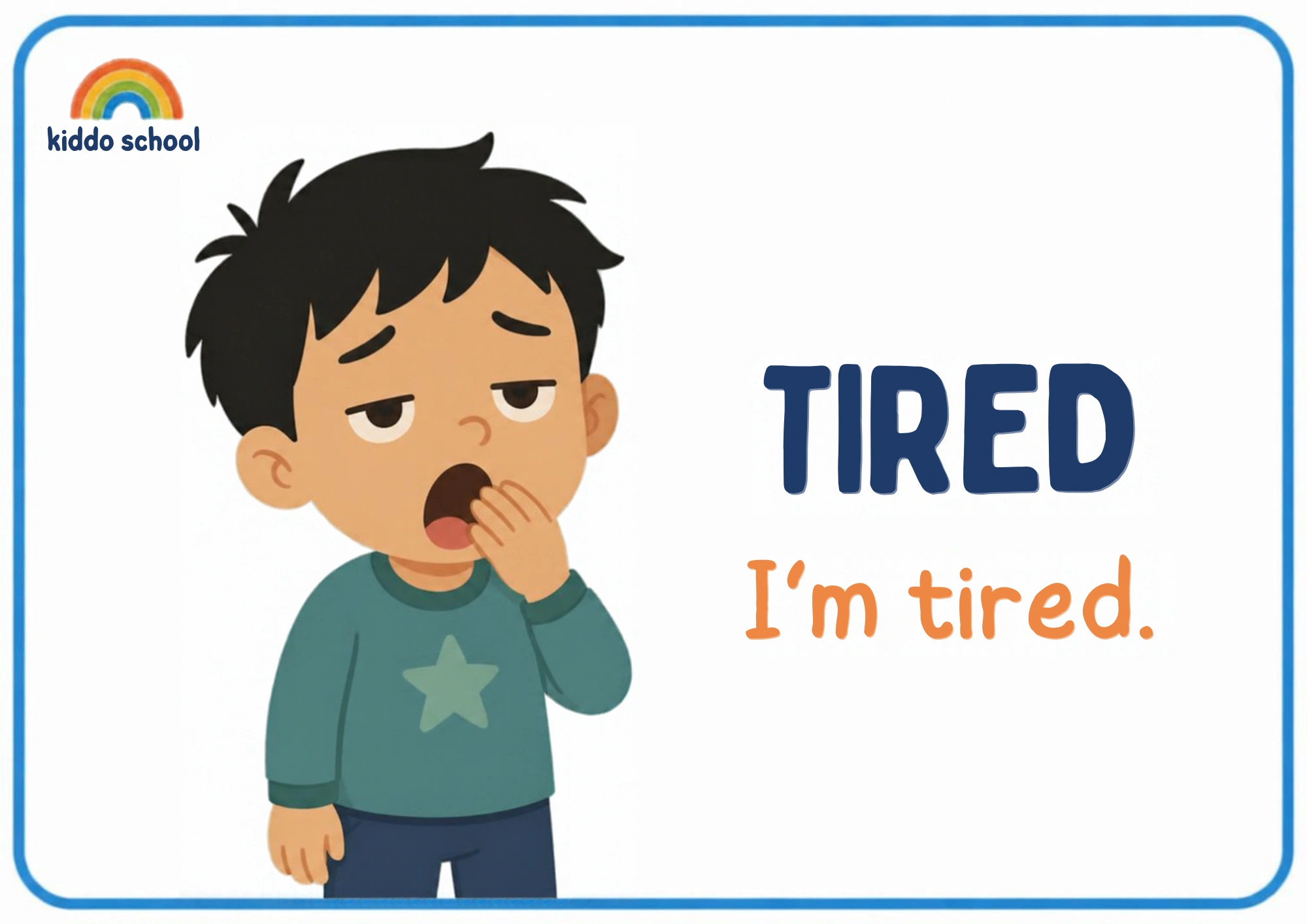
What is this?
Tired is the end-of-day feeling — heavy eyelids, slow body, short temper. Toddlers show it constantly and fight it constantly, which is exactly why the word is worth its weight in calm.
What does it mean?
A named tired feeling can be surrendered to: your body is tired, it is asking for rest works on a toddler in a way bedtime does not. The word turns rest from a punishment into an answer.
What does the child need to know?
Expect a yawn, a droopy demonstration, or a tired whispered from under a fringe. Name the feeling early — before the storm — and let the routine carry the rest.
Why this matters
Tired visits daily, usually on schedule, and it sits behind a fair share of afternoon meltdowns. A word for it is a fire extinguisher mounted by the door.
What it teaches
Feeling vocabulary for body signals, self-noticing, and the habit of reading your own body — the earliest form of self-care.
Words to learn
tiredsleepyrestyawnbedquiet
Say this to your child
“"Tired. This face is feeling tired — sleepy eyes, big yawn. Is your body tired? Tired means time for rest. Come here, let us be quiet together. Sleep is coming, and that is good."”
Step by step
- Show the card at a quiet moment: tired — this face is feeling tired. Let your voice drop low, because tired words travel best softly.
- Make the face together: droopy eyes, a big theatrical yawn, shoulders sliding down. The pretending is gentle comedy and it lands.
- Name the real thing early in the evening: your body feels tired — look, the tired face! Say it before the tears, not after.
- Connect the word to the routine: tired means rest — pyjamas, book, bed. The feeling has a plan, and the plan is kind.
- In the morning, close the loop: you were tired, you slept, and now look at you. The arc teaches that tired always has an answer.
Look closer at the picture
The card shows an illustrated child having a tired feeling — one droopy, sleepy face. Ask your toddler to find the tired face, then to make their very best yawn next to it.
Ask your child
"Where is the tired face?" "Can you yawn like that?" "Is your body tired?" "What does tired mean it is time for?"
What your child can say or do
A yawn caught and copied, a droopy slide to the floor, or tired murmured from inside a cuddle — all are answers. Some toddlers point at the card and then at themselves; that pointing is self-knowledge arriving.
Out in the real world
Tired shows up on time every evening and mid-morning after big outings. Name it at the first yawn and the word becomes the beginning of the wind-down instead of the middle of a fight.
Try it together
Big-yawn theatre: take turns doing the hugest, silliest yawns together, then let the silliness deflate into quiet. The game ends the way the feeling ends — soft, slow, and ready for blankets.
Understanding check
At the first evening yawn, ask how does your body feel? A tired, a yawn, or a lean into your shoulder all pass. A toddler who says tired and walks toward the cot has taken the whole lesson home.
Parent tips
Name tired before the wobbles start — the word works best at the first yawn, worst at the third meltdown. Pair it with the same routine every night; the feeling and the ritual learn each other.
Staying safe
Tired toddlers fall off things: the climbing urge and the droopy body are a bad mix, so low-energy play only after the word is said. Car-seat battles and tired bodies need extra patience and all the straps, every time.
This lesson pairs with the Tired flashcard in the library — print it, show it, keep it on the fridge. Back to Emotions & Feelings (Toddler 7).