
Friendly — a step-by-step lesson for grown-up and child
This lesson names the outward feeling: friendly, the hello-feeling that waves its whole arm. The card gives it a face mid-wave, and the games give it somewhere safe to practise.
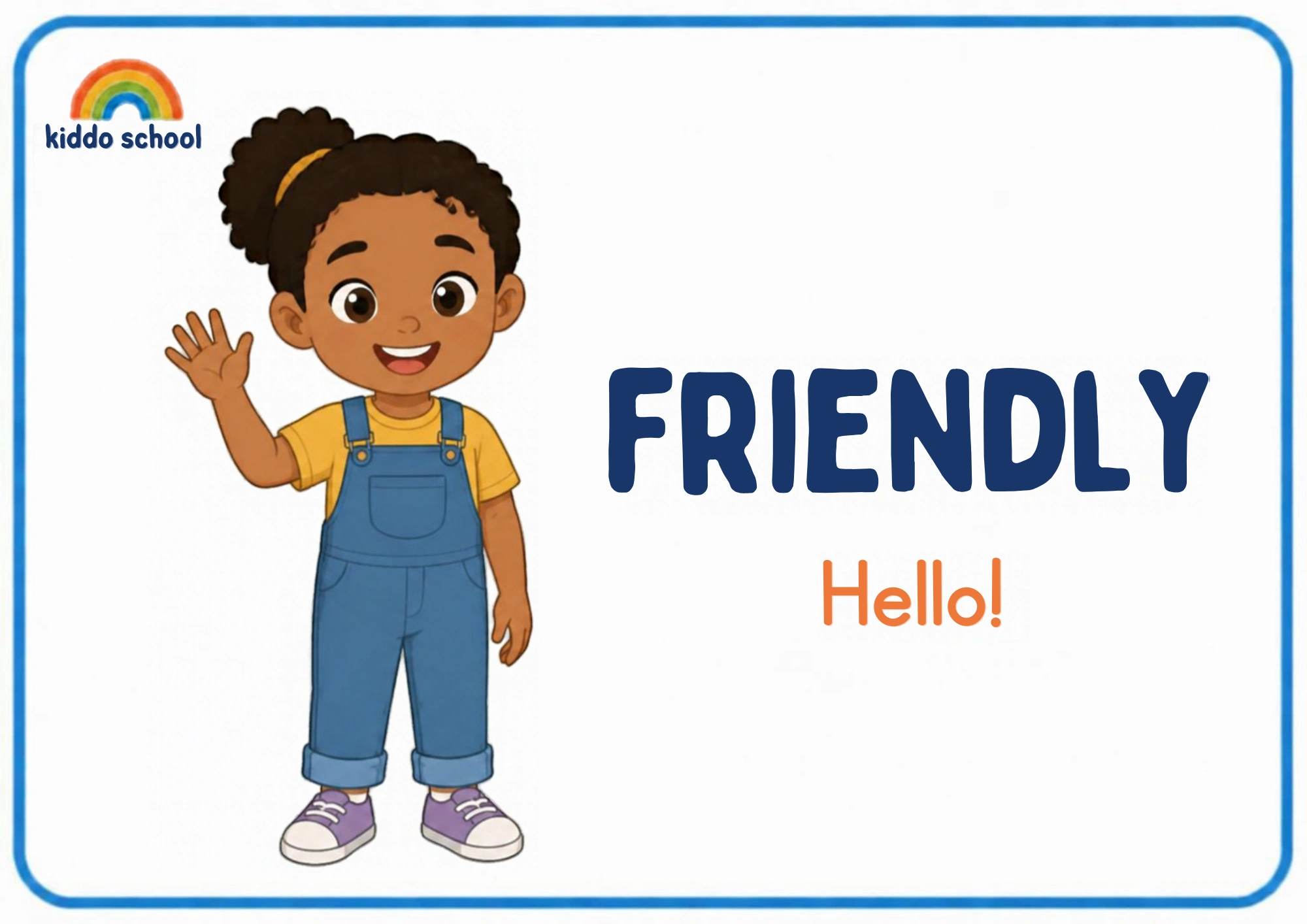
What is this?
Friendly is the open, welcoming feeling — a wave, a smile, a hello offered to dogs, babies and postwomen alike. The card shows it in motion: one illustrated child, mid-wave.
What does it mean?
Friendliness is a feeling and a skill at once: the warmth arrives on its own, and the greeting — wave, hello, smile — is the part that improves with practice. Toys make a patient practice crowd.
What does the child need to know?
Expect a big arm wave, a hello or hi delivered to the card, or a wave aimed at the window. Greetings to strangers remain optional and adult-supervised — the practice happens at home first.
Why this matters
Greetings structure a toddler’s whole social day: arriving, leaving, meeting, waving bye. A named friendly feeling with a rehearsed wave turns each one into a small victory lap.
What it teaches
Social greeting skills, feeling vocabulary for the outgoing moods, and confidence in first moves — the emotional machinery of making friends.
Words to learn
friendlyhellowavehibyesmile
Say this to your child
“"Friendly! This face is waving hello — look at that big wave! Can you wave? Hello, hello! We wave hello, we wave bye-bye. Being friendly is saying hi in your own way — a wave is plenty."”
Step by step
- Show the card and wave at it: friendly — this face is saying hello! Wave back at the card from your toddler’s hand if they need a start.
- Practise the wave in the mirror: big wave, small wave, wave with both arms. Hello can be whispered, shouted, or just waved.
- Run greetings on the toys: wave hello to teddy, wave bye-bye to the duck, say hi to the bus rumbling past. Six greets a day keeps the wave warm.
- At real arrivals, offer the choice: hello, wave, or just watch? Any of the three counts as friendly — the feeling is the point, the words are optional extras.
- Close the loop on goodbyes too: friendly has a second act — wave bye-bye, blow a kiss. Endings done warmly are half of friendliness.
Look closer at the picture
The card shows an illustrated child giving a friendly wave — one open face with a hand in the air. Ask your toddler to find the friendly face, then to wave back at it just as big.
Ask your child
"Where is the friendly face?" "Can you wave like that?" "Who shall we say hello to?" "Can you wave bye-bye?"
What your child can say or do
A full-arm wave with optional sound effects — ha! or hi! — is the complete answer. Some toddlers wave at everything for a day, including the fridge; the enthusiasm is the lesson taking hold.
Out in the real world
Greets happen all day at toddler height: the neighbour, the bus driver, the dog on the other side of the fence. Each wave is a repetition, and each one is free.
Try it together
Wave parade: march through the house greeting everything — hello chair, hello window, bye-bye bath. The parade makes greetings a game and the game makes the real ones easy.
Understanding check
At the next real arrival, watch for the wave — instant, delayed, or from behind your leg, all pass. A hello aimed at a teddy before the real person counts too; the practice crowd gets credit.
Parent tips
Let the child choose the volume and the timing of every hello — the feeling is theirs to spend. Your job is the warm example: wave first yourself, and let friendliness be caught rather than taught.
Staying safe
Real greetings happen on your terms: grown-ups decide who gets close, hands get held near roads, and waving from your hip is always a valid distance. Friendly and careful are the same lesson.
This lesson pairs with the Friendly flashcard in the library — print it, show it, keep it on the fridge. Back to Emotions & Feelings (Toddler 7).