
Kind — a step-by-step lesson for grown-up and child
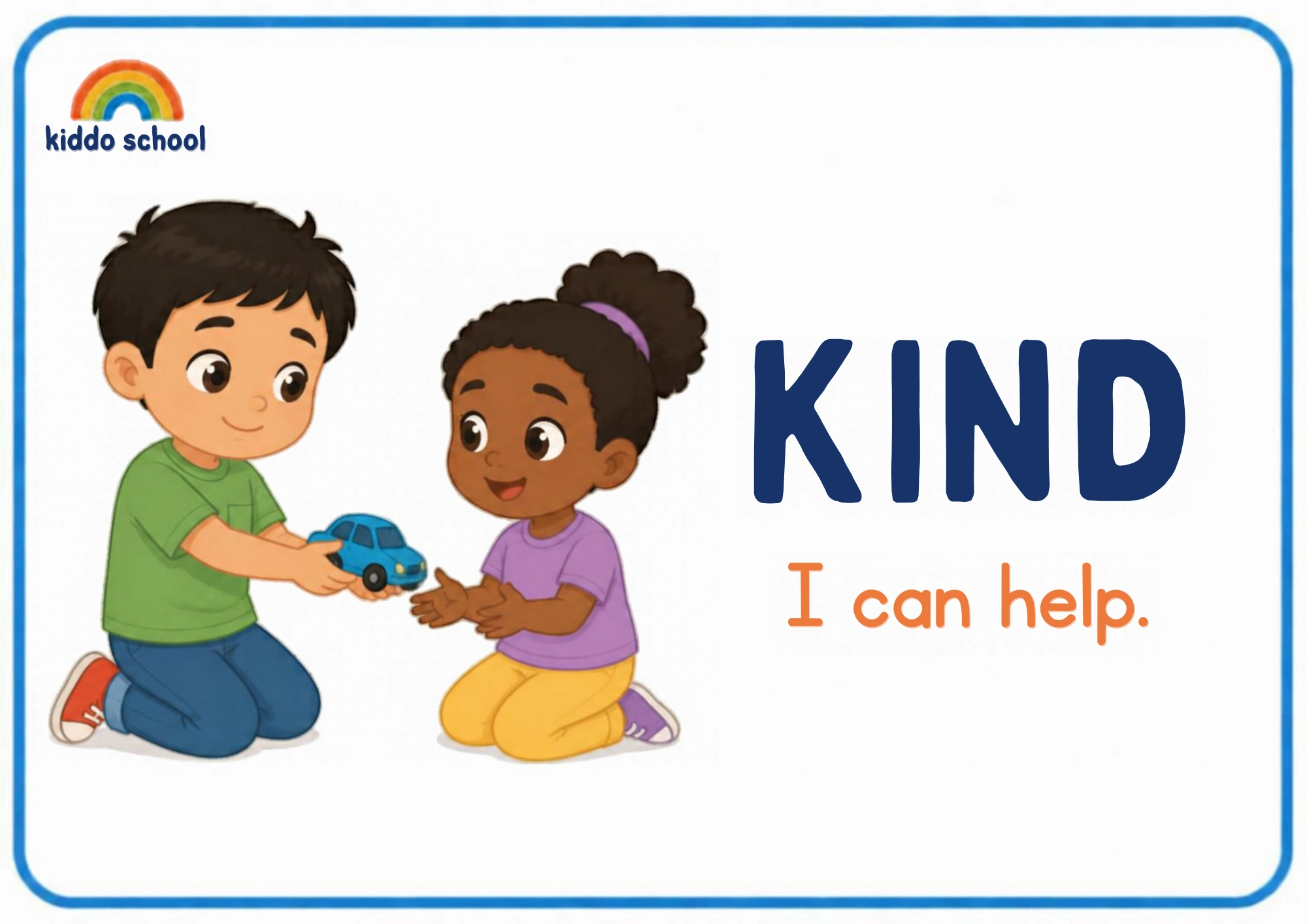
This lesson catches the quiet feeling with the biggest reputation: kind. The card shows a child being kind and helpful, and the week is full of small versions waiting to be named.
What is this?
Kind is the helping, gentle feeling — the soft pat, the shared bite, the blanket carried to a cold teddy. The card shows it in action: a child being kind and helpful.
What does it mean?
Kindness named gets repeated: a toddler who hears that was kind! while the gentle hands are still gentle learns exactly what the word points at. Named kindness is how a habit begins.
What does the child need to know?
Catch it small and in the moment: the pat, the crumb, the delivery of a shoe. Expect a grin, a kind repeated, or more gentleness on the spot — the behaviour blooms under attention.
Why this matters
Kindness happens hourly at two and almost never gets a headline. Naming it turns scattered gentle moments into a self-image: I am someone who is kind.
What it teaches
Prosocial behaviour, gentle-hands habits, and feeling vocabulary for the caring moods — the emotional start of ethics, built on teddy care.
Words to learn
kindgentlehelpsharesoftcare
Say this to your child
“"Kind! This child is being kind — gentle hands, helping. Can you do gentle hands? Stroke, stroke — soft. You gave Teddy a blanket — that was kind! Kind means helping and being gentle. You know how to do that."”
Step by step
- Show the card and name the action inside the feeling: kind — this child is being kind and helpful. Look how gentle.
- Practise gentle hands right there: stroke your own arm, stroke your toddler’s arm, then let them stroke yours. Slow is the whole secret.
- Run it on the toys: teddy gets a blanket, dolly gets a pat, the rabbit gets a gentle touch. Say kind each time the hands stay soft.
- Catch the real thing and name it instantly: you gave Teddy your blanket — how kind! The naming must land while the moment is still warm.
- Let kindness be contagious: when your toddler is kind to you, say so, and accept it. The feeling needs to be received as much as practised.
Look closer at the picture
The card shows an illustrated child being kind and helpful — one caring face, one helping gesture. Ask your toddler to find the kind child, then to show you their own gentle hands.
Ask your child
"Where is the kind child?" "Can you do gentle hands?" "How did you help today?" "Was that kind or rough?"
What your child can say or do
A pat that slows down mid-air when the word lands, a kind echoed proudly, or a teddy wrapped without prompting — all are the word taking root. Rough moments are information too: gentle hands, said once, and try again.
Out in the real world
Kindness grows at home on real targets: the baby, the cat, the visitor, you. One named kind moment a day is the whole curriculum — and it compounds.
Try it together
Gentle-zoo: gather the soft toys and visit each one with careful strokes — kind hands for the lion, kind hands for the bear. The zoo runs on the same skill the family cat is hoping for.
Understanding check
Watch for gentleness arriving without prompting: a soft pat, a shared bite, a helped-up friend. Name each one. A toddler who says kind while doing it has closed the loop entirely.
Parent tips
Notice kindness rather than demanding it — the feeling grows on being caught, not commanded. Keep the bar low and the catches frequent: a single gentle pat is headline material at two.
Staying safe
Gentle hands have real destinations: pets get stroked on the back with permission, babies get supervised hellos, and grown-ups stay within reach of every new meeting. Kindness and safety practice the same hands.
This lesson pairs with the Kind flashcard in the library — print it, show it, keep it on the fridge. Back to Emotions & Feelings (Toddler 7).