
Happy — a step-by-step lesson for grown-up and child
This lesson starts the feelings deck where every toddler already lives: happy. The card gives the grin a face to study, and the day supplies a hundred real moments to name it.
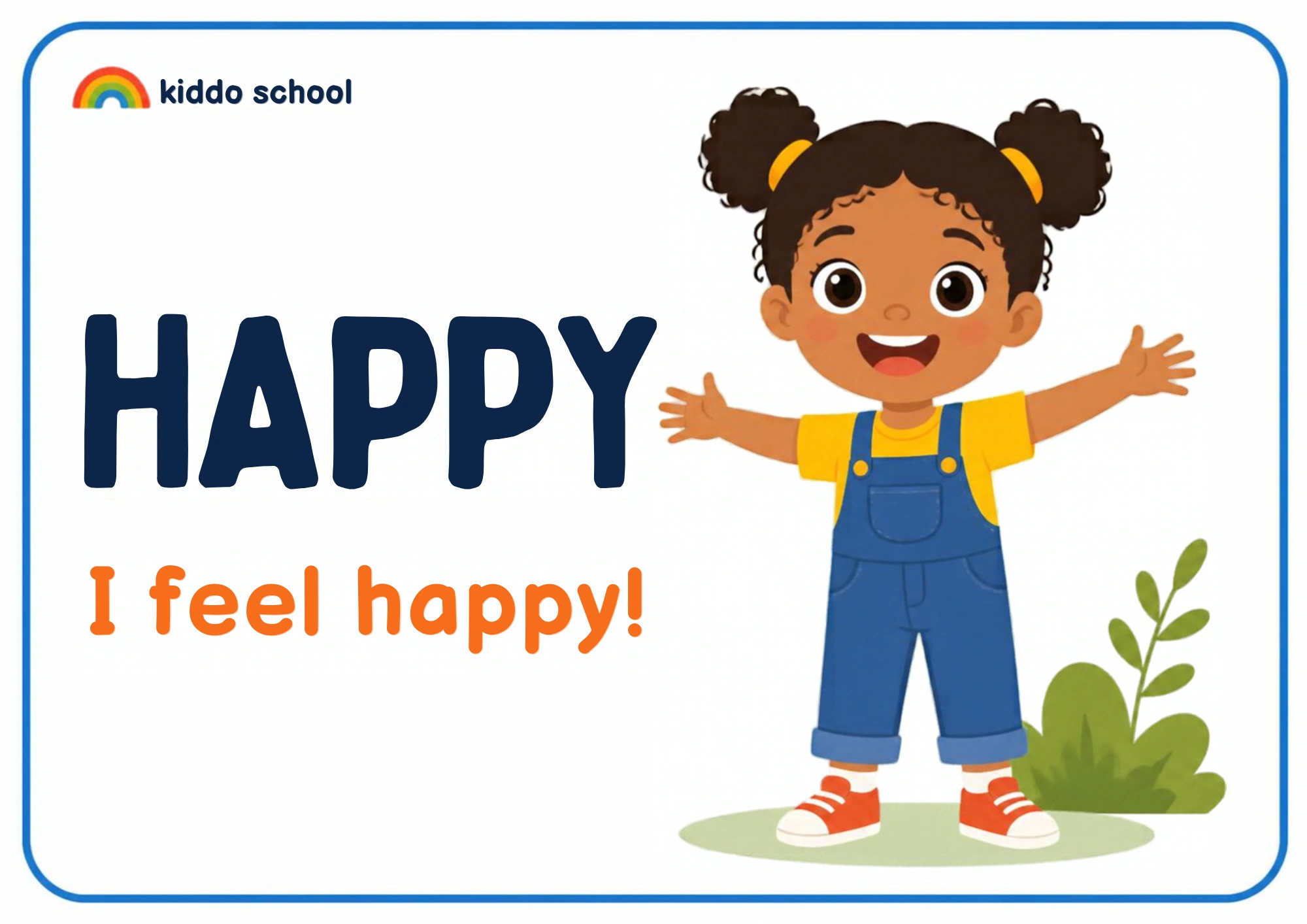
What is this?
Happy is the feeling that arrives with a grin, a bounce and a shout — the one your toddler produces daily without any help. The card puts a face on it so the word has somewhere to stick.
What does it mean?
Feelings are invisible until they get faces and words. Naming happy while it is happening builds the bridge between what a child feels inside and what everyone can see — the start of all self-knowledge.
What does the child need to know?
Any grin counts as an answer: a copied smile, a pointed finger, or happy shouted mid-giggle. Nothing is being tested — you are simply giving the good feeling its name, over and over, while it lasts.
Why this matters
Happy happens many times a day, free of charge. A feeling word with that many live rehearsals sticks fast — and once happy is named, every other feeling has a template to fit.
What it teaches
Feeling vocabulary, face-reading, and self-noticing — your toddler connecting their own inside weather to a word another person can understand.
Words to learn
happysmilefacegringladlaugh
Say this to your child
“"Happy! Look at this face — what a big smile. Can you do that happy face? There it is! You look happy right now. Happy, happy — the best feeling to say."”
Step by step
- Show the card and name the feeling twice: happy — this face is feeling happy. Let your voice smile along with the word.
- Make the face together: pull your biggest grin, hold it, wobble it. A mirror doubles the fun if one is close.
- Catch happy live: next giggle, say it on the spot — you look happy! The word lands hardest in the very second the feeling is here.
- Accept every version: a grin, a point at the card, or a delighted happy! are all complete answers at two.
- Keep naming it all week — happy at the swing, happy at the snack, happy at the reunion — so the word attaches to the feeling, not to the card.
Look closer at the picture
The card shows an illustrated child having a happy feeling — one face, one feeling, nothing else competing. Ask your toddler to find the face, then make one just like it at their own face.
Ask your child
"Where is the happy face?" "Can you make that face?" "Who looks happy right now?" "Did you feel happy today?"
What your child can say or do
Expect happy delivered with the matching grin — a word worn on the face. Some toddlers answer by pointing at themselves, which is the self-noticing skill arriving early; some just giggle, and the giggle is an answer.
Out in the real world
Happy moments arrive all day without scheduling: the swing, the dog, the biscuit. Say the word at each one and the card keeps teaching from the drawer without being fetched.
Try it together
Happy hunt: make happy faces at each other across the table until someone laughs — then name what just happened. The laughter proves the feeling, and the naming proves the word.
Understanding check
Next time a big grin appears, ask how do you feel? A happy, a grin, or a bounce all pass. Then show the card at a flat moment — if your toddler still finds the happy face, the picture has become the dictionary.
Parent tips
Name the feeling while it is happening, not after: the live version sticks. Stay light — this card should never become a demand to perform happiness; it is a label for something already there.
Staying safe
No safety angle here — happy is the lowest-risk lesson in the deck. The only note: let the feeling be real, not commanded; toddlers cannot manufacture smiles on request, and nobody should have to.
This lesson pairs with the Happy flashcard in the library — print it, show it, keep it on the fridge. Back to Emotions & Feelings (Toddler 7).