
Sad — a step-by-step lesson for grown-up and child
This lesson introduces the down feeling with the same calm voice as all the others: sad gets a face on a card, a word that fits in a small mouth, and a grown-up who stays.
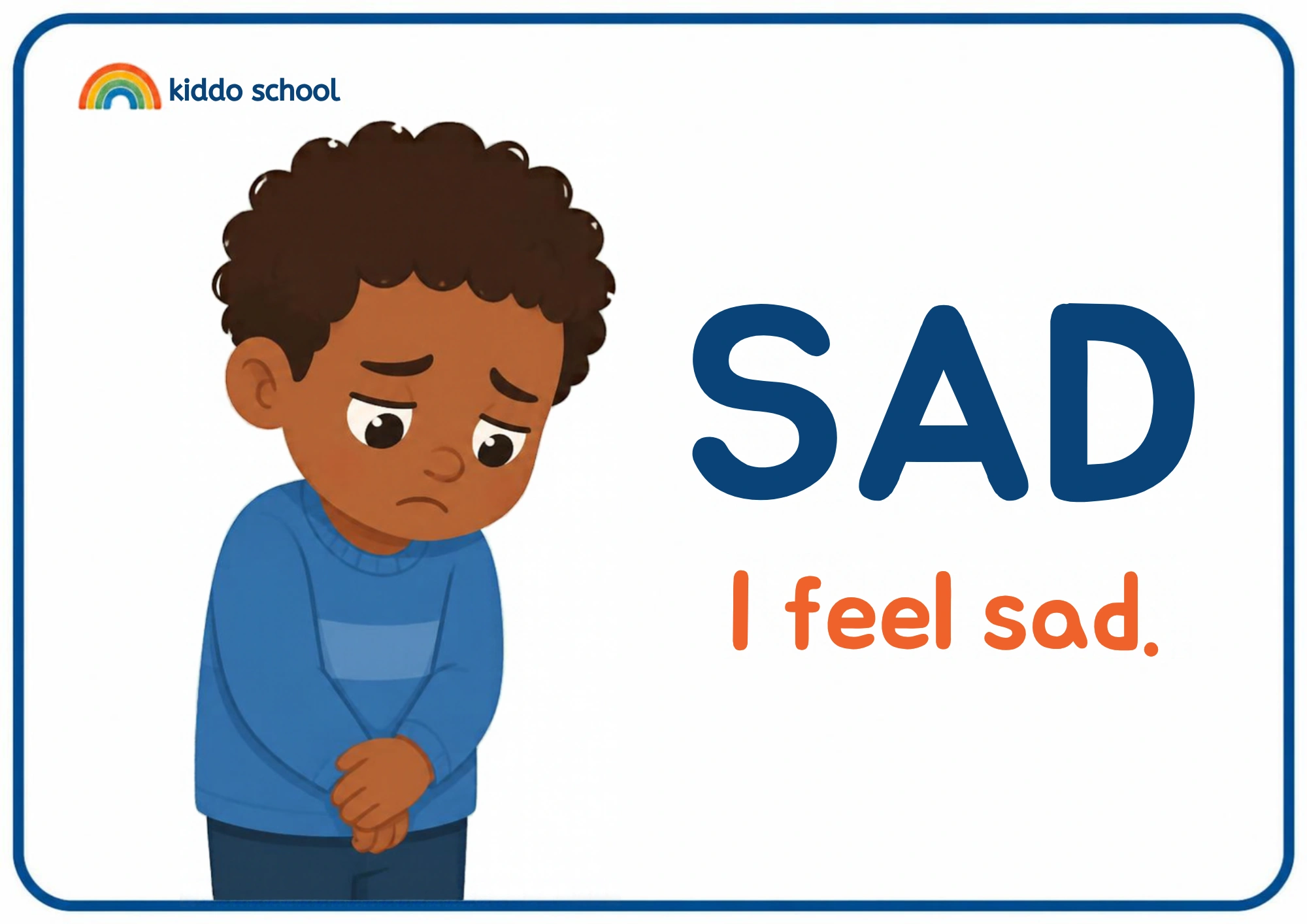
What is this?
Sad is the feeling that brings droopy shoulders, a wobbly lip and sometimes tears — the one that asks for company. The card shows it safely, where it can be looked at without living it.
What does it mean?
A named sadness is a smaller sadness: the word gives your toddler something to hold while the feeling passes. Being allowed to look at sad on a card teaches that this feeling is normal, welcome and survivable.
What does the child need to know?
Expect pointing, a quiet face, or a solemn word — sad is a soft answer, not a performance. If tears arrive during the lesson, the lesson has arrived in real life: comfort first, card later.
Why this matters
Small sorrows fill a toddler’s week — the dropped biscuit, the finished song, the door that closed. Each one is a live chance to say the word gently and mean it.
What it teaches
Feeling vocabulary for the hard feelings, comfort-seeking, and the deep lesson that all feelings are allowed — sad included, always.
Words to learn
sadtearscuddlefeelingssoftbetter
Say this to your child
“"Sad. This little face is feeling sad — see the soft eyes? Sometimes we all feel sad. If you feel sad, come and find me. Cuddles help. Sad goes away, and love stays."”
Step by step
- Show the card with a quiet voice: sad — this face is feeling sad. Let the calm in your voice do the first teaching.
- Make a sad face together in the mirror: droopy mouth, soft eyes. Two seconds is plenty — then let the faces rest.
- Ask where the sad face is and let your toddler find it; a gentle point is a full answer.
- When a real small sorrow shows up, name it low and slow: that made you sad. Then open your arms — the cuddle is part of the lesson, not a break from it.
- Return to the card afterwards, once the tears have dried: you felt sad, and now you feel better. The full arc, told in eight words.
Look closer at the picture
The card shows an illustrated child having a sad feeling — one quiet face to study. Ask your toddler to find the sad face, then to show you their own sad face, soft and slow.
Ask your child
"Where is the sad face?" "Can you do a sad face?" "What helps when you feel sad?" "Who gives good cuddles?"
What your child can say or do
A solemn point, a practiced droopy face, or sad whispered like a secret — all are answers. Some toddlers pat the card kindly; the comforting instinct is the deepest version of this lesson.
Out in the real world
Real sad moments are the lesson: name the feeling when it comes, stay close, and let the tears run their course. The card can wait on the shelf — the feeling cannot.
Try it together
Cuddle corner: when sadness visits, take your toddler and the card to a soft spot together. Look at the sad face, say the word once, and let the cuddle do the rest of the talking.
Understanding check
After a real sad moment has passed, show the card and ask what happened. A point, a sad face, or the word itself means the feeling and the label have met. Comfort given and received is the pass mark, every time.
Parent tips
Your calm is the whole atmosphere: sad named in a steady voice teaches that the feeling is survivable. Resist fixing fast — the sitting-with is the skill, and it is your skill as much as theirs.
Staying safe
Sad is allowed, always; tears are allowed too. The honest note: if sadness lingers for days, eats the appetite or the sleep, that is beyond a card — bring it to your health visitor or doctor, who are there for exactly this.
This lesson pairs with the Sad flashcard in the library — print it, show it, keep it on the fridge. Back to Emotions & Feelings (Toddler 7).