
Proud — a step-by-step lesson for grown-up and child
This lesson catches the feeling that arrives just after a hard thing works: proud. The card gives the chin-up moment a face, and your words give it a name that makes the glow last.
What is this?
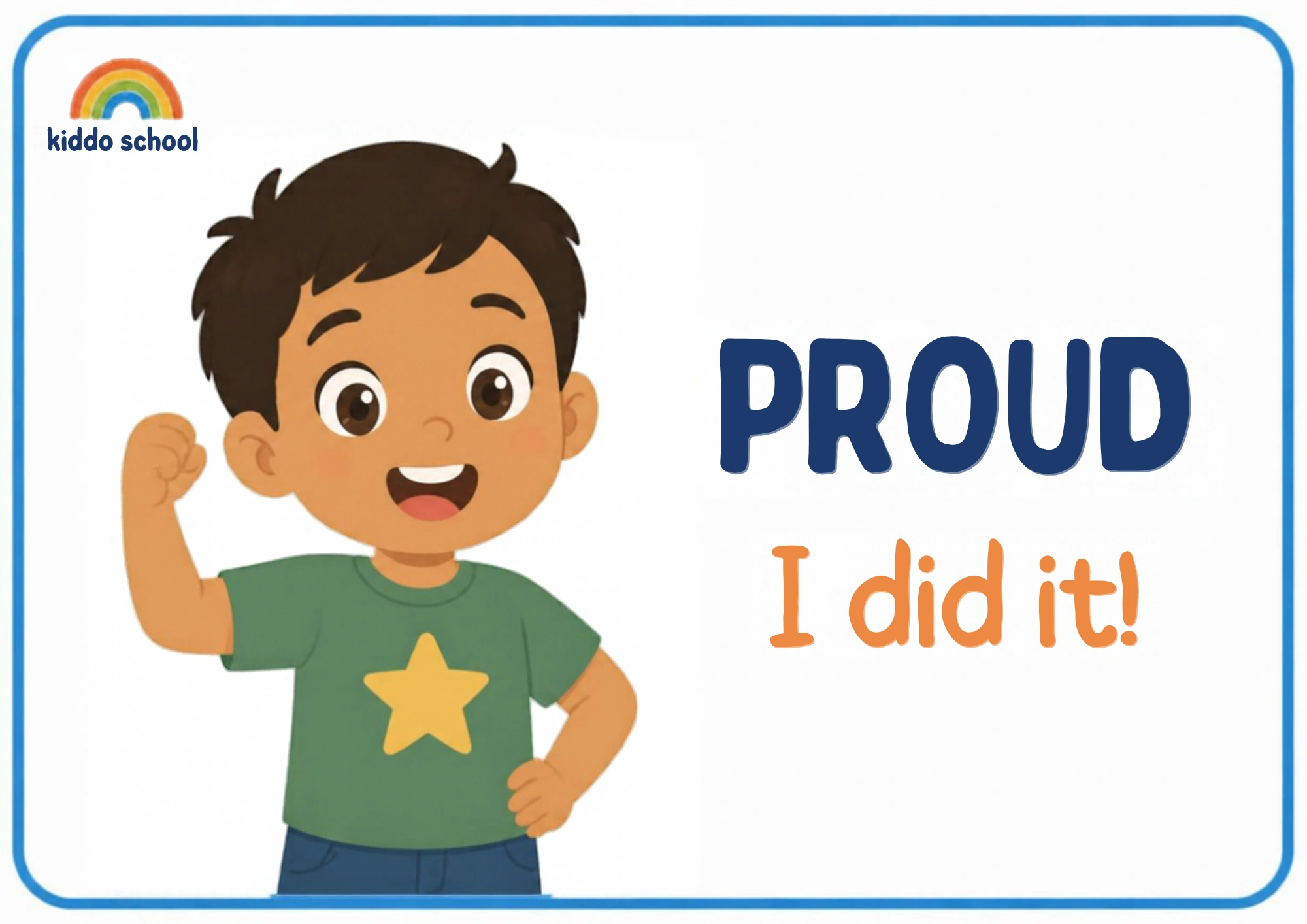
Proud is the earned feeling — chest out, chin up, a smile that cannot sit still, arriving after something took real trying. The card shows it as a face; your toddler supplies the achievements.
What does it mean?
Proud connects effort to feeling: your toddler learns that the warm glow after trying hard has a name, and that the name comes from inside them, not from a prize. That is the seed of healthy motivation.
What does the child need to know?
Name it at the moment of success and again at retelling: you did it — you look proud! Expect a grin, a cheer, or proud said with the chest puffed. All pass; the grin most of all.
Why this matters
Toddlers achieve hard things hourly — stairs, zips, towers. Each achievement is a live chance to wire effort to feeling, and the wiring is free.
What it teaches
Achievement vocabulary, effort-praise habits, and self-esteem built on doing — the feeling that makes toddlers try again tomorrow.
Words to learn
prouddidtryagainwowhard
Say this to your child
“"Proud! This face did something hard — look how it stands up tall! Can you stand like that? You did it! You kept trying and it worked. You must feel so proud. I am proud of you too."”
Step by step
- Show the card and name the feeling: proud — this face did something hard and it worked! Let your chin lift as you say it.
- Make the face together: chest out, chin up, hands on hips. Superhero posture is the honest body language of this feeling.
- Catch it live: next tower, next zip, next step climbed — you did it! You look proud! The word lands while the glow is warm.
- Praise the trying out loud: you kept going, you tried again, you did it yourself. The effort is the story, not just the win.
- Retell it at bedtime: today you were proud, because you built the tower all by yourself. Named achievements become part of who your toddler is.
Look closer at the picture
The card shows an illustrated child having a proud feeling — one tall-standing, chin-up face. Ask your toddler to find the proud face, then to stand tall like it, hands on hips.
Ask your child
"Where is the proud face?" "Can you stand tall like that?" "What did you do today?" "How did it feel when it worked?"
What your child can say or do
A chest-out march, a both-arms-up did it!, or proud delivered as poud with full posture — the body carries the word. Some toddlers point at the card and then at their own tower; that pointing is the connection.
Out in the real world
Achievements fill the day: the shoe that went on, the cup that got carried, the step that got jumped. One named proud per day keeps the word warm and the trying coming.
Try it together
Did-it parade: at the end of the day, march through three things your toddler did themselves, each with a proud-face salute. The parade teaches the feeling by collecting the evidence.
Understanding check
After the next hard-won success, ask how do you feel? A proud, a chest-out grin, or a did it! all pass. Then listen for the word arriving unprompted in your toddler’s own retelling — that is the word moving in.
Parent tips
Praise the effort rather than the talent: words about keeping on build persistence, while clever-child talk quietly builds a fear of failing. Keep the word for genuine effort — your toddler’s own measure of hard is the one that counts.
Staying safe
No safety angle beyond cheering safely — the proud parade stays off the furniture. The honest note: let the child do the doing; help offered too fast steals the feeling this card exists to name.
This lesson pairs with the Proud flashcard in the library — print it, show it, keep it on the fridge. Back to Emotions & Feelings (Toddler 7).