
Worried — a step-by-step lesson for grown-up and child
This lesson names the quiet, frowny feeling that comes before: a large dog, the strange cot, the first day somewhere new. Worried gets a word, and the word gets a plan.
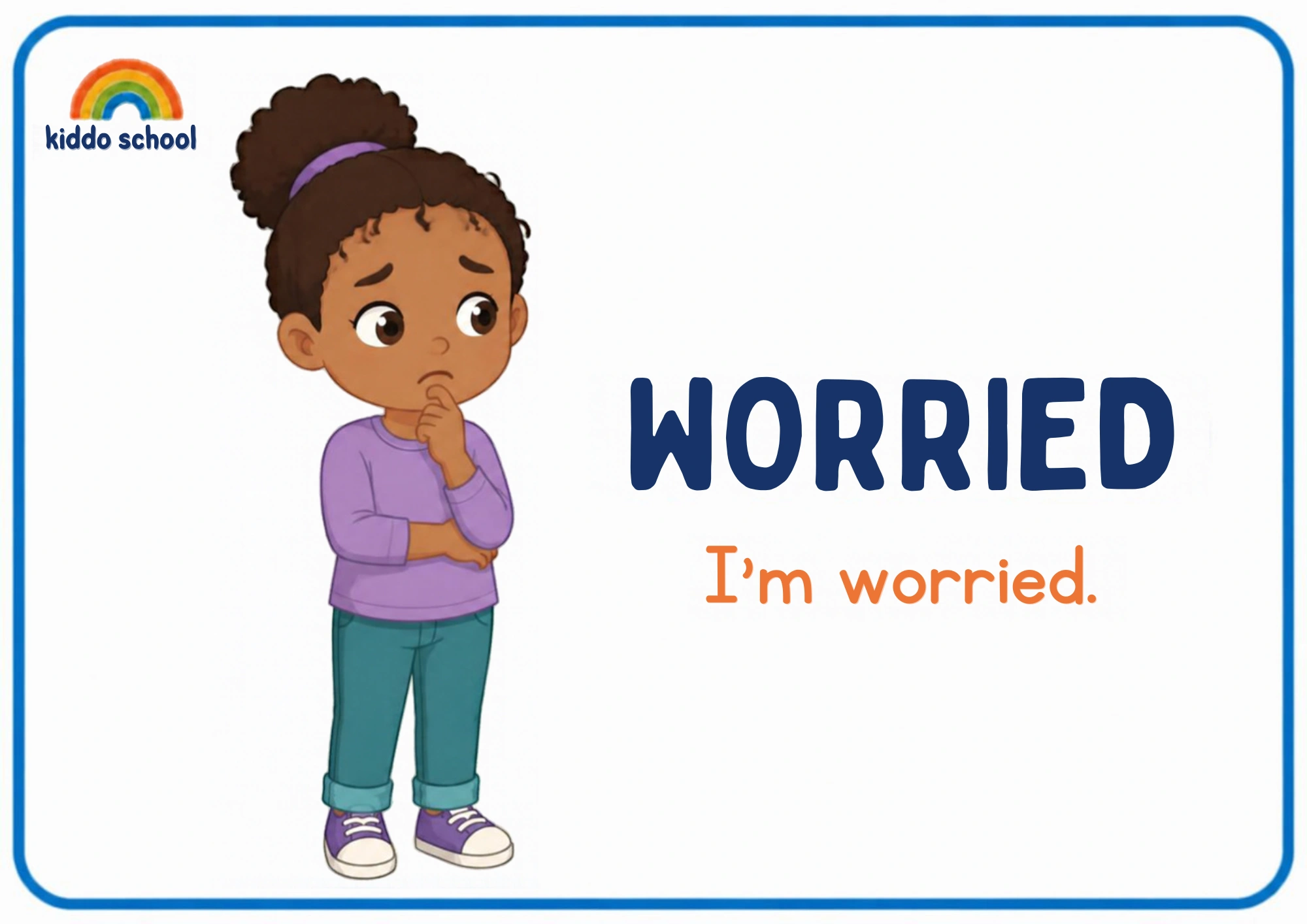
What is this?
Worried is the before-feeling — furrowed brow, clingy body, questions in the eyes. It arrives when something might happen, and at two, most might-happens loom large.
What does it mean?
Worries shrink when they meet a plan: first shoes, then hello, then home. A plain map of what comes next gives the feeling edges — and your calm does the rest of the reassuring.
What does the child need to know?
Expect a point, a frown-copy, or worried said small. Do not argue the worry away or promise outcomes; acknowledge it, sketch the plan, and stand close. Company is the cure that works.
Why this matters
New things arrive weekly at two, and each one casts a shadow before it arrives. A named feeling with a named plan turns dread into a map your toddler can read.
What it teaches
Feeling vocabulary for anticipation, plan-making, and the trust loop — worry spoken, grown-up steady, world predictable again.
Words to learn
worriedhmmplannexttogetherhere
Say this to your child
“"Worried. This face is feeling worried — see the little frown? Everyone feels worried sometimes. When you do, tell me, and we will make a plan together. First this, then that — and I stay with you."”
Step by step
- Show the card gently: worried — this face is thinking about something that might happen. Furrowed brow and all.
- Make the face together, softly: small frown, chewing lip. Then let the face rest — the pretending stays light.
- Teach the tool: when you feel worried, we say worried, and then we make a plan. Plans make big feelings smaller.
- Rehearse on a small real one: the big dog tomorrow — first we look from the window, then we hold hands, then we decide. Say the plan in three beats.
- When a real worry visits, use the sequence: name it, plan it, stay close. Afterwards, tell how it went — the ending is the medicine.
Look closer at the picture
The card shows an illustrated child having a worried feeling — one furrowed, thinking face. Ask your toddler to find the worried face, then to make their own small thinking-frown beside it.
Ask your child
"Where is the worried face?" "Can you make a worried face?" "What helps when you feel worried?" "What is our plan?"
What your child can say or do
A point at the card, a worried whispered into your shoulder, or a frown offered in miniature — all are answers. A toddler who brings the card during a wobbly moment has learned to ask for help with it.
Out in the real world
Worries announce themselves in clingy days and stalling bedtimes. Name the feeling, sketch the next three steps out loud, and let your steadiness answer the part words cannot.
Try it together
Plan-the-day game: line up three toys and give the day a map — first blocks, then snack, then park. Toddlers who can see the shape of what happens next carry fewer unnamed worries.
Understanding check
After the next mapped event, ask how you felt before. A worried, a nod, or a point at the card all pass. The deeper pass mark: your toddler brings you the worry earlier next time — trust compounding.
Parent tips
Acknowledge before you reassure — yes, that dog is big comes first; the plan comes second. Skip promises about what will happen; your calm and the map together are the honest comfort.
Staying safe
All feelings welcome — including the pre-feelings that arrive early. Do not dismiss or mock a worry; acknowledge it and stay near. If worries grow big enough to run the day, a chat with your health visitor is the strong move, not a failure.
This lesson pairs with the Worried flashcard in the library — print it, show it, keep it on the fridge. Back to Emotions & Feelings (Toddler 7).