
Scared — a step-by-step lesson for grown-up and child
This lesson lets your toddler study fear from the safest seat there is: a card, a cuddle, and a word. Nobody here has to be brave — the feeling just gets to have a name.
What is this?
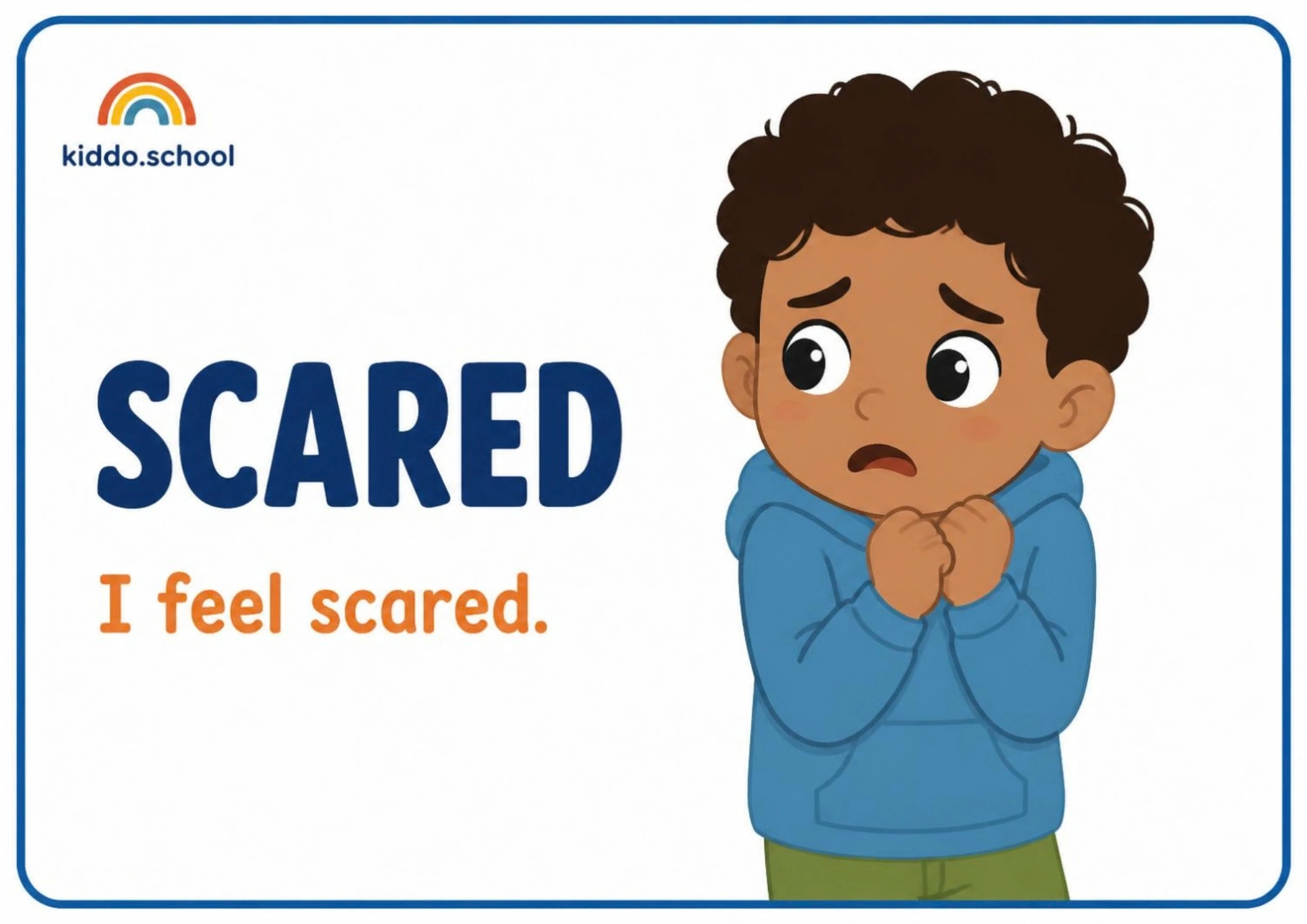
Scared is the wide-eyed feeling that arrives with loud noises, big dogs and dark corners — the one that sends small bodies behind trusted legs. The card shows it without any danger attached.
What does it mean?
A fear named is a fear that can be talked about: your toddler learns that scared is a feeling everyone has, and that saying it brings help instead of shame. Safety grows from company, not from pushing.
What does the child need to know?
Study the face, make it gently if your toddler wants to, and never demand bravery. If a real fright arrives, the order is fixed: feeling named, closeness given, story told afterwards.
Why this matters
Frights are daily at two — the hoover, the thunder, the hand-dryer. A word that works mid-scare turns each one into a moment of connection instead of chaos.
What it teaches
Feeling vocabulary for the wobbliest feeling, comfort-seeking, and the trust loop — fear named, grown-up arrives, world made safe again.
Words to learn
scaredhidecuddlesafebravehere
Say this to your child
“"Scared. This face is feeling scared — big wide eyes. Everyone feels scared sometimes. When you feel scared, say scared, and I will come. I stay close. The scared feeling gets smaller with company."”
Step by step
- Show the card softly: scared — this face is feeling scared. Wide eyes, tucked-in arms. Let your toddler look as long as they like.
- Make the face together, briefly and kindly: wide eyes, small squeak. Then let the faces rest — pretending is a game, not an exam.
- Say the ending every story needs: when you feel scared, I come to you, and we stay close until the scared feeling goes.
- If a real fright happens, name it in one breath — that noise gave you a scare — then scoop, settle, stay. The card can join in afterwards.
- Retell the fright gently once it is over: the noise happened, you felt scared, I came, and then it was fine. Stories with endings shrink fears.
Look closer at the picture
The card shows an illustrated child having a scared feeling — one wide-eyed face to study from a safe distance. Ask your toddler to find the scared face, and to point at what the arms are doing.
Ask your child
"Where is the scared face?" "Can you make a scared face?" "What helps when you feel scared?" "Who comes when you call?"
What your child can say or do
A point from a safe lap, a whispered scared, or hiding the card behind a cushion — all are answers, and the hiding is honest too. Some toddlers simply lean into you; leaning is the lesson working.
Out in the real world
Real frights get the same script every time: name the feeling, offer the closeness, add the ending later. Your toddler learns the sequence by heart — feeling, word, grown-up, calm.
Try it together
Brave-and-safe game: hide a toy somewhere mild, find it together, and narrate — the toy felt scared, then you came, now it is happy. Your toddler gets to be the rescuer, which is the deepest way to learn the script.
Understanding check
After the next fright, ask later: what did you feel? A scared, a point at the card, or hiding behind your leg with eye contact all pass. The real pass mark is the arm that reaches for you — trust installed.
Parent tips
Take fears at face value and answer them with company, not logic. Skip teasing entirely — a mocked fear teaches hiding, not courage. Your calm is the shelter; the word is the door into it.
Staying safe
All feelings are welcome, and scared most of all needs saying out loud. Never push a frightened child toward the scary thing — closeness first, retreat freely offered, and progress at the pace of the child.
This lesson pairs with the Scared flashcard in the library — print it, show it, keep it on the fridge. Back to Emotions & Feelings (Toddler 7).