
Squirrel — a step-by-step lesson for grown-up and child
This lesson borrows the garden’s quickest game: your toddler scurries and freezes like the squirrel on the card, plays the nut-hiding trick that real squirrels play all winter, and learns to watch the park’s best show from the path.
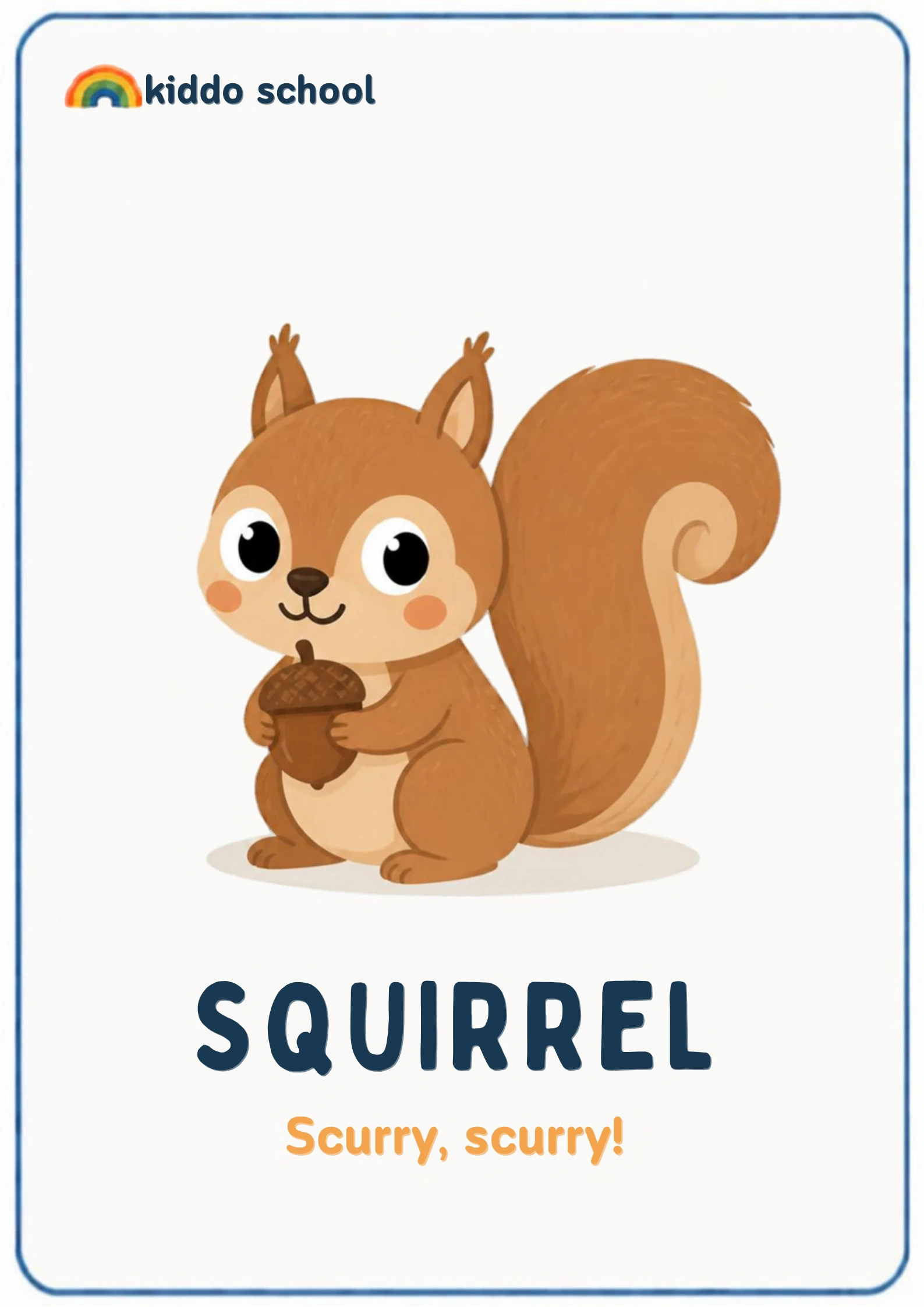
What is this?
A squirrel is a quick, bushy-tailed animal that runs up trees, along fences and across lawns, burying nuts to find again later. Its tail flicks and twitches — and it is almost always the first wild animal a toddler meets doing something dramatic.
What does it mean?
Squirrels close the set with the game toddlers were born for: dash, stop, look. The nut-burying story gives the dash a plot, and the tail gives the whole animal a flag your child will spot from a pram at fifty paces.
What does the child need to know?
Squirrels scurry, freeze and flick their fluffy tails, and they are watch-from-the-path friends: wild things stay wild, so we never chase, touch or feed them — admiring is the better gift.
Why this matters
Freeze-and-watch is attention training disguised as the squirrel’s own trick, and spotting one in a tree is a genuine search-and-find triumph. Owning an animal seen every day builds the confident feeling that the world is knowable.
What it teaches
Visual tracking at top speed, impulse control (the freeze), pretend play with a plot (bury, remember, dig), and respect for wild animals met on their own terms.
Words to learn
squirreltailtreenutsscurrywatch
Say this to your child
“"A squirrel! See the big fluffy tail — twitch, twitch! Squirrels run up trees and bury their nuts for winter. Can you scurry like a squirrel? Now freeze — and look around! When we see a real one, we stand on the path and watch its show. No chasing, no feeding — just watching."”
Step by step
- Show the card and say squirrel — then wag an arm-tail behind you: the make-believe tail makes the word unforgettable.
- Play the squirrel’s own game: scurry three steps, freeze, look left, look right, scurry again — narrating every move as you both do it.
- Hide a toy nut under one of three cups, shuffle slowly, and let your squirrel find it — then swap: you hunt, they hide.
- Tell the winter story: squirrels bury nuts everywhere and come back for them later — some are forgotten, and those grow into trees.
- End with the rule, on the move: squirrels are watch-from-the-path friends — eyes follow, feet stay with the grown-up, and hands stay full of nothing.
Look closer at the picture
Say squirrel together and find the tail on the card — this one has a big fluffy tail. Wag your arm-tail while you ask what the tail is doing, then scurry-and-freeze once across the rug.
Ask your child
"What is the squirrel’s tail doing?" "Where does the squirrel run — up what?" "Where did it put the nuts?" "Do we chase the squirrel, or watch from the path?" — answered with a wag, a point upwards and still little feet.
What your child can say or do
"Squirrel!" announced at top volume in every park and garden, arm-tails wagged at dinner, nut-hiding games running under sofas all winter — and the first honest freeze when a real one dashes past, the watching rule working exactly as built.
Out in the real world
Squirrels perform daily wherever trees grow: gardens, parks, churchyards, the tree outside the bakery. Every dash is a rerun — point, whisper, follow with your eyes, and keep your feet on the path.
Try it together
Three-cup squirrel stash: hide a nut or a small toy under one cup, shuffle, and let your squirrel remember where it went. Squirrels lose a few nuts every winter too — losing the round is part of the joke.
Understanding check
On the next walk, watch the feet when a real squirrel appears: still, or running? Still feet and a pointing finger mean the lesson landed — the freeze replaced the chase, and the show got a respectful audience.
Parent tips
Say eyes follow, feet stay on every sighting until your toddler finishes the line for you. Keep the cup game tiny — three cups, one treasure — and let your child be the hider half the time; hiding is the cleverer job.
Staying safe
Squirrels are wild things with tiny sharp teeth and quicker claws, so watching happens from the path with hands down — no chasing, no offering food, and no collecting acorns or conkers for anything but the toy game. Hands get washed after conker play, and nothing from the park goes in mouths.
This lesson pairs with the Squirrel flashcard in the library — print it, show it, keep it on the fridge. Back to Garden Bugs & Friends (Toddler 8).