
Elephant — a step-by-step lesson for grown-up and child
This lesson trumpets in the giant. The elephant is the biggest animal walking the earth, its sound does not even come from its mouth — it blasts from the trunk — and the arm-trunk game that teaches it is the silliest thing your living room will host this month.
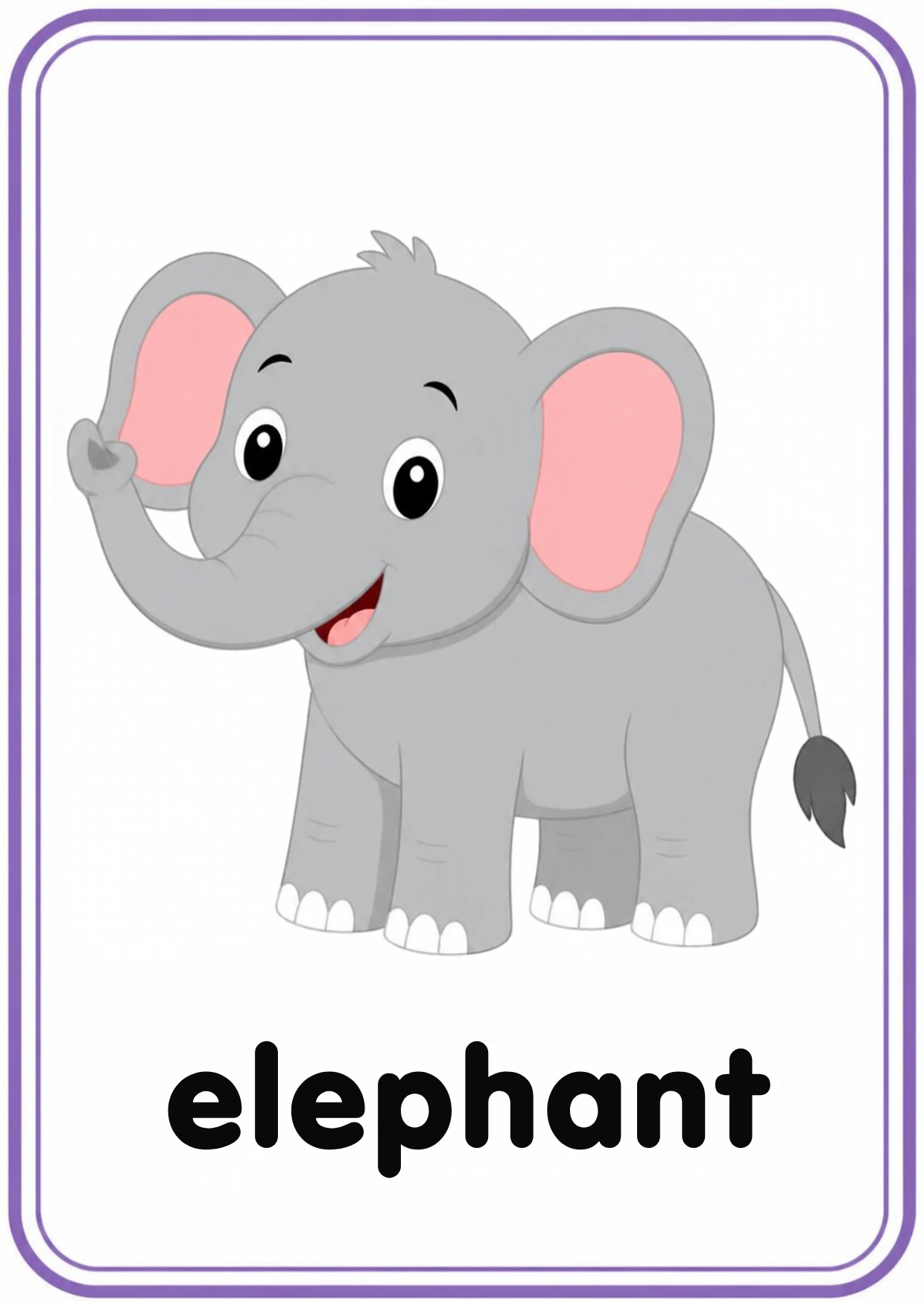
What is this?
An elephant is the biggest animal that walks on land, with ears like maps and a nose long enough to need its own name: the trunk. Its sound blasts out of that trunk — an airy Pbbbfft — and people copied it as a trumpet call.
What does it mean?
Trumpet is our copy of the elephant’s call: an airy blast through a long nose. And the trumpet is only half the story — elephants also rumble so deep that our ears can barely catch it, a secret voice that travels through the ground to far-away elephant feet. Loud and quiet, one animal.
What does the child need to know?
Your child needs to know: the elephant’s blast is written as a trumpet in English, the trunk is a nose and a hand in one — it breathes, smells, sprays water and picks things up — the big ears help keep the giant cool, and the hidden rumble is the elephant’s quiet way of talking.
Why this matters
The trumpet is comic and physical — your child will love it — but the trunk idea is the real prize: a nose that works like an arm stretches what a body part can be, and that kind of flexible thinking is exactly what imagination is made of.
What it teaches
Gross-motor swing in the arm-trunk game, breath control for the blast, body-part flexibility (a nose that is also a hand), the biggest-animal superlative, and listening for sounds that are almost too low to hear.
Words to learn
elephanttrumpettrunkearsstompgiant
Say this to your child
“"The elephant says Pbbbfft! Trumpet through the trunk — the biggest nose in the world! The trunk breathes, smells, sprays water and picks up peanuts, all in one. Swing your arm-trunk with me… and blast! And here is the secret: elephants also rumble deeper than our ears can follow. Stomp, stomp — hello, says the giant."”
Step by step
- Show the card and ask which animal is the biggest one on all the cards. Then introduce the giant and its strange nose: the trunk.
- Make the trumpet: take a big breath, let it rip through closed-ish lips — Pbbbfft! It comes out of the nose-end, just like a real trunk.
- Look at the picture: a gray giant with its ears spread wide. Trace the trunk from face to tip and flap your hands beside your own ears to feel how the big ears work.
- Play arm-trunk: swing one arm past your nose like a long trunk and let the blast rip as it swings high. Repeat until the room is fully elephant.
- Finish with the secret: elephants also rumble too low for our ears, talking through the ground. Stomp-stomp together — that is the elephant’s quiet half.
Look closer at the picture
Look at the picture together: what color is the elephant? How big are its ears compared to its head? What word sits with the elephant? Where does the trunk end?
Ask your child
"What does the elephant say?" "What is the long nose called?" "What can a trunk do that our nose cannot?" "How do elephants talk when the trumpet is off?"
What your child can say or do
Your child may trumpet at the bathtub with alarming accuracy, walk with one arm fixed as a permanent trunk, or stomp deliberately around the rug and announce "that is my quiet elephant talking" — sound, body and secret all in use.
Out in the real world
Elephants live at zoos and in storybooks and documentaries. Zoo trips gain a new layer — watch the trunk pick up a leaf, an ear flap in the heat — and the biggest-land-animal fact makes every elephant sighting feel like meeting a celebrity.
Try it together
Arm-trunk parade: one arm locked in front of the nose, the blast on every third step, stomp-stomp-TRUMPET across the room. Add a water hole where everyone kneels and slurps loudly through the trunk, then sprays. It is ridiculous, physical and impossible to do without laughing.
Understanding check
Ask: "What does the elephant say? What is the long nose called and what can it do? What is the elephant’s secret quiet sound?" The blast, the trunk and the rumble — that is the lesson landed.
Parent tips
The trumpet takes a few tries — loose lips, big breath, no shame. Model a bad one first and the pressure disappears. Keep the rumble as the bedtime chapter: the idea that a giant animal has a whisper voice is the gentlest thought in the whole set.
Staying safe
Real elephants are wild giants: watched from zoo paths and never touched outside farmer-or-keeper supervised moments. Their size that delights on a card is genuinely dangerous at arm’s length — the fence line is the rule, even for the friendliest giant.
This lesson pairs with the Elephant flashcard in the library — print it, show it, keep it on the fridge. Back to Animals & Their Sounds.