
Red — a step-by-step lesson for grown-up and child
Red opens the set because it opens the mouth: it is a color children tend to shout early and often, long before quieter shades get their turn. This lesson pins the word to the feeling — loud, warm, easy to spot — and then sends your child out to find it everywhere.
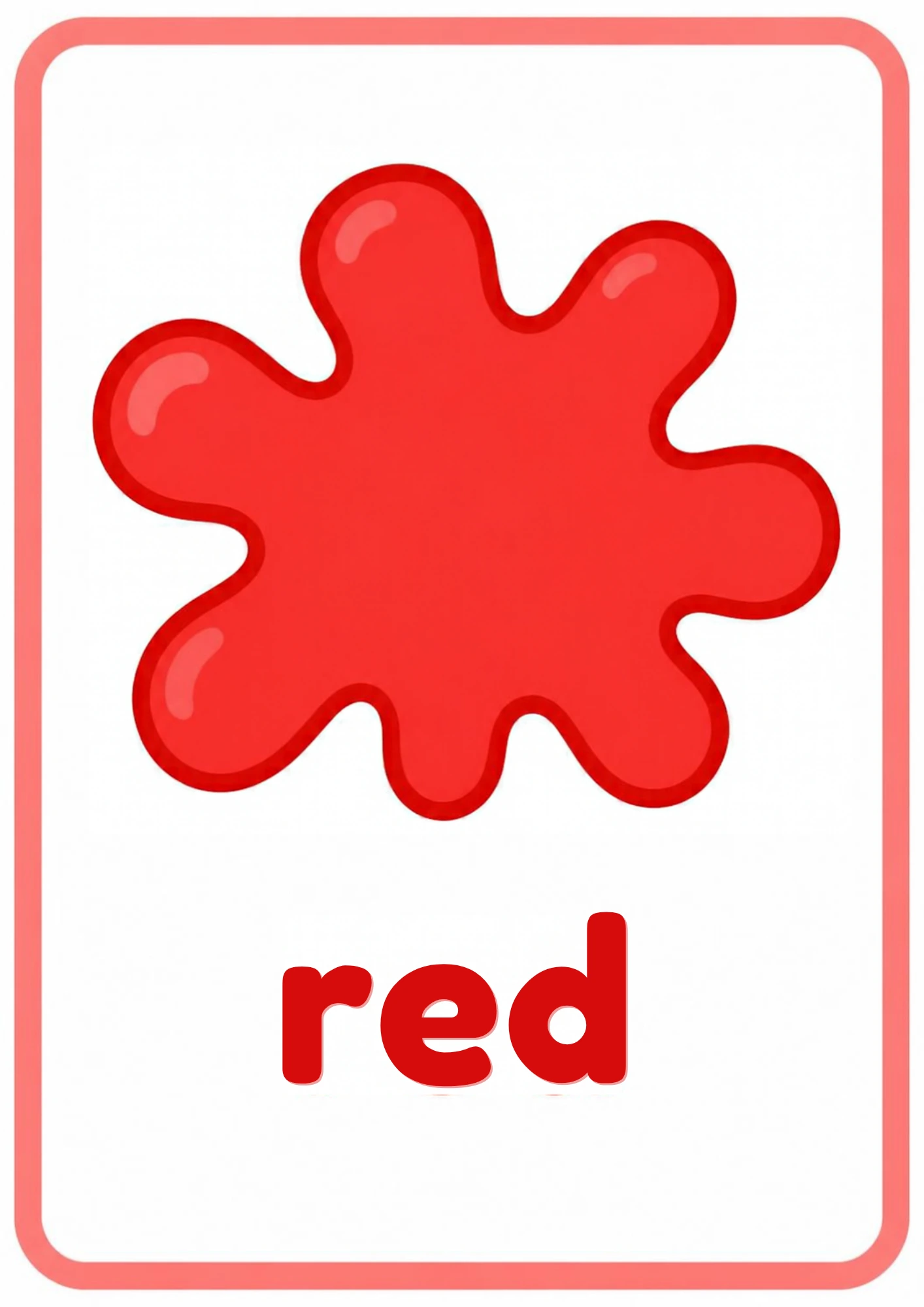
What is this?
Red is the name for one group of things that look alike in one way: the apple, the strawberry, the stop sign and the fire engine all wear it. The splash card holds the color by itself — nothing but red — and the picture card shows it living on a real thing your child can hold and eat.
What does it mean?
A three-year-old does not learn red from a definition; they learn it from repetition at the moment of noticing. Every find — a tomato at lunch, a coat on the hook — files the word a little deeper. The color belongs to no single object, which is exactly why hunting for it teaches better than staring at one card.
What does the child need to know?
Your child needs three things from this lesson: the word itself said clearly at the splash, at least one real twin found in your home — an apple works beautifully — and the experience of a successful hunt, because finding red things is the practice that makes the name stick. One color per day is plenty; today belongs to red.
Why this matters
Color words are classification practice: a child who sorts the world by red and not-red is doing the same thinking that later sorts animals, letters and shapes. Red is a friendly place to start because it is common, dramatic and easy to point at from across a room.
What it teaches
Visual discrimination (telling red from not-red at a distance), categorising, vocabulary, careful looking during hunts, and snack-time conversation skills when the apple twin gets eaten.
Words to learn
redapplesplashfindhuntsame
Say this to your child
““Red! Look at this card — all red, everywhere you point. Red is the color of fire engines and strawberries. Now the other card: a shiny red apple! Red hides inside apples too. Can you spot anything red in this room? Off you go — I will count every find!””
Step by step
- Hold up the splash card and say red slowly, twice — the color fills the whole card, so there is nothing else to look at and no way to miss it.
- Move to the picture card: a shiny red apple wearing its green leaf. Say red again at the apple — the word now belongs to something real.
- Hunt the room together: find five red things and touch each one as you say the word. A book cover, a mitten, a toy car all count.
- Snack-time finish: if you have an apple, hold it beside the picture card, name it once more, then eat your find together.
- Let your child play teacher — they hold the splash card, you point and guess. Get one wrong on purpose; being corrected is the best review there is.
Look closer at the picture
Look at the cards together: the splash card is one big red splash with the word red printed across it, and the picture card shows a shiny red apple wearing its green leaf. Ask your child where the red starts and stops on each card, and what the green leaf is busy not being.
Ask your child
“Which card is all red — the splash or the apple?” “Can you find something red bigger than your hand?” “Is the leaf red too, or a different color?” “What red thing would you like to eat?”
What your child can say or do
Your child might shout “red!” at everything vaguely warm-colored, march a toy fire engine around while announcing its color, or line up every red thing they own on the sofa — a correct piece of sorting work, loudly done.
Out in the real world
Red keeps arriving all day: strawberries at snack, a red door on the walk, the red car that passes the window. Each discovery your child announces is one more rehearsal of the word, and rehearsals — not lessons — are what make color names permanent.
Try it together
Red relay: scatter a few red toys and a few not-red ones, call “go red!”, and let your child fetch every red thing to the splash card as fast as legs allow. Wrong fetches are welcome too — sorting out the misses is where the learning actually happens.
Understanding check
Ask: “Show me red. Where is the red apple? Find me one more red thing.” The right card pointed at, the apple named and one fresh find brought back — that is the color landed.
Parent tips
If your child calls orange things red, do not correct flatly — set the two cards side by side and ask “same or different?” The comparison teaches the boundary more gently than a no ever could, and red keeps its good mood.
This lesson pairs with the Red flashcard in the library — print it, show it, keep it on the fridge. Back to Colors & Color Mixing (Preschool).